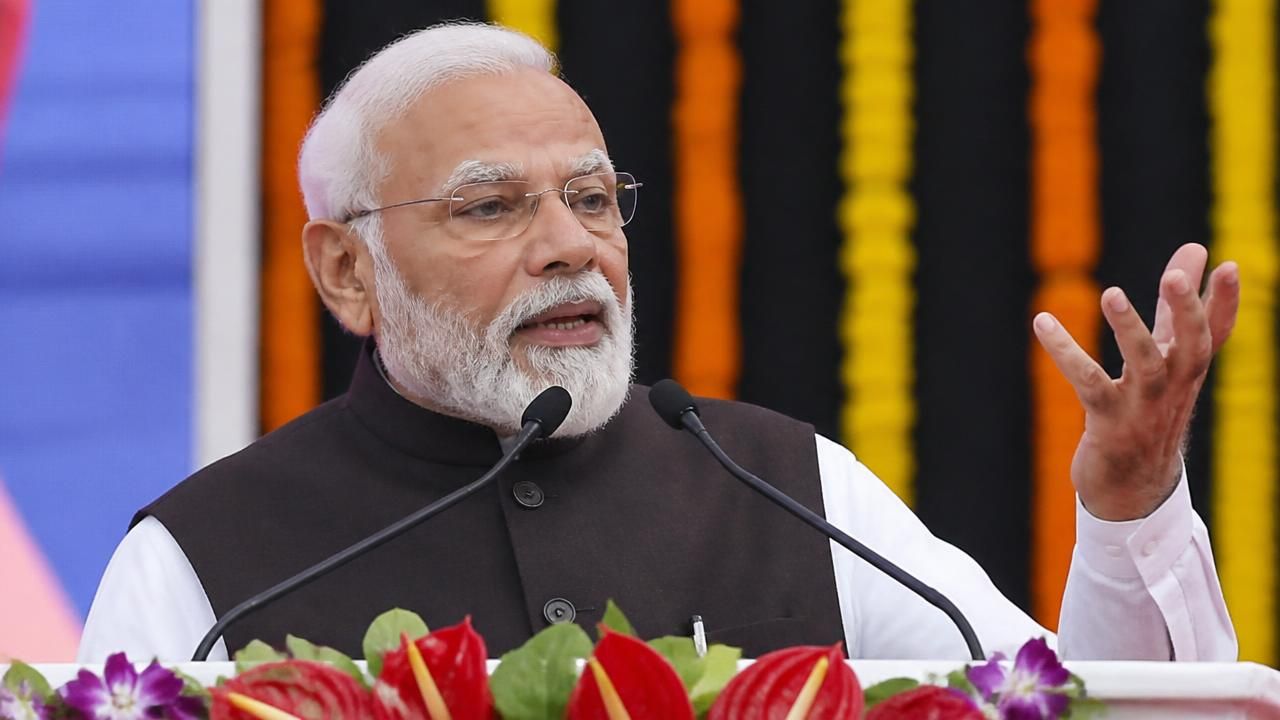
In a significant intervention aimed at defusing tensions, Indian Prime Minister Narendra Modi on Monday said he opposed punishment and court proceedings for young protesters who marched in New Delhi and other cities in recent weeks, urging society to "forgive" them for using foul language. Speaking at a public event, Modi remarked, "Children make mistakes," and called on families and communities to guide the "misguided youth" rather than seek retribution.
The remarks come after a controversy erupted over abusive slogans allegedly chanted by protesters at New Delhi's Jantar Mantar, a historic site for demonstrations, during a series of rallies against government policies. The protests, organized predominantly by young people, drew attention after several participants were booked by police for using derogatory language against the Prime Minister. A viral video showing a young woman, later identified as a student, being booked for allegedly abusing Modi, added fuel to the debate.
A Shift in Tone
Modi's statement marks a notable departure from the usually firm stance of his administration on dissent. "Abuses never solve anything," he said, emphasizing that the energy of the youth should be channeled into constructive nation-building. He urged society to "forgive" the protesters, saying that "children make mistakes" and that they should be given a chance to learn and correct themselves.
"Children make mistakes. We should forgive them. Abuses never solve anything. We must guide the misguided youth."
The comments were widely reported across Indian media, with headlines such as "PM Modi Calls for Forgiveness After Abuse During Jantar Mantar Protest" from Hindusthan Samachar and "'Guide, Don't Punish': PM Modi Reacts to Abuse During Jantar Mantar Protest" from News Mobile. The Northeast Herald highlighted the Prime Minister's emphasis on forgiveness, quoting him as saying, "Abuses never solve anything."
The Viral Video and Police Cases
At the center of the row is a viral video showing a young woman allegedly hurling abuses at PM Modi during the protests. The video led to her being booked by police. Mashable India reported that the girl, whose name has not been officially released, later expressed regret and sought forgiveness. Her plea, combined with Modi's remarks, has sparked a broader conversation about the handling of protest-related cases.
In Maharashtra, the advocacy group Citizens for Justice and Peace (CJP) issued a statement calling on PM Modi to withdraw all protest-related cases in the state, echoing his own sentiment of forgiveness. CJP's appeal, reported by thenewsmill.com, argued that criminalizing youthful exuberance and dissent is counterproductive and that the Prime Minister's words should be followed by concrete action.
Balancing Law and Compassion
The controversy has reignited discussions about the limits of free speech and the criminal justice system's treatment of protesters. While some argue that abuse aimed at public figures cannot be condoned, others point out that excessive legal action can have a chilling effect on democratic dissent.
Legal experts note that under Indian law, using derogatory language against the Prime Minister or other constitutional authorities can attract charges under sections of the Indian Penal Code related to sedition or criminal defamation. However, many such cases are discretionary, and local authorities often have the right to drop charges if deemed in the public interest.
Political analysts see Modi's intervention as a strategic move to de-escalate a potentially polarizing issue, especially with elections looming in several states. By taking a magnanimous stance, the Prime Minister has sought to position himself as a fatherly figure who disciplines but also forgives, thereby undercutting opposition narratives of a heavy-handed state.
Protests at Jantar Mantar: A Tradition
Jantar Mantar in New Delhi has long been synonymous with peaceful protest. For decades, civil society groups, student organizations, and political parties have congregated there to voice grievances on issues ranging from corruption to unemployment. The recent demonstrations, which drew thousands of young people, were notable for their raw language and confrontational tone.
The use of obscenities against public figures, while not new, has been amplified by social media, where videos and hashtags spread quickly. The young woman at the center of the recent controversy became an unintended symbol of this fiery dissent, her image circulating across platforms and eliciting both outrage and sympathy.
Reactions from Across the Spectrum
Reactions to Modi's plea have been mixed. Supporters of the Prime Minister praised his magnanimity, noting that it reflects his commitment to nurturing youth. Opposition leaders, meanwhile, welcomed his words but questioned why the cases were filed in the first place, pointing to the controversial sedition law that is often used to suppress dissent.
NewsBricks reported that PM Modi's call for forgiveness was accompanied by an appeal to youth to "learn from mistakes," underscoring his belief in second chances. Similarly, indiasnews.net highlighted his message to "guide the misguided," suggesting that society has a collective responsibility rather than merely punishing wrongdoers.
What Comes Next?
Thus far, the government has not announced any formal withdrawal of cases. However, pressure is mounting from civil rights groups and now the Prime Minister's own remarks to reconsider the legal actions. In Maharashtra, where multiple cases have been registered, the CJP has urged the government to act swiftly to ensure that young protesters are not burdened with permanent criminal records.
The incident also throws a spotlight on India's delicate balance between maintaining public order and allowing freedom of expression. As the country navigates this contentious terrain, Modi's words—whether sincere or strategic—provide a moment for reflection on how a vibrant democracy treats its most vocal critics.
For now, the young woman in the viral video and the many others facing charges will be watching closely to see if the Prime Minister's plea translates into action. If it does, it would be a rare instance of a leader turning the other cheek, setting a precedent for tolerance in an increasingly polarized world.