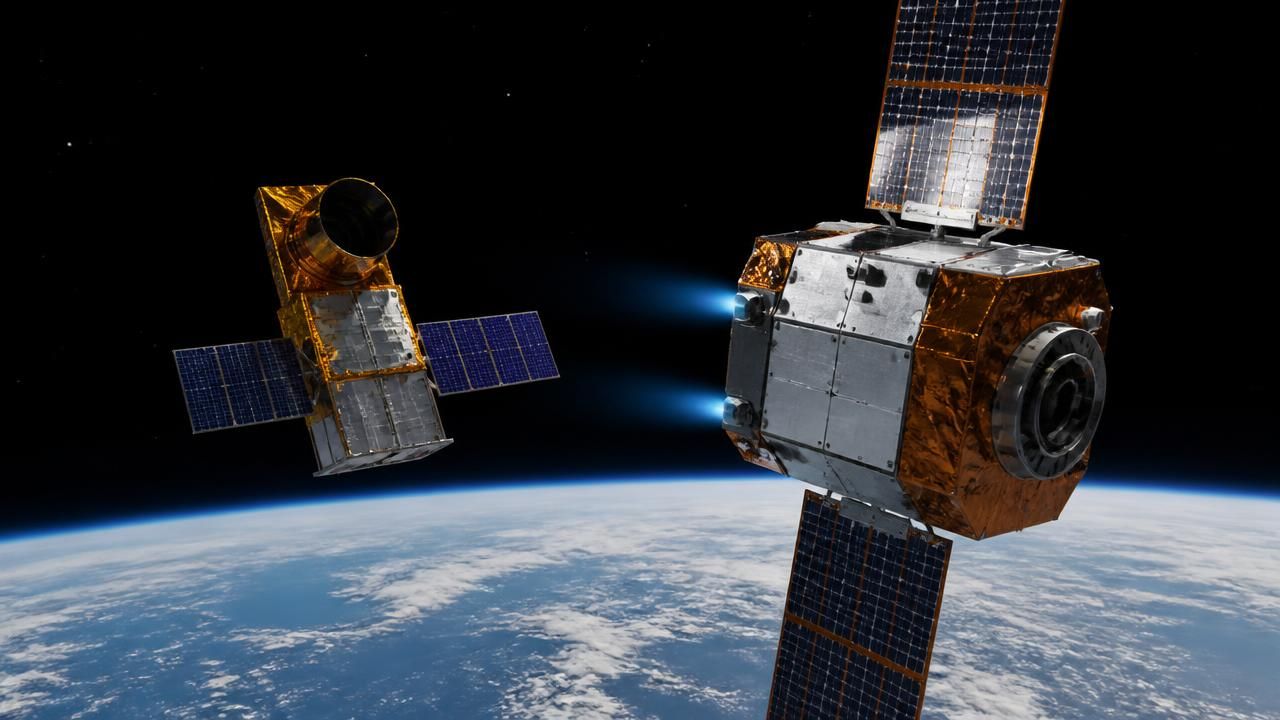
Just over a week ago, more than 200 miles above Earth, a refrigerator-size satellite named Link suddenly spun out of control. The spacecraft was on a mission to save NASA's $500 million Swift gamma-ray observatory, which is slowly losing altitude and threatens to burn up in the atmosphere. Now, engineers are racing to stabilize Link itself, in a mission that has become a dramatic test of the emerging satellite servicing industry.
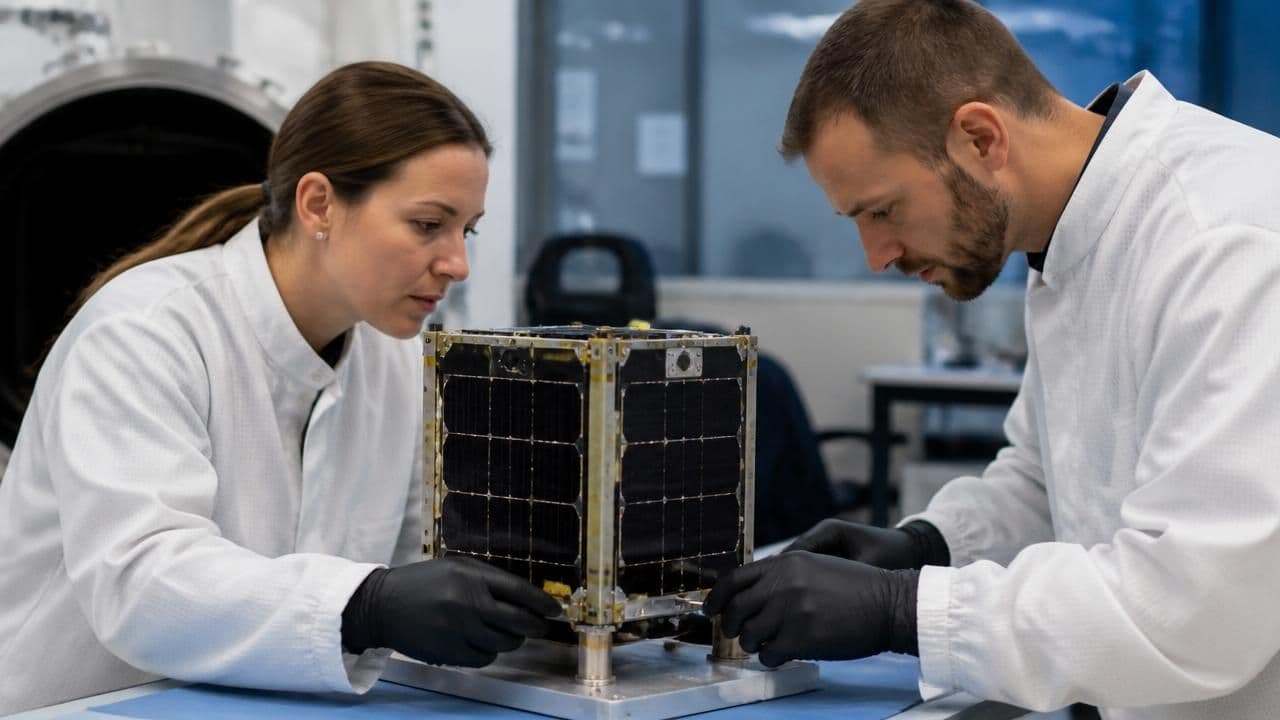
USA Today has called it "a daring race" and "an unprecedented mission," and the stakes could hardly be higher. Swift, launched in 2004, has been a cornerstone of high-energy astrophysics, discovering gamma-ray bursts and helping solve cosmic mysteries. But after nearly two decades in low-Earth orbit, it is succumbing to atmospheric drag. To keep it alive, NASA awarded a $30 million contract to Katalyst Space Technologies, a startup that built Link, the first commercial spacecraft designed to rendezvous with and grab an existing NASA observatory, then fire its thrusters to boost it to a higher orbit.
"No one thought it was going to be possible."
That skeptical sentiment, captured by Space.com, loomed over the mission. But when Link experienced multiple failures—two of its three reaction wheels stopped working and its cold gas thrusters malfunctioned—the rescue became a two-front battle.
Technical Gremlins in Orbit
According to Ars Technica, engineers have re-established sporadic contact with Link. The satellite is rotating on multiple axes, making it difficult to point its antenna or solar arrays. The team is now working to duplicate the original design: using the still-functional reaction wheel and magnetorquers (electromagnetic coils that interact with Earth's magnetic field) to damp the rotation, before conducting a careful thruster test. "It didn't look good," one engineer told the publication, "but we're in a better place than we were 48 hours ago." Universe Magazine also reports that NASA officials are cautiously optimistic about regaining control.
The Bigger Picture: Satellite Servicing Takes Center Stage
The Link mission is just one piece of a broader push to develop in-orbit services. NASA is also testing orbital "gas station" technologies that could refuel satellites, extending their lifetimes and enabling deep-space missions to the Moon and Mars (Space.com). Robotic repair systems are being developed to fix or repurpose satellites (Discover Magazine). And the specter of Kessler Syndrome—a chain reaction of collisions creating a debris belt around Earth—makes such capabilities ever more critical (International Business Times). As the IBTimes article notes, space debris is a growing existential threat; active debris removal and satellite servicing are seen as essential tools. The success of the Link/Swift mission could prove that commercial companies can take on these tasks.
Political and Budget Pressures
Meanwhile, the mission unfolds against a turbulent political backdrop. The Trump administration has once again proposed cutting NASA's science funding by 47%, a move that would gut many space science programs (Space.com). NASA workers have scheduled a third protest at the agency's Washington, D.C. headquarters on September 15 to denounce the proposed cuts (Space.com). These uncertainties could affect the agency's ability to fund future servicing missions and maintain existing assets.
Lessons from Past Space Dramas
The current crisis echoes earlier NASA challenges. The Columbia disaster in 2003 reshaped the agency's safety culture, emphasizing that even routine missions can carry catastrophic risk (Space.com). More recently, NASA gave the Opportunity rover a survival deadline on Mars, and The Verge reported that some close to the mission doubted the agency's ability to revive it—a sentiment that now feels relevant to Link. And just last year, careful orbital dynamics wizardry helped save NASA's next Mars mission from a launch window crisis (Ars Technica).
Amid the Drama, NASA's Ambitions Continue
While all eyes are on the Link rescue, NASA is pressing forward with other milestones. Artemis 2 astronauts are preparing for a historic moon flyby, with nearly 12,000 photos already released (Space.com). The Perseverance rover now has its own form of "GPS" on Mars, enabling more efficient navigation (Space.com). The 2026 space calendar is packed with moon landings, asteroid missions, and new telescopes (Space.com). Astronaut psychology is increasingly recognized as vital for long-duration missions (Space.com). Even broader questions loom: Space colonization remains a contentious debate, with supporters touting humanity's expansion and critics pointing to enormous costs and risks (Britannica). Some researchers have even proposed space-based interventions to combat sea-level rise (The Atlantic). These long-term visions rest on the reliability of the very technologies being tested today.
What Happens Next?
Engineers at Katalyst and NASA are working around the clock, but time is limited. Swift's orbit is decaying, and Link must be stabilized before it can attempt the delicate approach and docking. The mission—if successful—would mark the first time a commercial spacecraft has reboosted a major science observatory, proving a model that could be replicated for other aging satellites. As one engineer put it, "We've never done this before. But that's why it's worth trying."