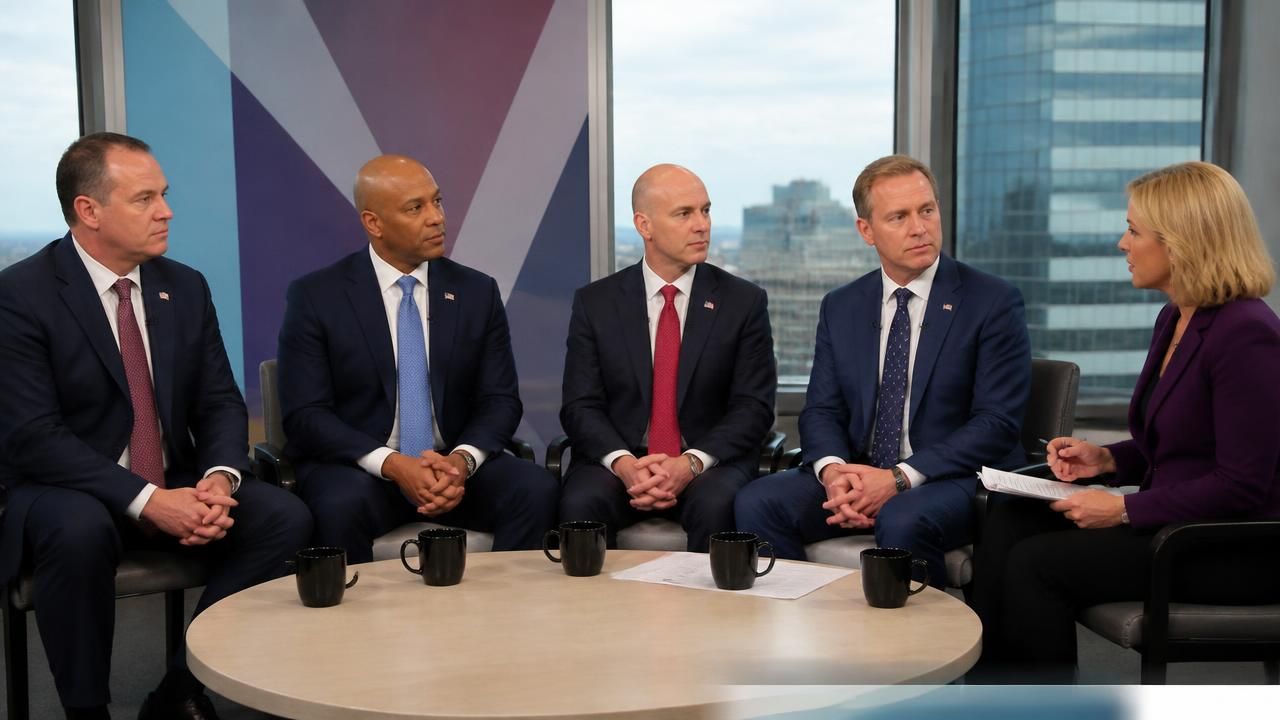
In a rare display of cross-party cooperation, a bipartisan group of governors announced the formation of a new task force aimed at addressing one of the most contentious issues in American politics: immigration reform. The announcement came from Oklahoma City, where the National Governors Association (NGA) is holding its annual meeting.
Oklahoma Governor Kevin Stitt, a Republican, joined forces with Maryland Governor Wes Moore, Utah Governor Spencer Cox, and Delaware Governor Matt Meyer—all Democrats—to launch the initiative. The group made the announcement during an interview with Christina Ruffini on Bloomberg's "This Weekend" program, signaling an intent to move beyond partisan gridlock in Washington.
Who Is Involved and What They Hope to Achieve
The task force brings together governors from geographically and politically diverse states: Oklahoma, a deep-red state with a strong conservative stance on immigration; Maryland and Delaware, solidly blue states with significant immigrant populations; and Utah, a purple state known for its pragmatic, problem-solving approach to governance.
In a joint statement, the governors emphasized that states have borne the brunt of federal inaction on immigration. They argued that governors are uniquely positioned to craft solutions that address both border security and the economic and humanitarian needs of immigrant communities.
"We may not agree on every detail, but we all agree that the current system is broken and that states cannot wait any longer for Washington to act," the governors said.
Why Now? The Political and Social Context
Immigration has remained a hot-button issue across the United States, with sharp divides over border policy, asylum procedures, and the status of millions of undocumented immigrants. Recent years have seen record numbers of encounters at the southern border, while cities and states far from the border have struggled to manage the influx of migrants sent by Texas and other states.
The launch of this task force comes at a time when public opinion polls show that a majority of Americans support a pathway to citizenship for undocumented immigrants, but remain divided on border security measures. The governors' initiative is seen as an attempt to bridge that gap with practical, state-level proposals.
A Foundation of Bipartisan Cooperation
The governors involved are no strangers to crossing the aisle. Utah's Spencer Cox has previously worked with Democratic governors on issues like voting rights and infrastructure. Maryland's Wes Moore has spoken about the need for comprehensive immigration reform as a moral and economic imperative. Oklahoma's Kevin Stitt, while more conservative, has focused on workforce shortages in his state, which could be addressed by immigration.
What the Task Force Will Do
While the specifics are still being drafted, the task force is expected to focus on several key areas:
- Developing a unified state-level approach to immigration enforcement and integration.
- Advocating for federal policy changes that give states more flexibility in handling immigration.
- Creating economic opportunities for immigrants, including work authorization and streamlined visa processes.
- Addressing humanitarian concerns at the border and in receiving communities.
The group plans to deliver a set of recommendations to the White House and Congress by the end of the year. They also intend to hold public hearings in each of their states to gather input from local leaders, business owners, and immigrant advocacy groups.
Reactions and Implications
The announcement has drawn cautious optimism from policy experts and advocacy groups. Some have praised the governors for taking a collaborative approach, while others remain skeptical that any state-led effort can overcome the deep polarization in Washington.
Bloomberg's coverage highlighted the significance of the announcement, noting that it represents one of the few recent examples of bipartisan leadership on immigration. The fact that it was made at the NGA's annual meeting—a venue traditionally focused on state issues—underscores the growing role of governors in shaping national policy.
The task force also has potential economic implications. With labor shortages affecting industries from agriculture to technology, states are increasingly recognizing that immigrants are essential to their economies. The governors' emphasis on economic solutions could resonate with business leaders who have long pushed for immigration reform.
Looking Ahead
The success of the task force will depend on its ability to translate good intentions into concrete policy. The governors have set an ambitious timeline, and their first meeting is expected to take place in the coming months. As the 2024 presidential election approaches, immigration will likely remain a defining issue, and this state-led initiative could become a template for other bipartisan efforts.
In an era of political division, the sight of four governors from opposing parties standing together on immigration reform is a notable development. Whether it will lead to real change remains to be seen, but it offers a glimmer of hope that progress is still possible on one of America's greatest challenges.