As the United States marks its 250th year, a series of conversations and confrontations are laying bare the deep fractures in American identity. In one sit-down, a former presidential cabinet member and a young historian trade views on capitalism and protest. In another, a retired four-star general denounces the sitting president as a threat to the Constitution. And from the corridors of the White House itself come accusations of demolition—both literal and figurative. Together, these moments frame a nation wrestling with its founding ideals, its economic system, and the leadership that will carry it into the next quarter-millennium.
Generational Divides on Capitalism and Protest
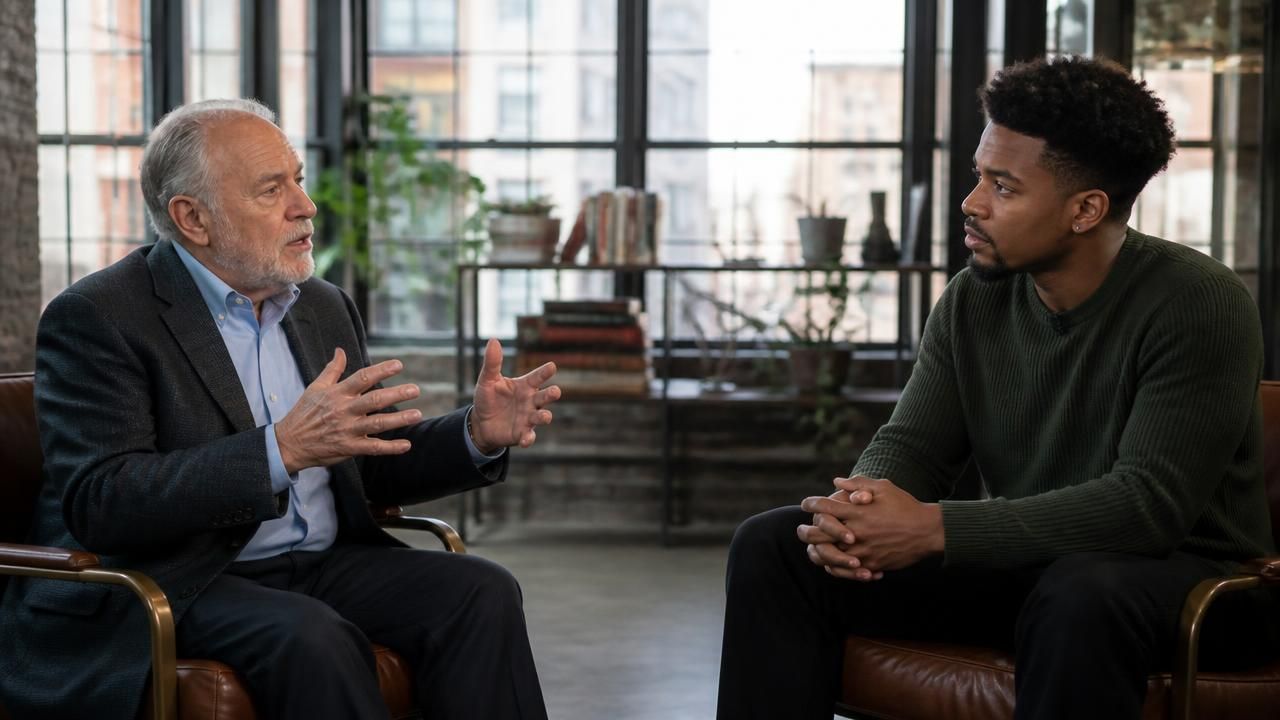
At the center of this reckoning is a dialogue between Robert Reich, 80, who served as U.S. Secretary of Labor under President Bill Clinton, and Kahlil Greene, 26, a Gen Z historian and content creator. Their conversation, facilitated by CNBC Make It, was part of a series marking America's 250th anniversary that brings together prominent voices across age groups to discuss what happiness and success mean in the United States today.
Reich, a longtime progressive economist, has spent decades arguing that capitalism must be tempered by social democracy. Greene, known as the “Gen Z historian” for his social media chronicles of American history, brings a younger, more skeptical lens to the national narrative. According to CNBC, the pair sat down to discuss politics, protest, and capitalism—touching on how movements for change have historically intersected with economic power.
The generational contrast was instructive. Reich’s perspective, shaped by service in administrations from Ford to Clinton, tends to focus on policy levers, labor relations, and the regulatory state. Greene, coming of age in the era of Black Lives Matter and climate strikes, emphasizes cultural memory, systemic critique, and the unfinished business of American democracy. Their exchange highlights a larger national conversation: Is the American Dream still attainable, and for whom?
The President and the Generals: A Constitutional Crisis?
The dialogue on capitalism and justice has been overshadowed by ongoing debate over President Trump’s fitness for office. In a widely noted article, The Atlantic reported that former Secretary of Defense James Mattis publicly broke with his former boss, denouncing him as a threat to the Constitution. Mattis, a retired Marine general who served as Pentagon chief from 2017 to 2019, had previously kept his criticism of the president private. His statement, published amid nationwide protests over racial injustice, accused Trump of seeking to divide the country and undermine the principles of the republic.
The Atlantic’s piece was seen as a significant rebuke because Mattis had long been considered a stabilizing force within the administration. By describing the president in such stark terms, Mattis lent military gravitas to the growing chorus of critics who worried about the erosion of democratic norms. The article framed his remarks as a direct challenge to Trump’s constitutional stewardship—a warning from a man who had once sworn an oath to defend the Constitution.
The East Wing Under Siege
Even the physical White House has become a flashpoint. In a Politico article, critics used dramatic language to describe the state of the East Wing, the traditional domain of the first lady and a repository of historical continuity. The headline, “‘It’s your house. And he’s destroying it,’” captured a sentiment that went beyond mere renovation. Sources in the piece reportedly described a presidency that was neglectful of the building’s heritage and dismissive of its traditions—an extension of a broader assault on institutional memory.
“It’s your house. And he’s destroying it.”
The East Wing has historically served as a stage for ceremonial events and the first lady’s initiatives. During the Trump administration, high staff turnover and reports of disarray in the executive mansion added to the impression of instability. Whether the “destruction” was literal or symbolic, the Politico report contributed to a narrative that the president treated the White House—and the office itself—as a disposable possession rather than a sacred trust.
Capitalism’s Counterpoint: Entrepreneurship and Innovation
Amid the political storm, stories of individual enterprise remind Americans of the economic opportunities that capitalism can create. In a separate CNBC feature, an entrepreneur recounted the personal inspiration behind a new health care product. Although the segment’s details were not fully accessible, such stories are a staple of business journalism: someone experiences a gap in the system, and they build a company to fill it.
This narrative sits in counterpoint to the critiques offered by Reich and Greene. While economists and historians debate capitalism’s flaws, thousands of innovators continue to invest in the American Dream. The healthcare sector, in particular, has spawned countless startups aimed at reducing costs, improving access, and empowering patients. For many, this is proof that the entrepreneurial spirit remains alive and well.
Yet the juxtaposition is also telling. For every entrepreneur who succeeds, there are millions who struggle with medical debt and inadequate care—a tension that Reich has long highlighted. The conversation between Reich and Greene suggests that the next generation is less willing to accept inequality as an inevitable byproduct of growth. They call for a capitalism that works for everyone, not just the few.
What Unites a Nation at 250?
The United States’ semiquincentennial arrives at a moment of profound self-examination. The conversations facilitated by CNBC, the warnings from figures like Mattis, and the symbolic battles over the White House all point to a common anxiety: can a nation built on protest, capitalism, and representative government hold together when its citizens disagree on the meaning of those ideals?
Robert Reich, looking back on half a century of public service, remains cautiously optimistic. He sees the arc of history bending toward justice, but only through struggle. Kahlil Greene, with the urgency of youth, echoes the need to act now. Their dialogue, and the surrounding controversy, underscore that the struggle for America’s identity is ongoing.
Whether through the ballot box, street demonstrations, or the gritty work of entrepreneurship, Americans are voting—sometimes with their dollars, sometimes with their voices—on the kind of country they want. The path forward is contested, but the debate itself is a testament to the republic’s endurance. As the nation marks 250 years, it remains a work in progress.