The commercial space industry is entering a new era of rapid growth and regulatory change. President Trump this week signed an executive order to streamline commercial spaceflight rules, a move that could significantly benefit SpaceX and Blue Origin. At the same time, SpaceX is on pace to nearly triple its launch cadence, with a goal of 145 Falcon rocket launches this year. But this breakneck expansion is raising alarms about environmental damage from rocket emissions, as highlighted in a recent New York Times investigation. Here is a synthesis of these developments from multiple sources.
Regulatory Rollback: A Boon for SpaceX and Blue Origin
President Trump's executive order, reported by Reuters and MSN, directs the Federal Aviation Administration (FAA) to revamp and streamline the regulatory framework for commercial spaceflight. A key provision is the waiver of certain environmental reviews for launch licenses, a change that would significantly shorten approval timelines for companies like SpaceX and Blue Origin. The move is framed by the administration as a necessary step to reduce bureaucracy and maintain US competitiveness in the global space race.
The order will direct the FAA to expedite launch licensing and waive certain environmental requirements, cutting red tape that has slowed innovation, a White House official told Reuters.
For SpaceX and Blue Origin, this could mean faster turnaround between launches, reduced compliance costs, and greater flexibility in mission planning. The FAA is expected to implement new rules within 60 days, according to the MSN report. Industry analysts see this as a major win for the commercial sector, particularly as the US military increasingly relies on private rockets for national security missions.
Record Launch Cadence: Inside SpaceX's 145-Launch Goal
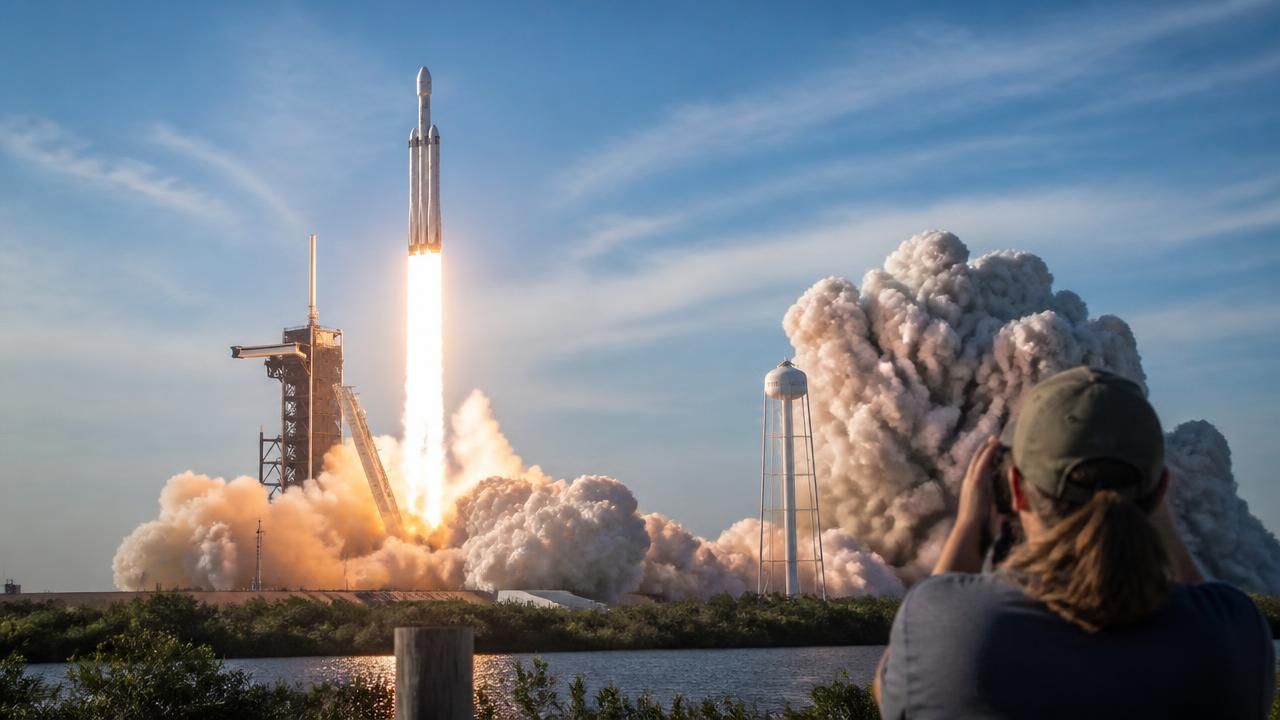
SpaceX is already capitalizing on the more permissive environment. According to a separate MSN report, the company has flown 66 Falcon rockets so far in 2025, and is aiming for approximately 145 launches by year's end. That would average one launch every two-and-a-half days, an unprecedented pace for any launch provider. For comparison, SpaceX will likely exceed the number of launches achieved by the entire global industry just a decade ago.
The surge is not limited to SpaceX. Rocket Lab, a smaller launch provider, announced this week its largest contract to date: a $266 million multi-launch deal with the US Space Force, as reported by Ars Technica. The contract covers 12 suborbital missions, with options for up to six additional flights, with the first launch expected no earlier than late 2026. This indicates that the military's appetite for commercial launch services is expanding beyond the Falcon 9 workhorse, creating opportunities for multiple players.
Military Dependence on Commercial Rockets
The US Space Force's decision to award Rocket Lab a deal of this magnitude underscores the deepening reliance on commercial partners. Both Rocket Lab's Electron and SpaceX's Falcon 9 have become the workhorses for the US military's small and medium lift needs. With regulatory barriers lowered, these companies can respond more agilely to national security requirements, a point emphasized in the Ars Technica Rocket Report.
The Environmental Trade-Off: Pollution from the New Space Race
However, the fast-paced expansion has a darker side. A New York Times investigation published last year highlighted that the new space race is causing new pollution problems. Rocket exhaust, especially from kerosene-burning engines like the Falcon 9's Merlin, releases soot and alumina particles into the stratosphere, where they can linger for years and contribute to ozone depletion. The article also noted that reentry debris and manufacturing emissions add to the cumulative impact.
The number of rocket launches is rising so quickly that scientists are struggling to keep up with the atmospheric consequences, the New York Times reported.
Environmental advocates argue that the FAA's decision to waive environmental reviews will exacerbate these effects. They point to the 2024 finding by the National Oceanic and Atmospheric Administration that black carbon emissions from rockets have increased tenfold over the past two decades. The regulatory rollback, they say, puts industry growth ahead of planetary health.
Perspectives: Industry vs. Environmentalists
The two narratives—geopolitical and commercial opportunity versus environmental stewardship—frame the story in sharply different ways. Proponents, including the Trump administration and industry leaders, view deregulation as essential for maintaining US leadership in space, fostering innovation, and ensuring national security. They argue that modern rockets are becoming cleaner, and that the sector's overall emissions remain a tiny fraction of aviation or maritime shipping.
Critics, including environmental groups and some scientists, counter that the rapid increase in launch frequency is outpacing safeguards. They point to the lack of comprehensive environmental impact assessments for emerging mega-constellations and suborbital flight schedules. The conflict is not merely technical; it is a policy question of how to balance progress with protection.
Looking Ahead: A Defining Moment for the Commercial Space Age
As SpaceX pushes toward 145 launches and Rocket Lab expands its military portfolio, the coming months will reveal the true costs and benefits of this regulatory shift. The FAA's implementation of the executive order will be closely watched, as will global responses. While the US moves to ease restrictions, other nations are tightening oversight, creating a patchwork of standards. The outcome will shape not only the economics of spaceflight but the future of Earth's upper atmosphere.
For now, the industry is charging forward. The Falcon 9 continues to fly at an unprecedented rate, and new launch pads are being built to accommodate the demand. But with each launch, the question of planetary impact grows louder. The challenge for policymakers will be to find a middle ground that allows the space economy to thrive without sacrificing the very environment it seeks to explore.