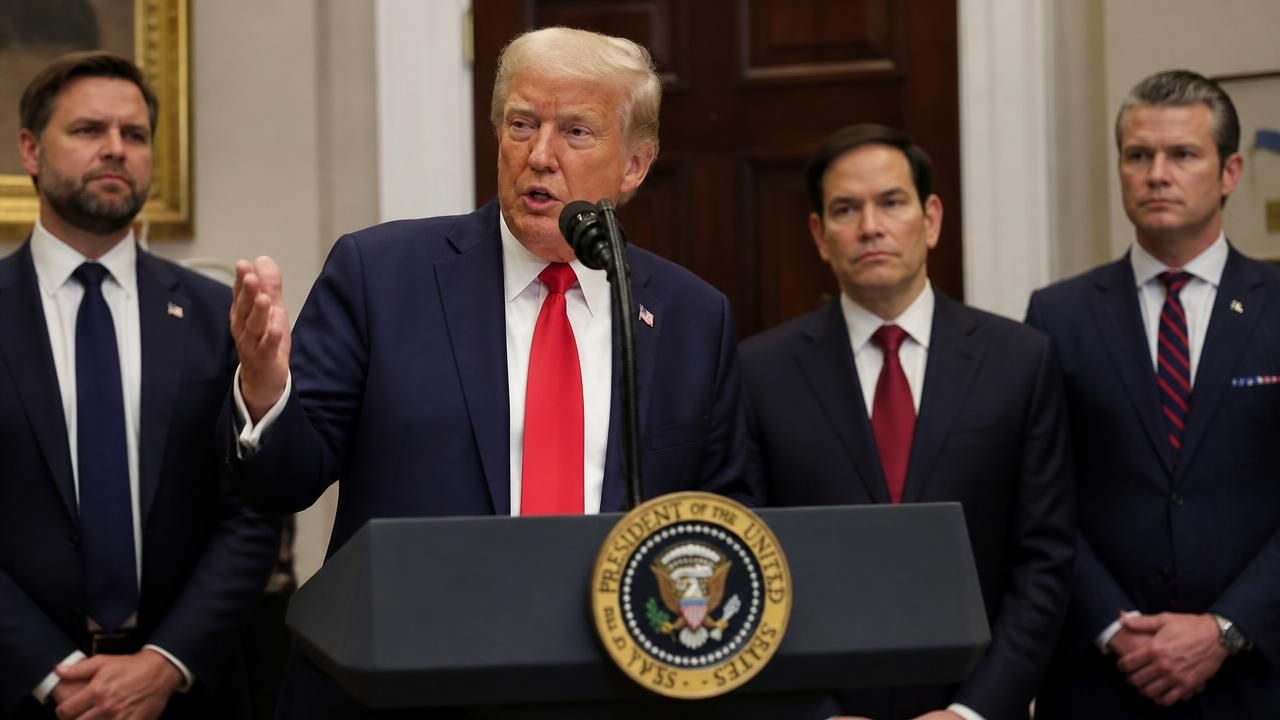
President Donald Trump announced on [date] that a deal has been reached for Hamas to disarm and for Israel to withdraw its forces from Gaza, describing it as a breakthrough in the long-running conflict. However, the announcement was immediately met with caution from analysts and officials, who noted that significant hurdles, strict conditions, and an extended timeline remain before the war in the Palestinian territory can truly be resolved.
The news, first reported by NPR and echoed across regional outlets, marks one of the most concrete proposals to emerge from months of diplomatic efforts. Yet details of the agreement, including enforcement mechanisms and sequencing, remain murky. Sources indicate that the plan is less a formal treaty and more a tentative framework that could collapse under the weight of decades of mistrust.
The Announcement
In a brief statement, President Trump said,
“A deal has been reached for Hamas to disarm and for Israel to withdraw its forces from Gaza.”He did not provide specifics, but aides suggested that the agreement was brokered over several weeks of indirect talks facilitated by regional mediators. The announcement was carried by multiple news organizations, including NPR and its local affiliates, although some websites experienced technical difficulties that temporarily prevented access to the full story.
What the Deal Envisions
At its core, the purported agreement would require Hamas to surrender its weapons and military capabilities, a long-standing demand by Israel and its allies. In exchange, Israel would pull its troops out of the Gaza Strip, a territory that has seen repeated cycles of violence since Hamas took control in 2007. The deal also reportedly includes provisions for a long-term ceasefire, humanitarian aid access, and the eventual transfer of security responsibilities to the Palestinian Authority.
However, the timeline for implementation is contentious. Reports suggest that the disarmament process would occur in phases, potentially spanning months or even years. This gradual approach has drawn criticism from both sides: hardliners in Israel fear it gives Hamas time to rearm, while Palestinian factions worry that Israel may not fully withdraw if disarmament is incomplete.
Hurdles and Uncertainty
Even before the announcement, experts cautioned that the deal faces enormous obstacles. First, there is the question of enforcement. Who will verify that Hamas has actually disarmed? The proposal does not clearly specify whether international monitors, a United Nations peacekeeping force, or a coalition of Arab states would take on this role. Without a robust verification mechanism, the deal could easily unravel.
Second, there is no uniform definition of “disarmament.” Hamas possesses not only small arms but also rockets, explosives, and a network of tunnels. Whether the agreement covers all these elements is unclear. Additionally, Hamas has historically refused to disarm, viewing its weapons as a means of resistance and a bargaining chip.
Third, Israel’s domestic politics complicate any withdrawal. Several members of the Israeli unity government have opposed any Soviet-style pullout until all hostages are returned and Hamas is dismantled. While the status of hostages was not mentioned in Trump’s statement, it is likely a critical component of the negotiations. Without a comprehensive solution, Israeli leaders may resist implementing the deal.
Historical Context
The conflict in Gaza has deep roots, dating back to Israel’s occupation of the territory in 1967 and Hamas’s electoral victory in 2006. Subsequent wars in 2008, 2012, 2014, and 2021 have caused thousands of deaths and widespread destruction. The current war, which began with an October 2023 assault by Hamas that killed over 1,200 Israelis and led to the capture of hundreds of hostages, has been the deadliest yet. Gaza’s health ministry reports more than 40,000 Palestinians have been killed, and most of the strip’s population is displaced.
Previous ceasefire attempts have failed, often due to disagreements over disarmament and border crossings. The international community, including the United States, has long pressed for a two-state solution, but progress has been stymied by mutual distrust and political extremism on both sides.
Differing Perspectives
Coverage of Trump’s announcement varied by outlet. NPR framed it as a diplomatic gamble, highlighting the many “hurdles and uncertainty” that remain. Local news stations that syndicated the report echoed that language, while some websites encountered errors that delayed publication of the full story. This underscores the challenge of reporting on a rapidly evolving situation where details are scarce and official statements often conflict with ground realities.
Analysts have also pointed out that the announcement may be aimed at boosting Trump’s diplomatic legacy ahead of upcoming elections. A breakthrough on Gaza would offer a significant political win, but the complexity of the conflict suggests that any true resolution will require months or years of patient negotiation.
What Happens Next?
The coming weeks will be critical to determine whether this deal is more than a rhetorical statement. If both sides can agree on verification procedures, humanitarian corridors, and a concrete timeline, negotiations could proceed. But the record of past agreements is not encouraging.
In the meantime, the people of Gaza continue to suffer. The UN has warned of famine, and reconstruction will take billions of dollars and years of effort. Even if the disarmament deal succeeds, it does not address the underlying political issues that perpetuate violence.
For now, President Trump’s announcement is a hopeful signal, but as one official put it, “The devil is in the details.” Those details are yet to be defined, and the path to peace remains long and treacherous.