The artificial intelligence boom is hitting a reckoning. After months of relentless enthusiasm, investors are now grappling with a stark reality: Big Tech is spending more than ever on AI infrastructure, and the returns remain uncertain. This week, a wave of earnings reports, bond-market signals, and stock movements has crystallized what many call a growing bubble—one that some fear could burst with painful consequences.
Amazon set the tone, reporting that its capital expenditures soared 69 percent in the latest quarter, joining a procession of tech giants ramping up AI spending. Microsoft, Meta, Alphabet, and others are pouring tens of billions into data centers, chips, and energy infrastructure. Combined, U.S. tech giants are planning over $600 billion in capital spending this year, according to Reuters. But as the numbers climb, so do the jitters.
The Capex Supercycle
The spending spree is unprecedented. Amazon's 69 percent surge in capital expenditures is just one data point in a broader trend. Meta's CEO Mark Zuckerberg has publicly called for increased spending, even as Meta's stock slides on AI bubble fears. Alphabet, meanwhile, reportedly has an $80 billion AI fundraising plan that shook Wall Street, raising questions about how these projects will be financed.
Microsoft's stock has fallen on AI spending concerns and a lack of clarity about its OpenAI partnership. Even Apple, often seen as a relative laggard in the AI race, has seen its stock climb despite the broader jitters, suggesting investors are picking winners carefully.
The sheer scale of the investment has drawn comparisons to past speculative bubbles. Bloomberg asks, "Why Fears of a Trillion-Dollar AI Bubble Are Growing," while a BBC headline warns: "It's going to be really bad." In Silicon Valley, concerns are spreading that the industry has over-committed to a technology whose payoff may be years away—or may never materialize at the promised scale.
Credit and Debt: The New Frontline
The anxiety is no longer confined to equity markets. It has spread to the bond market, where the cost of insuring against Big Tech defaults is rising sharply. Oracle's credit default swaps—a key indicator of credit risk—hit a cycle high, and Nvidia's spreads have widened as well, according to Seeking Alpha. The Financial Times reports that Big Tech credit risks are rising sharply as AI spending soars.
Hyperscaler debt is a growing concern. Companies like Amazon, Microsoft, and Google are flooding the bond market to finance their AI buildouts, and investors are starting to question whether the borrowed money will generate sufficient returns. CNBC notes that AI capex spending fears have spread to the bond market following tech jitters. A tepid demand for a recent U.S. Treasury auction further underscores investor unease about the fiscal implications of massive corporate debt issuance.
According to a Yahoo Finance analysis, there are five debt hotspots in the AI data center boom, including the reliance on long-term contracts, the risk of overbuilding, and the potential for interest rate shocks. These concerns are amplified by the fact that many AI data centers are being built on speculation, with no guaranteed tenants.
Chip Stocks: The Canary in the Coal Mine
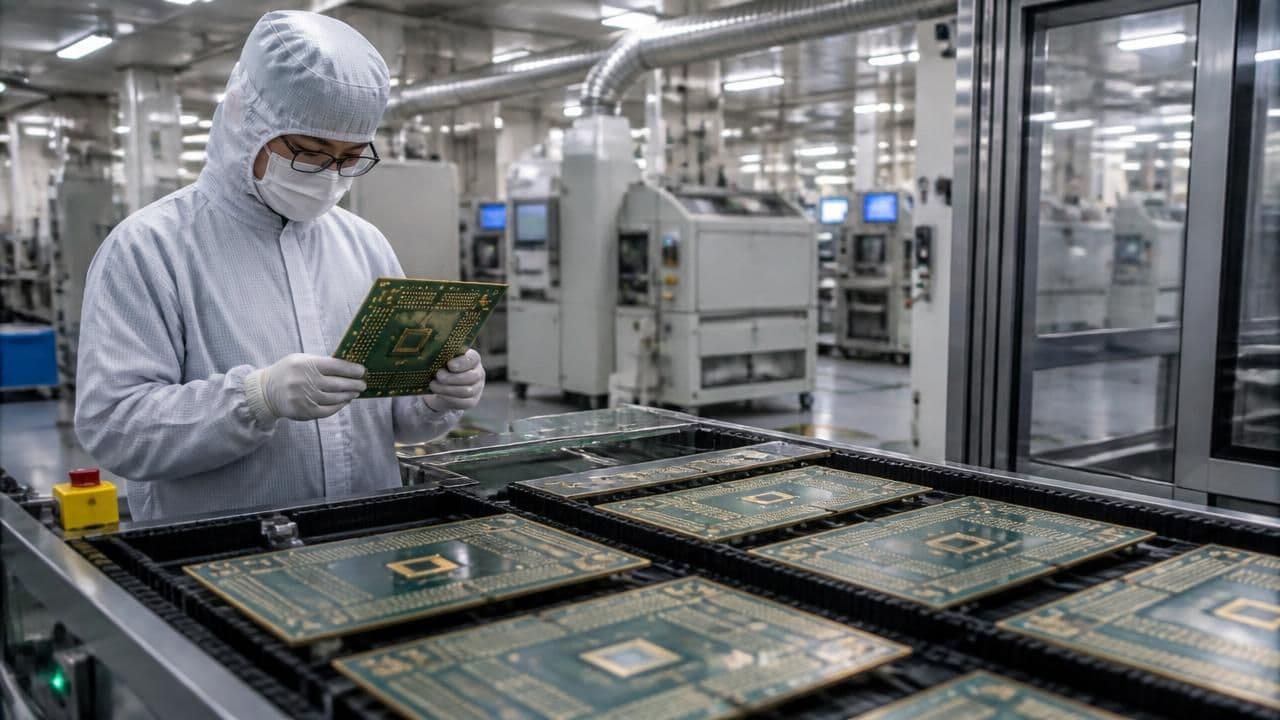
Semiconductor companies, the backbone of the AI revolution, are experiencing the whiplash most acutely. SK Hynix, a key memory-chip supplier to Nvidia, reported record profits on robust AI chip demand—but missed forecasts, sending its shares down 10 percent. Samsung similarly flagged a 19-fold jump in quarterly profit, yet its stock slumped as investors worried the AI boom may stall.
The sell-off has swept across U.S. and Asian markets. The BBC reports chip stocks sliding in both regions as AI jitters rattle investors. Oracle, despite its cloud and AI ambitions, dragged the Nasdaq down even as the Dow and S&P 500 recorded new closing highs. The divergence suggests a market split between AI winners and losers—or perhaps between those believed to have durable AI revenue streams and those merely riding the hype.
Bubble or Foundation? Divergent Views
Not everyone is bearish. Some analysts argue that the spending, while massive, is a rational response to genuine demand. Amazon and Alphabet have shown strong earnings in their core cloud businesses, and the Infrastructure as a Service (IaaS) market is growing rapidly. The Wall Street Journal notes that Big Tech is spending more than ever on AI and it's still not enough, implying that the investment is necessary to stay competitive.
But others see the seeds of a crash. The juxtaposition of record stock market closes with plunging chip shares and widening credit spreads suggests a market grappling with conflicting signals. As one Financial Times headline put it, "Chip stocks tumble as AI sell-off deepens." The question is whether this is a healthy correction or the beginning of a sustained downturn.
"It's going to be really bad," one anonymous Silicon Valley insider told the BBC, capturing the growing dread about an AI bubble.
What to Watch Next
All eyes are now on Nvidia, whose earnings report is imminent. Investors are already worried about whether the company can justify its valuations, and a disappointing guide could trigger a broader sell-off. The next week also brings earnings from Microsoft, Meta, and Amazon, which will provide a clearer picture of how AI spending is impacting profitability.
Beyond earnings, bond markets will be a key barometer. If credit spreads continue to widen, it could signal that the era of easy money for AI is ending. The Federal Reserve's stance on interest rates, and the trajectory of the U.S. deficit, will also play critical roles.
For now, the AI revolution remains a tale of two markets: one where companies are spending as if there is no tomorrow, and another where investors are slowly waking up to the bill. Whether that bill comes due remains to be seen, but the jitters are undeniably growing.