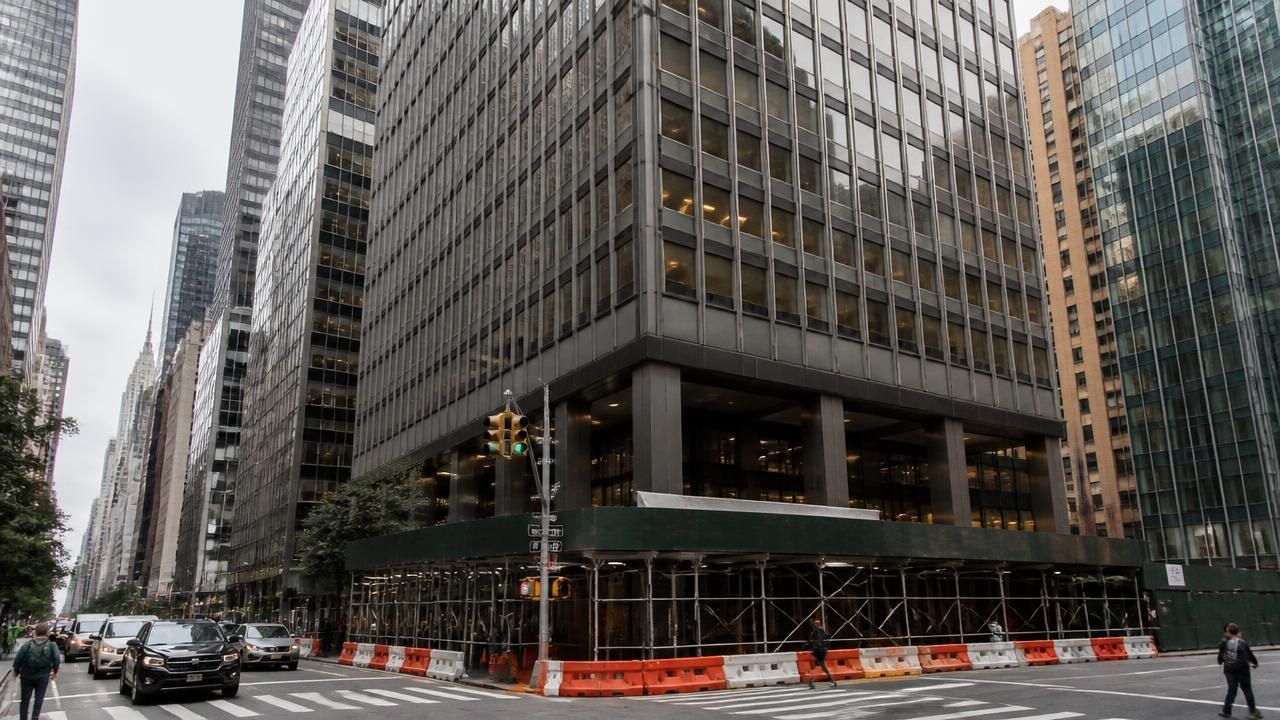
New York City has ordered a halt to construction at yet another office-to-residential conversion project, this time at 750 Third Avenue in Midtown Manhattan, marking the third such stop-work order in recent weeks following a near-collapse at the former Pfizer headquarters downtown. The New York City Department of Buildings (DOB) issued a partial stop-work order on certain floors of the 41-story tower, citing concerns over steel column stability, according to multiple sources including The New York Times and The Real Deal.
The move comes on the heels of a more dramatic incident at 222 Broadway in the Financial District, where work was paused earlier this month after a steel column buckled during the conversion of the former Pfizer building into luxury apartments. That project, developed by Nathan Berman’s MetroLoft in partnership with David Werner, required street closures and emergency stabilization efforts. The DOB has since launched a citywide inspection sweep of all active office-to-residential conversions, with inspectors descending on job sites to check for structural integrity.
A Growing Pattern: Three Stops in Three Weeks
The 750 Third Avenue project, owned by a joint venture including GFP Real Estate, is the latest to face scrutiny. The stop-work order applies to floors where new steel columns are being added to support residential loads. Sources told Bisnow that the DOB is concerned about the adequacy of connections between existing and new steelwork. This follows similar actions at 222 Broadway and an earlier halt at another site (the former Pfizer building itself).
According to The Wall Street Journal, the DOB is taking a hard line after the 222 Broadway incident, which shut down several city blocks for days as engineers worked to stabilize the building. Bloomberg reported that streets were reopened only after temporary shoring was installed. The near-collapse has sent shockwaves through the real estate industry, which has been banking on office-to-residential conversions as a solution to Manhattan’s high office vacancy rates and housing shortage.
The Pfizer Building: A Wake-Up Call
The 222 Broadway tower, formerly Pfizer’s global headquarters, was being converted into 1,200 rental apartments by MetroLoft and partners. During demolition work, a steel column buckled, causing a section of the building to shift. The incident prompted an evacuation of nearby buildings and closed surrounding streets. Crain’s New York Business reported that the developer said a new addition caused the structural problems, but the DOB cited unsafe conditions. The engineer of record, Robert Silman Associates, is under investigation.
“The safety of construction workers and the public is our top priority,” a DOB spokesperson told CNN. “We will not allow work to proceed until we are confident that these conversions can be done safely.”
The DOB’s sweep has now affected three major projects. According to Propmodo, the pace of office conversions in Manhattan is slowing as developers face higher scrutiny and costs. The Real Deal noted that Nathan Berman, dubbed the “conversion king,” is facing a crisis as his flagship project is stalled.
How Different Outlets Frame the Story
The coverage from various news organizations reflects differing emphases. The Wall Street Journal and New York Times focus on the regulatory response and the specific engineering issues, while Bloomberg highlights the economic implications for the conversion pipeline. CNN and Gothamist emphasize public safety and the dramatic evacuation. Trade publications like Bisnow and Crain’s dig into the developer relationships and project financing. MSN and Insurance Journal provide straightforward updates, while The Real Deal offers critical behind-the-scenes details on the 222 Broadway buckle.
Notably, several sources (Crain’s, Business Journals) suffered access-denied errors, but their headlines confirm the trend. The overarching narrative is clear: New York City is cracking down on office conversions after a near-disaster, with inspectors checking every active site for similar risks.
Historical Context: Office Conversions in New York
Office-to-residential conversions have been a growing trend in Manhattan since the pandemic, as companies downsize space. The city has incentivized such conversions through tax breaks and zoning changes, hoping to create much-needed housing. However, adapting office towers designed for low occupancy loads to residential use often requires extensive structural modifications, including adding new steel columns and reinforcing floors.
Structural engineer Douglas Weeks, speaking to The Real Deal, noted that “converting a high-rise office building is one of the most complex structural challenges in construction.” The recent stops suggest that some projects may have cut corners or that the engineering assumptions were faulty.
What Happens Next?
The DOB has required the developers of 750 Third Avenue and 222 Broadway to submit structural plans and analysis proving the buildings are safe before work can resume. Meanwhile, the city is reviewing all active conversion permits. According to a source quoted by WSJ, this could delay dozens of projects by months or years.
For the housing market, the slowdown may exacerbate supply constraints. Manhattan’s rental market is already tight, and these conversions were expected to deliver thousands of units. For developers, the cost of delays and retrofits could eat into profits, potentially making some projects uneconomical.
As of late July, the street near 222 Broadway has reopened, and the building is stabilized, but the broader conversion pipeline remains in limbo. The city has not yet announced any new regulations, but the DOB’s heightened enforcement signals a new era of caution.
Expert Views and Data Points
- According to Bisnow, there are currently over 40 active office-to-residential conversion projects in Manhattan.
- The Real Deal reports that MetroLoft had planned to deliver 1,200 units at 222 Broadway by 2026; that timeline is now uncertain.
- The DOB has issued stop-work orders at three sites in July 2025, the most in a single month for conversions.
- Insurance Journal notes that the 222 Broadway incident has prompted insurers to raise premiums for conversion projects.
A Wider Impact
The situation highlights the tension between the need for housing and the risks of adaptive reuse. As the city pushes for more conversions, the DOB’s actions may set a precedent for stricter oversight nationwide. For now, the message from New York is clear: safety comes first, even if it means hitting pause on a key housing strategy.
This story continues to develop. Follow updates as engineering reports are filed and the DOB considers next steps.