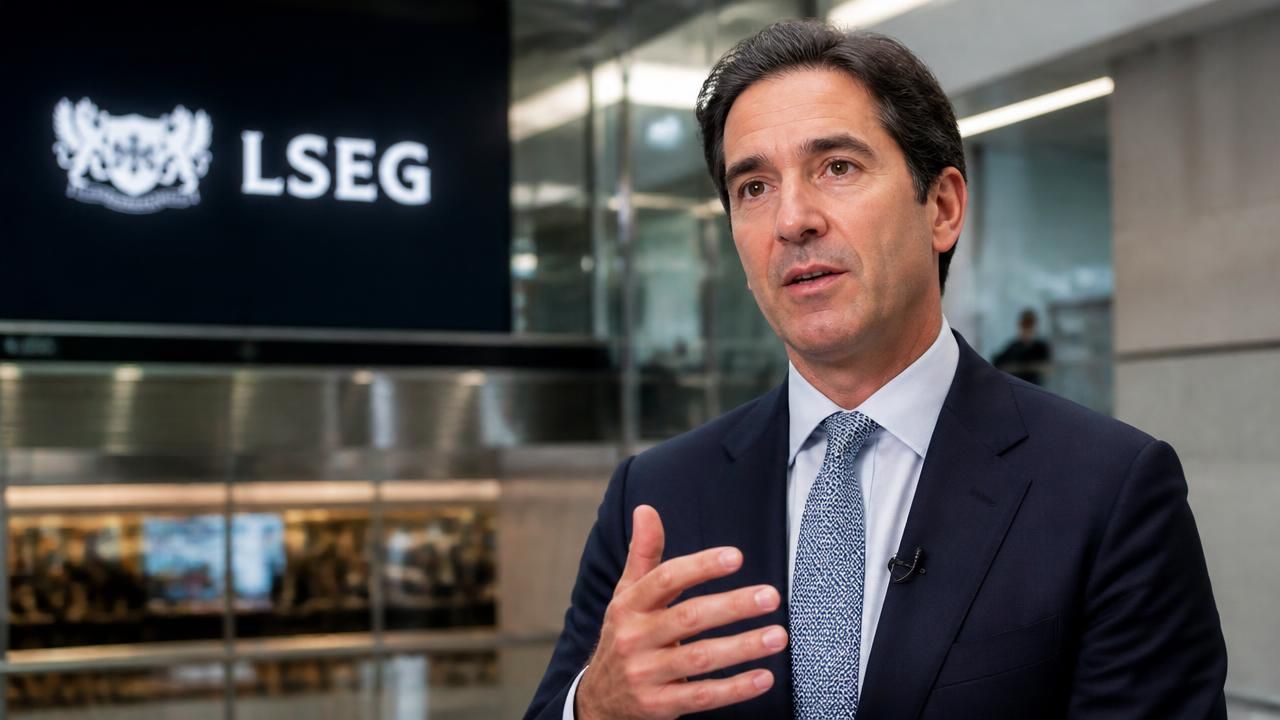
London Stock Exchange Group (LSEG) chief executive David Schwimmer has made a forceful call for the abolition of the UK’s stamp duty on share purchases, arguing the levy is a barrier to trading and listings at a time when the City of London is fighting to retain its status as a global financial hub.
Speaking to Bloomberg Radio, Schwimmer said he would “love to see” the 0.5% tax removed, describing it as “the wrong incentive structure” for investors and companies. His intervention comes as LSEG reported its strongest first-half results since acquiring data giant Refinitiv in 2021, prompting the group to raise its full‑year guidance. The company highlighted growing demand for its AI‑powered data products, which are increasingly used by asset managers and banks.
‘The wrong incentive’
Schwimmer’s comments reflect a long‑running frustration among market participants. Stamp duty, introduced in the 17th century, adds roughly 0.5% to the cost of buying UK shares (though it is not charged on many derivatives and ETFs). Critics say it discourages trading, depresses liquidity, and makes London less attractive compared to New York, where no equivalent tax exists.
“Stamp duty is the wrong incentive structure for people to trade, for people to list, and for people to invest in UK equities,” Schwimmer said. “We underinvest our own pension capital in the domestic market, and removing it would send a powerful signal.”
The CEO noted that UK pension funds allocate a smaller proportion of assets to domestic equities than many peers, a pattern successive governments have tried to reverse with reforms such as the Mansion House Compact. Schwimmer said he sees “signs of receptivity” to further changes, but urged faster action.
London’s IPO drought and green shoots
The debate over stamp duty is playing out against a backdrop of a prolonged slump in London initial public offerings. In 2024, the London Stock Exchange raised just over £1bn from new listings, a fraction of the sums raised in New York or even smaller European bourses. High‑profile companies such as beauty tech group Oddity and fintech giant Revolut have chosen to list in the US, while others like Monzo and Gymshark are rumoured to be eyeing IPO locations.
Yet there are tentative signs of revival. Challenger bank Shawbrook Group has confirmed plans for a London IPO, providing a much‑needed boost for the City. According to reports, the bank is targeting a valuation of around £2bn. Other potential candidates for 2026 include sportswear brand Gymshark, digital bank Monzo, and payments fintech Checkout.com, according to Legal Cheek.
Pisces: A new threat or opportunity?
Meanwhile, the launch of the Private Intermittent Securities and Capital Exchange System (Pisces), a platform for trading private company shares, has split opinion. Some bankers fear Pisces could siphon demand away from the main market, further reducing public listings. Others argue it could act as a stepping‑stone for companies to eventually list. One senior banker told FN London: “If Pisces works well, companies may never feel the need to graduate to a full listing.”
Divergent views on the City’s future
The tone of media coverage varies sharply. Bloomberg and Yahoo Finance give a fairly neutral account of Schwimmer’s remarks and LSEG’s earnings. The Times, in editorial comments, has argued that the LSE remains “vital to the UK economy” but needs reform. The Telegraph takes a darker view, describing the London market’s decline as a “long and sad path to oblivion,” citing the exodus of companies and sluggish IPO activity.
One fintech founder, speaking anonymously to The Times, said his $1bn company would rule out a London float because of “valuation discounts, illiquidity, and the stamp duty tax.” Another, the boss of a beauty technology firm, said she was considering a London listing to “inspire” a rebound but acknowledged the challenges.
Data and historical context
London’s share of global IPO proceeds has fallen from around 20% in the early 2000s to less than 5% in 2024, according to Dealogic. The UK’s stamp duty revenue is roughly £3.7bn a year, a figure the Treasury would be loath to forgo. But Schwimmer and other advocates argue that the dynamic gains from higher trading volumes and more listings would offset the direct loss.
The LSEG CEO also pointed to the success of AI‑powered data products as a bright spot. The group’s data and analytics division, which includes Refinitiv, now accounts for over 70% of revenue. “We are seeing strong demand for our AI tools that help clients make sense of complex markets,” Schwimmer said.
What next?
With a new government in office and a financial services regulation bill making its way through Parliament, the debate over stamp duty is likely to intensify. The City of London Corporation and industry bodies such as the Investment Association have also called for the tax to be reviewed. But any change would require a Budget decision, and the current Chancellor has given no signal that a cut is imminent.
For now, the London market’s fate hangs in the balance. As Schwimmer noted, “The UK has all the ingredients to be a global listings destination – talent, rule of law, time zone, language. But we need the right policy framework to unlock it.”