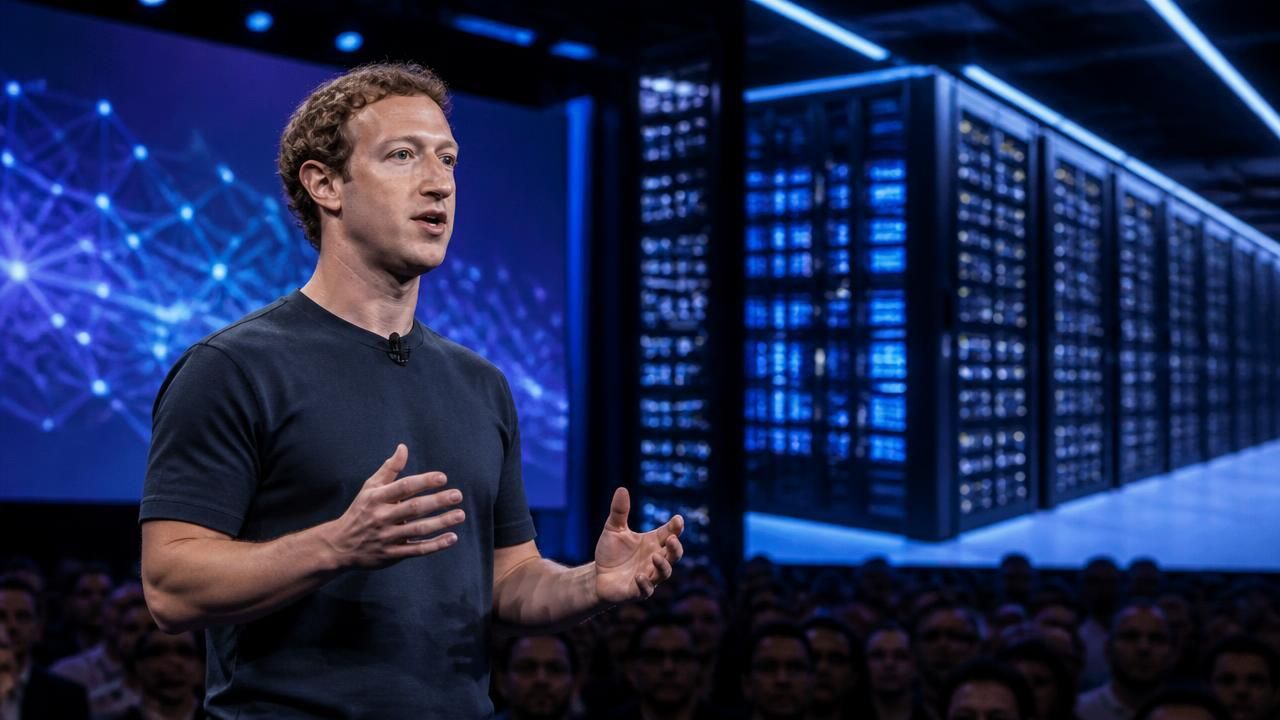
In a sweeping strategic pivot, Meta CEO Mark Zuckerberg has outlined a vision for the company's future centered on personal AI agents, superintelligence, and a massive infrastructure buildout. During a Q2 2026 earnings call, Zuckerberg previewed a future where 'agents can work 24/7 on your behalf to help you achieve your goals and improve your life, your health, your relationships, your finances'. The Verge reported that Meta is all-in on AI, with a particular focus on personal agents that can handle tasks autonomously. According to MSN, Zuckerberg predicts that billions of people will have personal AI agents within five years, a bold claim that signals his confidence in the technology's adoption.
However, the path to this AI-driven future is fraught with challenges. Meta's AI progress has been slower than expected, as acknowledged by Zuckerberg, with thousands of job cuts already implemented or planned. The New York Post reported that Yann LeCun, Meta's top AI scientist, is set to depart to launch his own startup, a move that underscores the turbulence at the highest levels of the company's AI research. Reuters and other outlets have detailed sweeping layoffs: Meta is planning to cut up to 10% to 20% of its workforce, with estimates ranging from 8,000 to 16,000 jobs at risk (In.mashable.com, startuppedia.in, nypost.com). The company's hiring in AI division has even been frozen after a spending spree, according to the Wall Street Journal as cited by The American Bazaar.
At the heart of these drastic measures is Meta's enormous financial commitment to AI. The company has boosted its annual capital expenditure sharply, with forecasts for even higher costs next year. Reuters reported that Meta plans to spend $135 billion on AI infrastructure, including data centers the size of Manhattan, according to The Guardian. The Financial Times (FT) described it as an 'aggressive AI buildout' and revealed that Meta is even building an AI version of Mark Zuckerberg to interact with staff. The New York Times and San Francisco Chronicle confirmed hundreds of layoffs amid huge AI spending, while a $16 billion hit to earnings from Trump's 'Big Beautiful Bill' (as reported by the New York Post) adds further financial pressure.
Differing perspectives emerge across the media. Some outlets frame the story as a visionary leap: The Verge and contentgrip.com highlight the potential of personal agents and commerce tools. Others emphasize the cost: The FT, Reuters, and the NY Post consistently focus on the massive spending and workforce reductions. Notably, Cointelegraph noted that AI agent development hasn't accelerated as expected, adding a note of caution. Industry leaders, as reported by en.wikinews.org, see energy supply as the next hurdle for AI, a challenge that Meta must navigate as it builds colossal data centers. Meanwhile, the formation of the 'Meta Superintelligence Group' and projects like 'Prometheus' (aimagazine.com, builtin.com) signal a race toward superintelligence that rivals Google DeepMind and OpenAI.
The implications are profound. Meta's AI push is reshaping its workforce, with coding jobs being redefined by AI code generation tools (rdworldonline.com). The talent arms race is intensifying, with top researchers like LeCun departing and new hires being frozen in some teams. For consumers, the promise of personal agents could revolutionize daily life, but for investors, the soaring costs raise questions about ROI. As Zuckerberg defends the massive spending on the earnings call, the market remains divided: shares initially surged then faced pressure. With data centers, superintelligence labs, and a new AI-focused identity, Meta is staking its future on AI—a bet that could redefine the tech industry or strain the company to its limits.