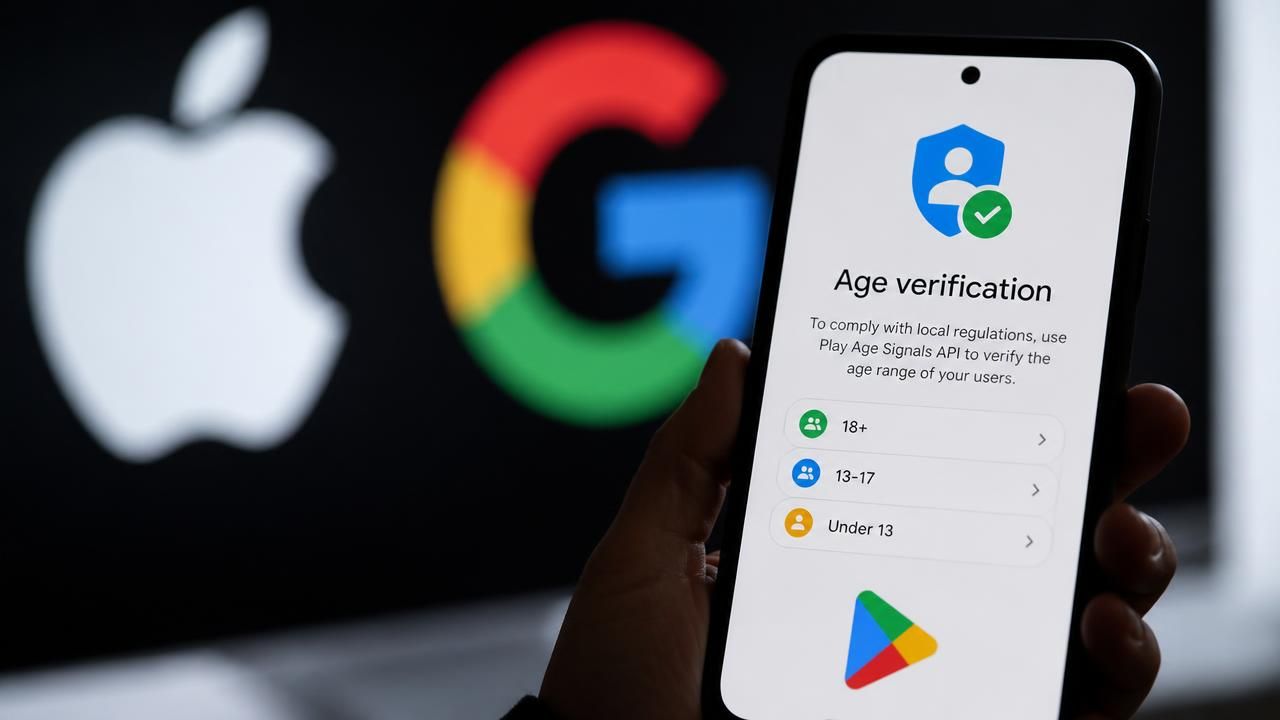
A wave of age verification requirements is sweeping across the globe, forcing major tech platforms to implement systems that determine how old users are—without compromising their privacy. At the center of this shift is Google's Play Age Signals API, a tool that allows developers to infer user age ranges without collecting exact birth dates or requiring ID scans. The system, initially tested in a limited beta, is now expanding to more regions, as reported by Ars Technica and confirmed on Google's own blog.
The impetus for these changes comes from a flurry of new laws. In the United States, Texas Governor Greg Abbott signed a law requiring age verification on app stores, as covered by Cyprus Mail and AppleInsider. Apple and Google have both stated they will reluctantly comply, with Apple detailing measures for developers. Utah became the first state to pass an app store age verification bill earlier this year, according to The Verge and Consumer Affairs. Meanwhile, Europe is moving forward with its own regulatory framework: the EU's Digital Services Act (DSA) includes age assurance requirements, with a 2026 deadline for certain provisions, as noted by PPC Land. The UK is also exploring on-device age checks and nude image blocking, as reported by TechRadar and The Stack.
Google's approach, detailed on its blog, relies on existing infrastructure like Family Link—the company's parental control app—to allow parents to set age ranges for their children's managed accounts. Developers can then use the API to tailor content appropriately, without accessing the child's actual age. Google emphasizes that the system is privacy-preserving because it does not require an ID or selfie. Instead, it uses dynamic ranges that update as the child grows.
But not everyone is convinced. The Electronic Frontier Foundation (EFF) has long warned that age gates create new privacy risks and can lead to surveillance. In a recent article titled "So, You've Hit an Age Gate. What Now?", the EFF argues that mandatory age checks could force users to surrender sensitive data, and that the technology often fails to distinguish between privacy and paternalism. BuiltIn echoes these concerns, questioning the cost of age verification to user anonymity.
Industry reactions are mixed. Some companies, like Instagram, are testing AI-powered age verification using facial analysis and behavioral signals, as reported by AdNews Australia. YouTube is also using AI to estimate age based on browsing history, according to Mashable. However, these methods have drawn criticism for potential inaccuracies and bias. A Stanford study (via Stanford News) exposed privacy risks in AI chatbot conversations, highlighting how even anonymized data can be exploited.
Europe's approach is further dividing tech giants. Euractiv reports that the EU's push for age verification is creating a schism: some companies favor centralized systems that rely on government-issued credentials, while others back decentralized, privacy-first solutions. Google has partnered with Sparkasse, a German bank, as a national credential partner for EU age assurance, as announced on its blog. Critics, however, argue that such partnerships create a dependency on a few large entities, as reported by Ghacks.
Meanwhile, in Asia, experts in Malaysia advocate for privacy-preserving methods over mandatory national ID submissions for age checks on social platforms, as covered by Yahoo News. In Australia, ConnectID and k-ID have partnered to boost child safety on gaming sites (ChannelLife Australia). These examples illustrate the global and fragmented nature of the age verification landscape.
From a technical standpoint, the methods vary widely. Google's API uses signals from user activity and account settings. Apple's system, described in its developer documentation cited by AppleInsider, leverages device-based checks. Both companies are responding to laws like Texas' HB 18, which requires app stores to verify ages before allowing downloads of certain content. The laws are part of a broader trend to protect children online, but they also raise questions about how such systems might affect adults' privacy.
Privacy advocates urge caution. The EFF's piece offers practical advice for users encountering age gates: use browsers with privacy features, avoid sharing unnecessary information, and consider using payment methods that don't require ID. Infosecurity Magazine highlights the openness debate, noting that Google's introduction of developer verification could impact the open Android ecosystem.
Looking ahead, 2026 looms large for digital businesses. Lewis Silkin's analysis (via Lewis Silkin) outlines what companies operating in the UK and EU need to know: compliance will require robust age assurance mechanisms that balance privacy with legal obligations. NFCW reports that Google is also exploring the use of digital driver's licenses for age verification, a move that could standardize the process but also centralize identity data.
As age verification becomes the new normal, the tension between safety and privacy will only intensify. For now, Google and Apple are positioning themselves as responsible gatekeepers, but critics warn that the infrastructure being built could easily be repurposed for broader surveillance. The debate over who controls the gates—and what they do with the keys—is far from over.