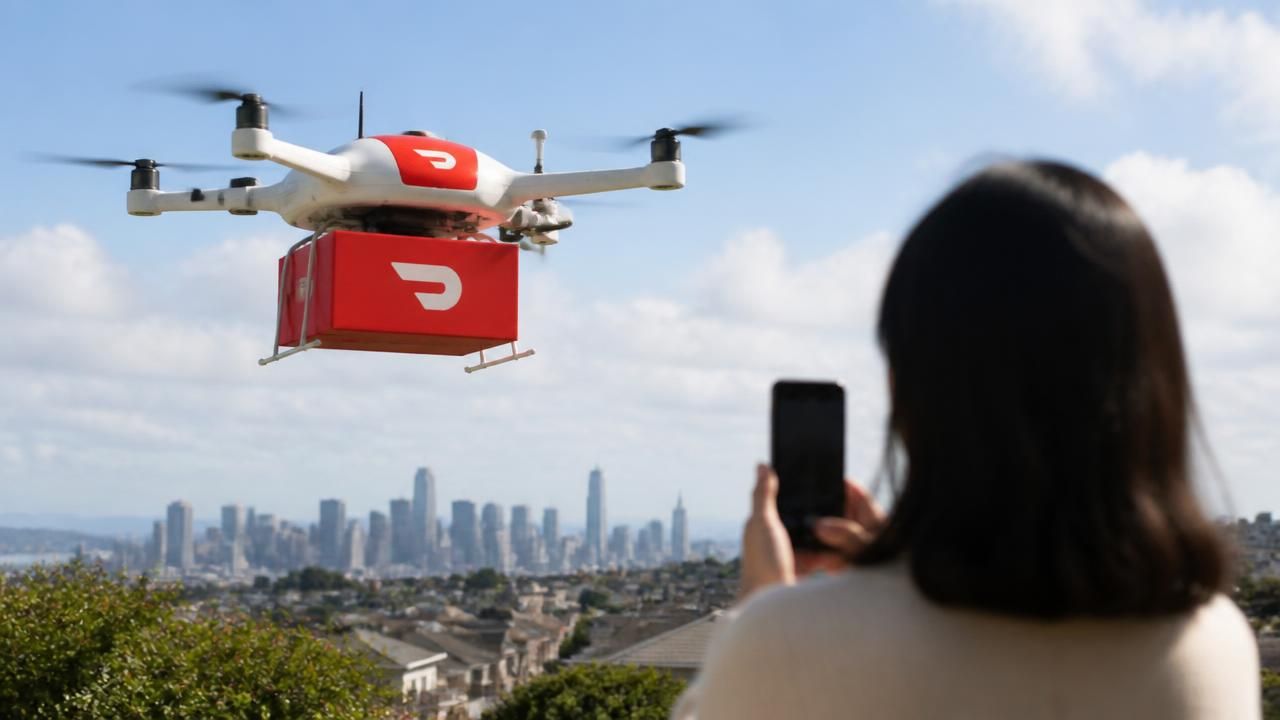
DoorDash, the largest food delivery app in the United States, is taking to the skies. The company announced the launch of DoorDash Air, a new drone delivery division, after securing a Part 135 air carrier certification from the Federal Aviation Administration (FAA). This designation allows the company to operate drones for commercial package delivery, joining the ranks of Alphabet’s Wing, Zipline, and Amazon.
The move marks a significant escalation in the competitive drone delivery landscape, with DoorDash moving from partner to operator. Previously, the company collaborated with Alphabet's Wing on pilot programs in Dallas-Fort Worth, Virginia, and Australia. Now, DoorDash plans to build its own drones and expand its network through partnerships—notably with Flytrex, an Israeli drone delivery company, for operations in the Dallas-Fort Worth metroplex.
FAA Green Light and Operational Scope
The FAA's Part 135 certification is a crucial regulatory hurdle that permits DoorDash to conduct drone deliveries beyond visual line of sight, a capability long sought by the industry. According to sources, DoorDash’s certification covers small package deliveries in designated airspace. The company has not disclosed the specific range or payload capacity of its drones, but early deployments will focus on suburban areas with lower air traffic density.
In Dallas-Fort Worth, DoorDash and Flytrex are launching all-day drone deliveries from “dozens” of restaurants in the towns of Frisco and Little Elm, according to a report from Dallas Innovates. The service initially covers a limited radius, with orders delivered via tethered drones that lower packages to the ground. This partnership allows DoorDash to tap Flytrex’s proven technology while developing its own in-house drone platform.
San Francisco Mission: Controversy and Community Clash
Meanwhile, in San Francisco, DoorDash’s drone ambitions have ignited a familiar battle between tech companies and local activists. The company won an appeal to test drone deliveries in the Mission District, a densely populated neighborhood with a history of resistance against tech incursion. The San Francisco Chronicle reported that the Mission has long clashed with tech firms over gentrification, privacy, and noise. The Teamsters union, representing delivery drivers, has voiced strong opposition, arguing that drones threaten jobs and could disrupt the neighborhood.
“DoorDash’s appeal victory is a blow to community efforts to keep drone testing out of the Mission,” said a union spokesperson in a statement. “We will continue to fight for jobs and neighborhood safety.” The company, however, maintains that drones will complement human drivers, not replace them, and that deliveries will be carefully managed to minimize disruption.
Industry Context and Competitive Landscape
DoorDash’s entry into drone delivery comes as the industry accelerates. Alphabet’s Wing has completed tens of thousands of deliveries in the U.S. and Australia, while Amazon Prime Air recently received expanded FAA approval. According to a report by Klover.ai, DoorDash is also leveraging artificial intelligence to optimize route planning and predictive analytics, further integrating autonomous systems into its logistics network.
The Progressive Grocer noted that the Dallas-Fort Worth launch focuses on food delivery, but DoorDash Air could eventually expand to other categories like convenience items and small packages. Analysts suggest that drone delivery could reduce costs by up to 30% in the last mile, a critical factor as DoorDash faces pressure from rivals like Uber Eats and Grubhub.
Historical Background
DoorDash’s drone journey began in 2021 with small-scale tests in partnership with Wing. The company filed for its own FAA certification in 2023, signaling a shift toward independence. The Part 135 certification process is rigorous, requiring demonstrated safety, reliability, and communication protocols. Sources indicate that DoorDash completed extensive test flights in rural Texas before seeking approval.
Expert Views and Data Points
Drone delivery experts remain cautious about scalability. “The FAA certification is a major milestone, but limited range and weather conditions will restrict operations initially,” said Dr. Rachel Lin, an aviation analyst at MIT. “DoorDash’s hybrid approach—partnering with Flytrex while building in-house—gives it flexibility.”
Data from the Dallas-Fort Worth tests show that drone deliveries can cut transit times by 40% compared to ground vehicles in low-traffic zones. However, adoption faces public skepticism: a 2024 Pew survey found that 54% of Americans are uncomfortable with drones flying over their homes.
Implications for the Future
If DoorDash Air succeeds, it could reshape urban logistics, particularly in sprawling suburbs where drone delivery is most efficient. The company’s ability to navigate community opposition and labor union challenges will be critical. In San Francisco, the Mission District case may set a precedent for how cities regulate drone operations in dense neighborhoods.
For now, DoorDash is moving forward with a phased rollout. The company has not announced a timeline for San Francisco deliveries but plans to expand in Texas throughout 2025. As one industry analyst noted, “DoorDash is betting that the sky is the limit—but only if they can keep the ground from pushing back.”