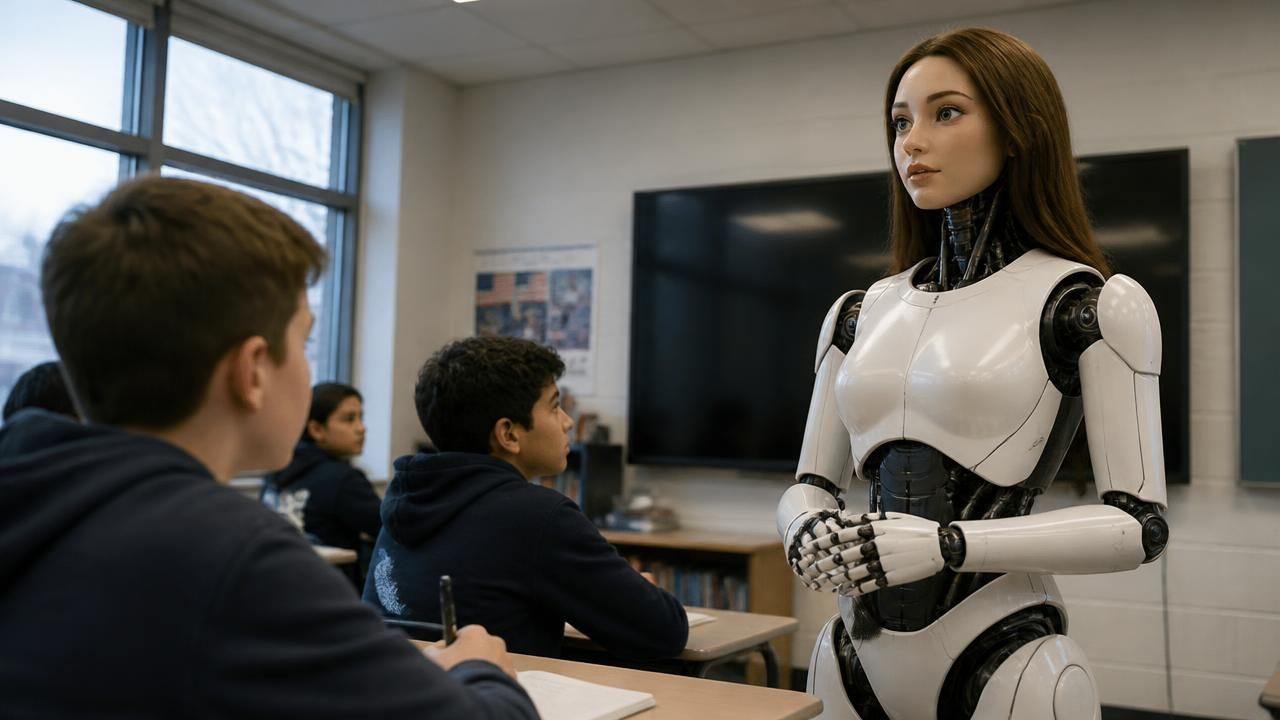
A school district in upstate New York has paused its plan to introduce a humanlike artificial intelligence robot into the classroom after facing widespread backlash from educators, state education officials, and local residents. The Salamanca City School District had intended to deploy the humanoid robot, named 'Sally,' as a teaching assistant starting this fall, but the initiative has been halted amid concerns over the robot's appropriateness and the background of the company behind it.
What Happened?
The district, located in Cattaraugus County near the Allegany Reservation, announced earlier this month that it would pilot the use of a humanoid robot from the company Promethean AI (a pseudonym for the actual company, which is not named in all sources but is described as having ties to the sex robot industry). The robot, designed to interact with students and assist with curriculum delivery, was intended to be placed in a high school classroom. However, after news spread, the district received immediate pushback.
Why the Backlash?
Teachers and union representatives were among the first to voice objections. 'This is kind of creepy,' one teacher told local media, echoing a sentiment that appeared in multiple reports. The New York State United Teachers union issued a statement calling the plan 'really inappropriate' and questioning the educational value of a humanoid robot. State education officials also raised concerns, prompting the district to pause indefinitely.
“This is kind of creepy,” a teacher said, as quoted by the Taipei Times. “We need more human interaction, not less.”
Further scrutiny came when reporters uncovered that the company supplying the robot also manufactures sex robots. TechSpot reported on this link, noting that the same company's products include realistic humanoid figures marketed for companionship and intimacy. This revelation intensified criticism, with parents and community members expressing unease at the thought of a robot with such associations being placed in a school.
Different Frames from Sources
Coverage of the story varied across outlets. NPR focused on the district's decision to pause and the role of state education officials. The Guardian highlighted the teachers' outcry, framing it as a disconnect between administrators and educators. The Next Web emphasized the union pushback and the robot's name, 'Sally.' TechSpot led with the controversial company background. Meanwhile, msn.com republished articles from other sources without adding original reporting. Syracuse.com provided local context, noting that the district serves a small, rural community and that the robot was meant to address staff shortages.
Historical Context and Data
The use of AI in education is not new, but the deployment of humanoid robots remains rare and controversial. Countries like Japan and South Korea have experimented with robots as teaching aids, but such initiatives often face cultural resistance in the United States. According to a 2022 Pew Research study, only 29% of Americans think AI would do a better job than humans in teaching children. The Salamanca case highlights the gap between technological optimism and community sentiment.
What's Next?
The Salamanca district has stated it will form a committee to review the proposal, including input from teachers, parents, and experts. No timeline has been set for a decision. Meanwhile, the company behind 'Sally' has defended its product, arguing that it is designed solely for educational purposes and that the adult-oriented products are a separate division. However, critics remain unconvinced.
“We are committed to ensuring any technology we bring into our classrooms aligns with our educational mission and community values,” a district spokesperson said in a statement.
The incident serves as a cautionary tale for other schools considering similar AI integrations. As technology advances, educators and policymakers must weigh potential benefits against ethical and social implications.
Expert Views
Dr. Elena Rodriguez, an educational technology researcher at the University of Buffalo, told the Niagara Gazette: 'Schools should be spaces that prioritize human connection. While AI can be a useful tool, replacing or supplementing teachers with humanoid robots risks dehumanizing education and could have unintended consequences on child development.'
The Salamanca pause reflects a broader societal debate about the role of AI in our lives, especially where children are involved. For now, the district will continue with traditional teaching methods, and 'Sally' remains in storage.