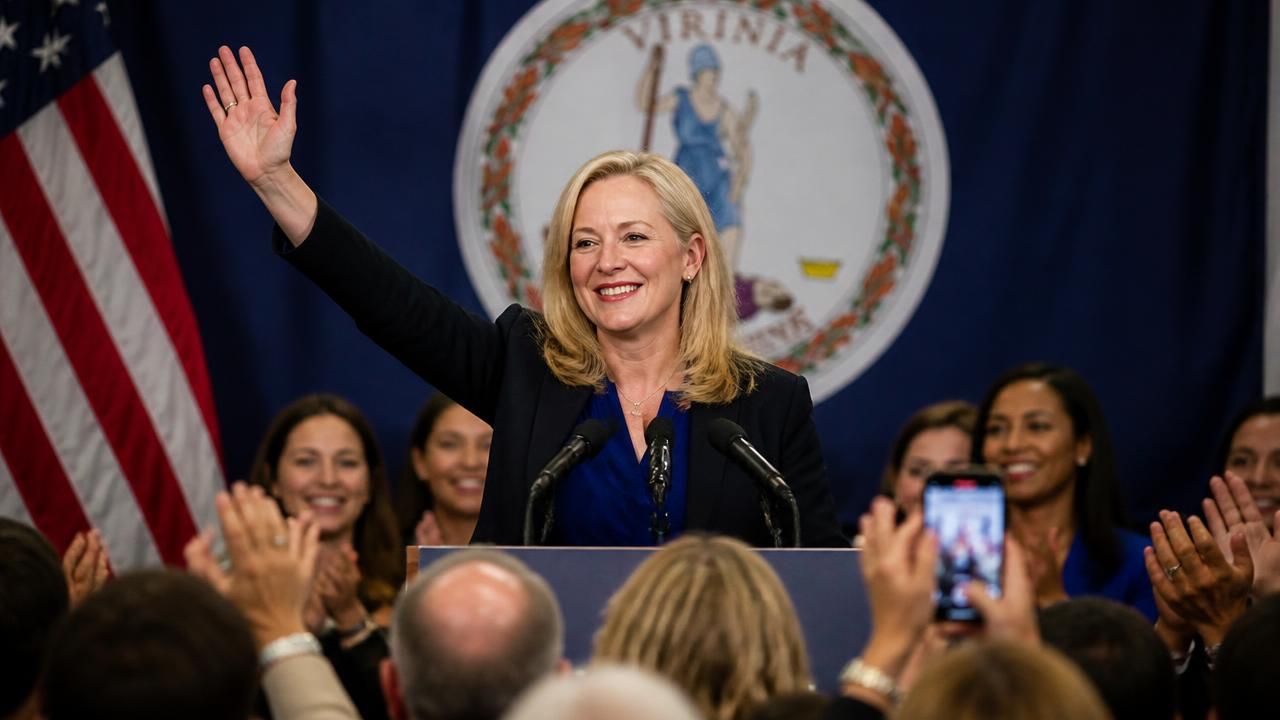
In a significant political development, Democrats are advancing a dual narrative: a call for sweeping anti-corruption reforms at the national level and a pragmatic victory in Virginia that underscores voter frustration with the cost of living and government inefficiency. The convergence of these messages suggests a party seeking to rebuild trust after years of norm-shattering behavior by former President Donald Trump.
Spanberger's Virginia Victory: A Mandate for Change
Abigail Spanberger, a Democrat and former CIA officer, won the Virginia governor's race with a campaign centered on government efficiency and the cost of living. Her victory, reported by VPM.org, was framed as a repudiation of Republican governance and a call for practical solutions. Spanberger's messaging prominently featured 'DOGE' – the Department of Government Efficiency – a concept that resonated with voters tired of bureaucratic waste. According to exit polls, the economy and cost of living were top concerns for Virginians, and Spanberger's platform directly addressed these issues.
“Spanberger’s win is a clear signal that voters want leaders who will focus on the basics: making government work and bringing down costs,” said political analyst Dr. Karen Reynolds of the University of Virginia.
National Democrats: Ethics Reform as a Check on Trump
Meanwhile, NPR Politics reports that Democrats in Washington are making the case that the time is ripe for anti-corruption reforms. The article notes: 'Democrats are making the case that now is the time to tackle anti-corruption reforms — to serve as a check on Donald Trump and to overhaul a system voters say is co-opted against their interests.' This framing reflects a strategic shift: rather than simply opposing Trump, Democrats are offering a positive vision of government accountability.
The push includes proposals to strengthen ethics rules, limit executive power, and increase transparency in campaign finance. Proponents argue that these measures are necessary to restore faith in democratic institutions, which have been eroded by investigations into Trump's business dealings and his refusal to divest from his properties while in office.
Different Perspectives on Reform
While Democrats unite behind the reform agenda, the approach varies by audience. National Democrats emphasize the need to repair the damage wrought by the Trump administration, while local campaigns like Spanberger's focus on tangible benefits for voters. The NPR piece highlights that voters across the political spectrum feel the system is rigged against them – a sentiment Spanberger tapped into with her promise to 'drain the swamp' of inefficiency.
Republicans, however, have pushed back, arguing that the reform proposals are a political tool to target Trump and limit executive authority. Some GOP leaders have characterized the push as an overreach that would hamstring the government.
Historical Context and Implications
The current push for ethics reform echoes previous efforts following scandals in past administrations. The post-Watergate era saw the creation of the Office of Government Ethics and campaign finance reforms. Today's proposals, if enacted, could similarly transform how government operates. For instance, strengthening the Hatch Act and expanding conflict-of-interest rules could restore norms that were undermined during the Trump years.
Spanberger's victory also carries national implications. As a centrist Democrat in a swing state, her win offers a blueprint for the party ahead of the 2026 midterms. Analysts suggest that her focus on practical governance over partisan battles could energize moderate voters who are disillusioned with both parties.
Looking Ahead
The dual tracks of national reform and state-level pragmatism may define the Democratic strategy moving forward. With Spanberger elevating 'DOGE' as a campaign theme and congressional Democrats pushing ethics legislation, the party is attempting to address voter fatigue with political dysfunction. Whether these messages will resonate as strongly nationwide remains to be seen, but the Virginia results suggest a promising start.
As one voter in Richmond put it, 'I'm tired of the circus. I just want someone to make things work.' That sentiment, echoed across sources, may be the driving force behind both Spanberger's win and the broader reform push.