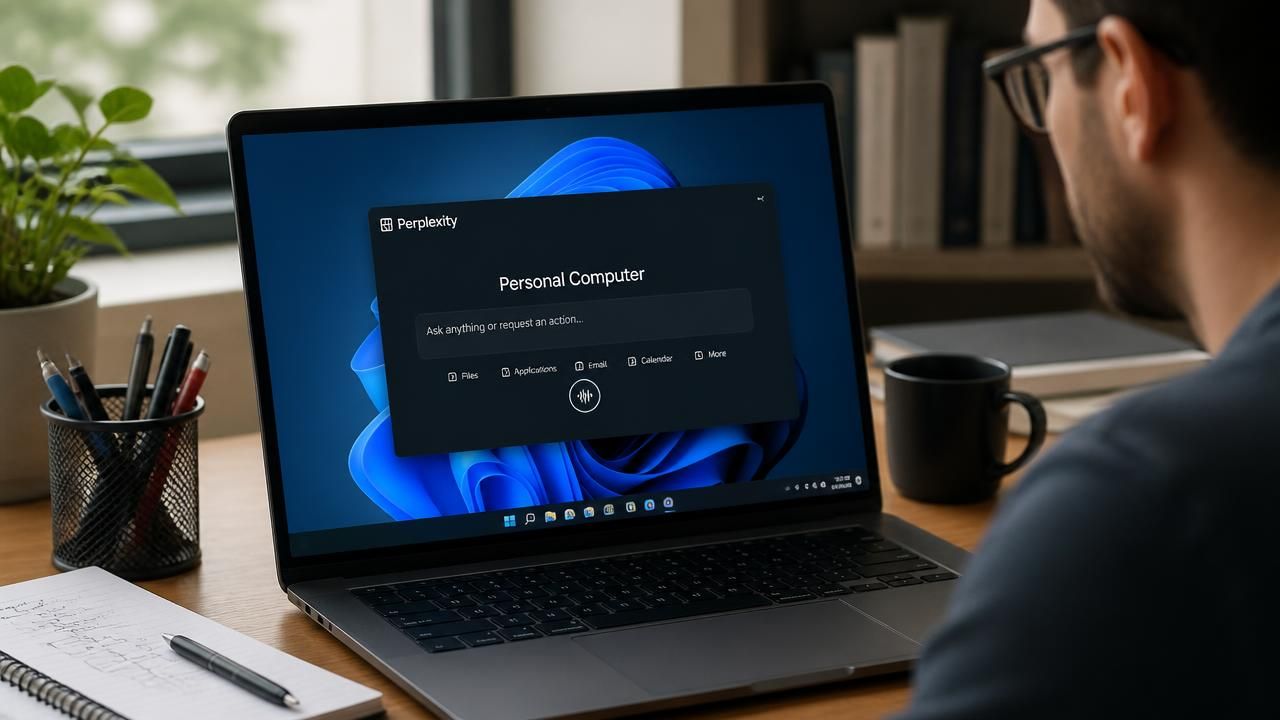
Perplexity AI has taken a major step toward making autonomous AI agents a mainstream reality. The company announced on June 3, 2026, that its Personal Computer tool—an agentic AI system that can act as a “general-purpose digital worker”—is now available for Windows PCs, following its April launch on macOS. The expansion positions Perplexity at the center of a rapidly evolving industry race to bring AI agents to everyday computers, but it also raises significant questions about privacy, security, and the boundaries of machine autonomy.
What Is Perplexity’s Personal Computer?
First introduced in April 2026 for Mac, Perplexity’s Personal Computer is an always-on AI system that runs locally on a user’s machine. It can access local files and applications—such as creating documents, updating spreadsheets, managing emails, and interacting with calendar apps—by interpreting natural language commands and executing tasks autonomously. The tool builds on integrations Perplexity previously launched for Microsoft 365 and Teams in May, but the new Windows version closes the loop, making the agent available on the world’s most popular operating system.
“It’s like having a digital assistant that doesn’t just answer questions—it does things for you,” said Perplexity CEO Aravind Srinivas in a recent interview. “We believe agentic AI will be measured by how many tasks it can complete reliably without human intervention.”
Windows Expansion and Hybrid Inference
The Windows launch is powered by a hybrid local-server inference orchestrator, a system that intelligently routes tasks between on-device processing and cloud servers. This design aims to balance performance and privacy: sensitive data can remain on the machine, while compute-intensive requests are sent to Perplexity’s cloud infrastructure. According to sources at the company, the orchestrator automatically detects the best execution environment based on task complexity and available hardware.
Early adopters have tested the tool with five complex tasks on a Mac, reporting that it successfully automated workflows like generating weekly reports, rescheduling meetings, and even debugging code. The Windows version promises similar capabilities, though some users have noted occasional latency when tasks are routed to the cloud.
Enterprise and Individual Use Cases
Beyond consumer use, Perplexity has rolled out enterprise-focused features, positioning Personal Computer as a productivity multiplier for businesses. The tool can be configured to work with corporate accounts, manage shared spreadsheets, and integrate with custom APIs. A separate enterprise tier offers admin controls, usage analytics, and priority routing.
Perhaps the most striking demonstration of Personal Computer’s potential came from an independent finance techie who claimed to have “cloned” a Bloomberg Terminal—valued at over $30,000 per year—using Perplexity’s platform. The project, which drew both praise and skepticism, involved connecting the AI agent to financial data sources and automating portfolio analysis. “If this works, it could democratize access to Wall Street-level tools,” noted one analyst. However, critics argue that the clone lacks the real-time reliability and regulatory compliance of Bloomberg’s dedicated hardware.
Controversies and Security Concerns
The rapid expansion of Perplexity’s agentic AI has not been without friction. In a notable legal case, a judge ordered Perplexity to block its AI agents from placing orders on Amazon, following complaints from the e-commerce giant that the automated purchases violated its terms of service. The ruling highlights the unresolved question of liability when AI acts autonomously.
Meanwhile, cloud security firm Cloudflare accused Perplexity of “acting like North Korean hackers” by ignoring robots.txt files and other scraping blocks. The company maintains that its agents use standard web access methods and respect user privacy, but the allegations have amplified calls for clearer regulations around AI data collection.
Security researchers have also raised red flags about Perplexity’s new Comet AI browser, a separate product that embeds AI directly into the browsing experience. Tests revealed that Comet fails basic security inspections, with one Windows Central report describing “a perfect trust chain gone rogue.” In response, some enterprises have moved to block all AI browsers from their networks, fearing data exfiltration.
Industry Reactions and the Broader AI PC Push
Perplexity’s moves come as the entire tech industry pivots toward “AI PCs.” Intel, AMD, and Nvidia are all developing hardware and software to support local AI inference. AMD, in particular, has coined the term “Agent Computer” for PCs capable of running autonomous agents like Perplexity’s. Yet Intel admitted in a recent report that “consumers don’t care about AI PCs—yet,” suggesting a gap between industry hype and adoption.
Microsoft has responded by revamping its Edge browser with an experimental “Copilot Mode,” aiming to compete directly with Perplexity’s browser play. Google, too, is secretly embedding a 4 GB AI model into Chrome, raising privacy concerns of its own. Samsung and Meta are also entering the fray with AI-powered browsers and agent tools, making this a fiercely contested arena.
Data Privacy and Ethical Challenges
With great power comes great responsibility—and scrutiny. Privacy advocates have warned that always-on AI agents create new vectors for data misuse. Perplexity claims that its hybrid inference design minimizes data exposure, but security experts remain skeptical. “The concept of an AI that watches everything you do and acts on your behalf is a privacy nightmare,” said one researcher from the Transparency Coalition AI, which published a guide on how to prevent data from being used to train AI.
Perplexity’s Personal Computer has also been integrated into Motorola’s new Razr phones via “Moto AI,” and Samsung announced a partnership at its Galaxy Unpacked event, signaling the company’s ambition to embed its agents across devices.
The Future of Agentic AI
As Perplexity’s Personal Computer expands to Windows, it sets the stage for a new paradigm in computing—one where machines don’t just process commands but anticipate and execute them. The trajectory is clear: AI agents will become as common as word processors. But the road ahead is littered with legal, ethical, and technical obstacles. Whether Perplexity emerges as a leader or a cautionary tale will depend on how it navigates these challenges.
Additional reporting by multiple sources. This article synthesizes information from The Verge, PCMag, Windows Central, Tom’s Hardware, Cloudflare, and others.