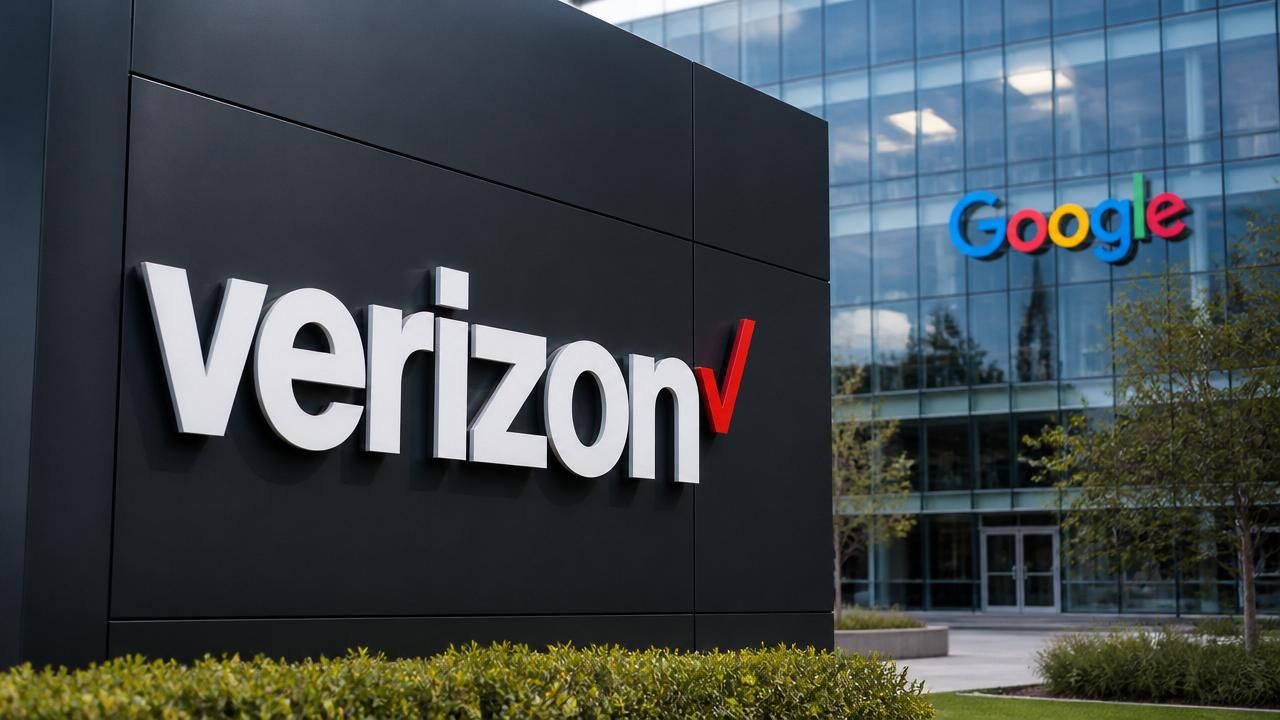
Verizon Communications has announced a landmark deal worth more than $1 billion to provide Google with dark fiber connectivity for its data centers, marking a major push into the AI infrastructure space. The announcement came during Verizon's second-quarter 2026 earnings call, where CEO Dan Schulman also outlined plans to convert legacy copper-filled central offices into small data centers optimized for AI inference workloads.
The deal, part of Verizon's new 'AI Connect' business initiative, is seen as a strategic pivot for the telecom giant, which is leveraging its extensive fiber network to tap into the surging demand for AI compute capacity. Schulman emphasized that this is just the beginning, stating that Verizon expects to announce additional AI-related deals worth 'multiple billions of dollars in revenue over the next several years' by the end of 2026.
The Google Dark Fiber Agreement
Under the agreement, Verizon will provide Google with dark fiber—unlit optical fiber that Google can activate and manage as needed—to interconnect its data centers. This is a critical component for hyperscalers like Google, which need high-bandwidth, low-latency connections to support the massive data flows required for training and running AI models. The deal is valued at over $1 billion, making it one of the largest fiber agreements in recent years.
'Now it really is about, how do you connect data center to data center to assure that you can optimize to maximize the ever-exploding need for compute?' Schulman said during the earnings call.
The CEO highlighted that while demand for data center connectivity is exploding, there is an equal need to power inference models and applications that require ultra-low latency, such as robotics, remote surgery, and autonomous driving. These workloads are increasingly moving to the edge, away from massive centralized data centers.
Converting Central Offices into Edge Data Centers
In parallel with the Google deal, Verizon is tearing out copper wiring from its central offices—the legacy hubs that once housed telephone switching equipment—and converting them into small data centers suitable for AI inference. This move repurposes existing real estate and fiber infrastructure to support edge computing, bringing compute power closer to end users.
Analysts see this as a smart use of assets. 'Verizon is essentially turning its network into a platform for AI,' said industry analyst Jessica Chen. 'By converting central offices, they can offer low-latency services that big cloud providers can't easily replicate.'
Dividend Implications
For income-focused investors, the Google deal and the broader AI strategy have positive implications for Verizon's 6.3% dividend yield. The company's ability to secure long-term, high-value contracts with tech giants like Google provides revenue visibility and supports the sustainability of its dividend. Market reactions were muted but optimistic, with shares edging up following the announcement.
However, some analysts caution that the capital expenditure required for fiber deployments and central office conversions could weigh on free cash flow in the near term. 'The $1 billion deal is a positive, but investors should watch how much Verizon spends to build out this AI infrastructure,' said Michael Torres, a telecom analyst at Morningstar.
Broader AI Strategy and Future Deals
Verizon's 'AI Connect' initiative signals a broader ambition to become a key enabler of the AI economy. By selling dark fiber and edge computing services, the company is positioning itself as a critical infrastructure provider for both hyperscale data centers and emerging edge applications. Schulman hinted at more deals to come, noting that the pipeline is robust and spans multiple industries.
The timing is strategic: AI adoption is accelerating, and demand for data center connectivity is growing at a compound annual rate of over 30%. Verizon's existing fiber routes—many of which were laid years ago—give it a competitive advantage over newer entrants. Additionally, the company's massive network footprint allows it to offer connectivity across the United States.
Different Perspectives on the Story
Coverage of the deal has varied by outlet. Technical publications like Ars Technica focused on the copper-removal and central office conversion aspect, framing it as a visionary move to repurpose legacy infrastructure. Financial news sources like MSN emphasized the impact on Verizon's dividend and the potential for billions more in revenue. Seeking Alpha provided a straightforward business summary, noting the deal's significance for Verizon's growth narrative.
One area of consensus is that Verizon is making a bold bet on AI. The company is not just connecting data centers but also building out the edge infrastructure necessary for real-time AI applications. This dual approach could give Verizon a unique position in the market.
Historical Context and Implications
Verizon has long been a leader in fiber optics, with its FiOS and business fiber services. However, the company has faced challenges in recent years, including stagnant revenue and heavy competition from cable and wireless rivals. The AI boom offers a new growth vector, one that leverages Verizon's core strengths in connectivity.
For Google, the deal ensures reliable, high-capacity links between its data centers, which are essential for training large language models and other AI workloads. As AI models grow in size and complexity, the need for efficient inter-data-center networking becomes critical.
The broader implications for the telecom industry are significant. If Verizon's strategy succeeds, other carriers may follow suit, converting central offices into edge data centers and signing similar dark fiber deals. This could reshape the competitive landscape, blurring the lines between telecom and cloud computing.
What's Next
Verizon expects to announce additional AI-related deals later this year, with Schulman hinting at partnerships across industries such as healthcare, autonomous vehicles, and manufacturing. The company is also investing in AI-native network management tools to optimize its operations.
For now, the Google deal serves as a flagship example of how traditional telecom operators can monetize the AI wave. Whether Verizon can execute on its vision remains to be seen, but the early signs are promising.