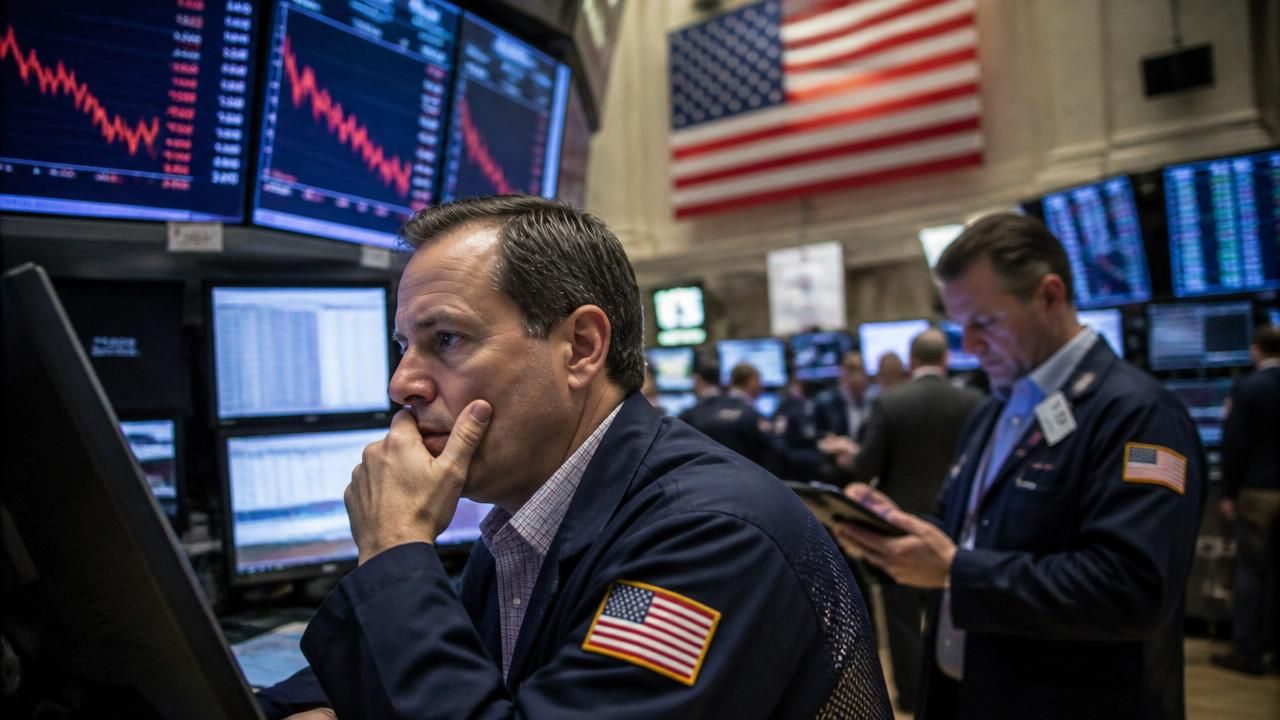
Global financial markets are navigating a complex landscape this week as a temporary halt in U.S.-Iran hostilities pulls oil prices lower, while speculation over the Federal Reserve's next policy move keeps bond yields and equities on edge. The confluence of geopolitical easing, inflationary pressures, and central bank uncertainty has created a volatile environment for traders and investors alike.
Oil Retreats as Geopolitical Tensions Ease
Crude oil prices fell sharply on Monday after the United States announced a pause in its nearly two-week air campaign against Iran, sparking hopes of a de-escalation in the Middle East. Brent crude slid below $80 a barrel, while West Texas Intermediate dropped to around $75, marking a significant retreat from recent highs. The move was driven by expectations that supply disruptions from the conflict may be avoided, though analysts caution that the situation remains fluid.
"The market is breathing a sigh of relief, but the underlying risk of a broader war hasn't disappeared," said Helima Croft, chief commodities strategist at RBC Capital Markets. "Any resumption of hostilities could send oil prices sharply higher again."
According to Reuters, investors are now focusing on a steep draw in fuel stocks, suggesting that demand remains robust despite the geopolitical shock. Meanwhile, ActionForex outlined five key levels to watch in the oil market, warning of a "triple supply shock" that could test global markets.
Treasury Yields Wobble on Fed Uncertainty
U.S. Treasury yields edged lower on Monday as the oil price decline reduced some inflation fears, but the move was capped by persistent expectations that the Federal Reserve will raise interest rates later this year. The 2-year yield fell to around 4.6%, while the 10-year yield held near 4.8%, reflecting a market torn between short-term dovish signals and longer-term hawkish projections.
Bloomberg reported that traders now see roughly a one-in-three chance of a rate hike at the Fed's meeting this week, though many economists argue that a move is unlikely given the uncertainty around the Iran situation. UBS stated in a daily note: "We think a Fed hike remains unlikely," citing the need for more data on the economic impact of the conflict.
However, Minneapolis Fed President Neel Kashkari, in a comment picked up by CNBC, backed a rate increase by year-end, saying that inflation remains too high and the labor market too tight. This hawkish stance has kept the bond market on edge. The Wall Street Journal noted that President Donald Trump has publicly called for lower yields, but the Fed's independence makes such influence uncertain.
Equities Mixed as Tech Volatility Resurfaces
Stock markets showed a mixed picture on Monday. The Dow Jones Industrial Average rose modestly, supported by energy and industrial stocks, while the S&P 500 and Nasdaq struggled as tech shares faced renewed selling pressure. Forex.com attributed the divergence to a rotation out of growth stocks into value, as higher oil prices and rising yields weigh on high-valuation sectors.
"The AI trade is taking a backseat as macro concerns dominate," said one strategist at Saxo Bank. The Nasdaq 100, which had rallied on artificial intelligence optimism earlier this year, paused as investors reassessed the impact of higher input costs and interest rates.
CNBC Africa reported that stocks rose on lower oil prices, with the S&P 500 gaining 0.5% in early trade, but gains were pared as the session wore on. Investopedia's "5 Things to Know Before the Stock Market Opens" highlighted the importance of upcoming Fed minutes and inflation data.
Gold and Dollar React to Shifting Sands
Gold prices fell below $4,100 an ounce, as the prospect of higher interest rates dimmed the appeal of the non-yielding asset. FXEmpire noted that gold is consolidating as the oil shock clouds the Fed's outlook. The dollar index slipped slightly, giving up early gains, as the easing of Middle East tensions reduced safe-haven demand. Economies.com reported that the dollar's decline shifted focus back to the Fed.
Central Bank Calculus: The Iran Oil Shock
TD Economics, in a note titled "Dire Straits: The Central Bank Calculus of the Iran Oil Shock," warned that the conflict complicates the Fed's ability to provide clear guidance. "The oil price spike adds to inflation pressures at a time when the Fed is already struggling to bring it down," the note said. The New York Times reported that the Fed sees higher inflation and lower growth ahead, a stagflationary scenario that limits policy options.
Fed Chair Kevin Warsh, who took office earlier this year, faces an especially challenging debut. Reuters reported that investors are girding for high Treasury yields as Warsh battles inflation. The Fed's own projections, released in June, indicated one more rate hike this year, but the conflict has thrown those estimates into doubt.
Historical Context and Data Points
The current situation echoes the 1970s oil shocks, but with a modern twist: central banks are now more hawkish, and supply chains are still recovering from the pandemic. The Cleveland Fed has published research on the impacts of supply chain disruptions on inflation, noting that energy shocks can amplify price pressures across sectors.
Key data points this week include the Fed's interest rate decision on Wednesday, followed by the release of the minutes from the previous meeting. Forex.com also highlighted the importance of U.S. CPI data, which fell for the first time in six years in the latest reading, adding to the confusion over the inflation trajectory.
Outlook: A Market at a Crossroads
As Financial Sense summed up in its weekly market wrap: "Oil collapse, Fed reset, and AI's growing reach are all colliding." The path forward depends critically on the Iran situation. If the pause becomes a permanent ceasefire, oil prices could stabilize, giving the Fed room to pause. But if hostilities resume, a renewed spike in energy costs could force the central bank's hand.
In the meantime, investors are advised to watch the interplay between oil, yields, and the dollar. As Tekedia put it, "Treasury yields hold steady as U.S.-Iran escalation clouds Fed outlook." The next few days will be crucial in determining the direction of global markets for the rest of the year.