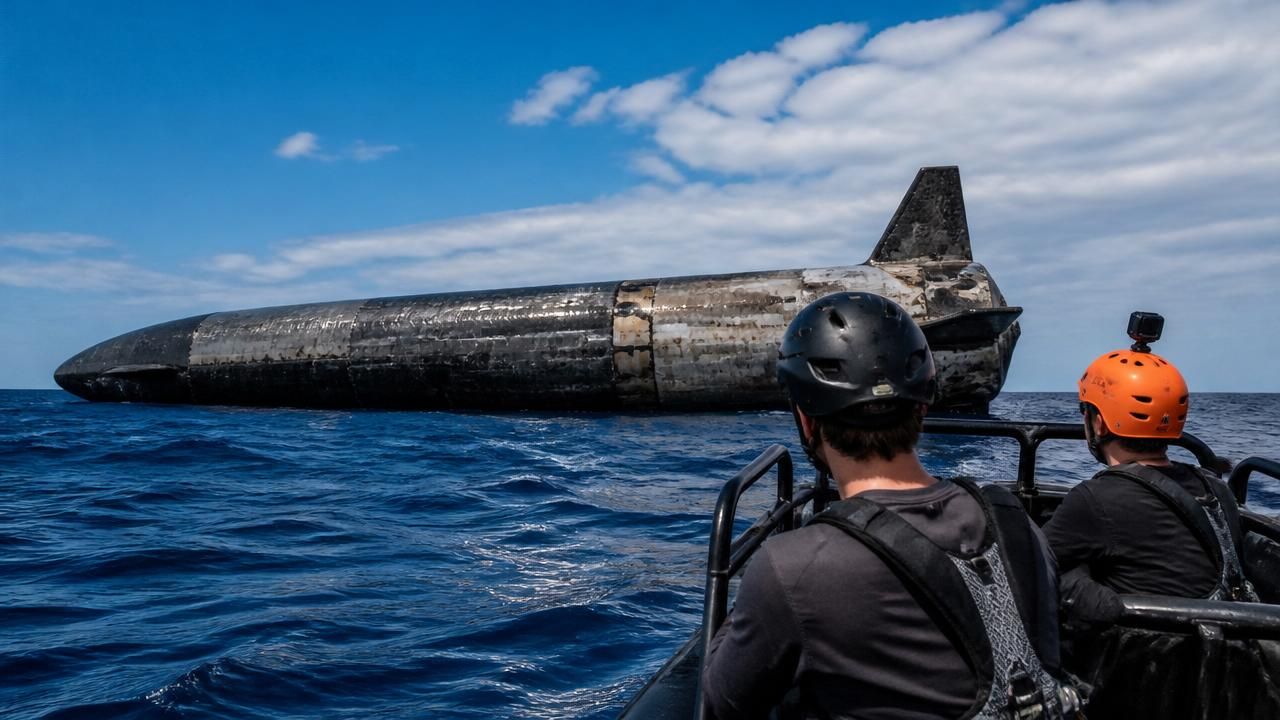
SpaceX achieved a significant milestone on Friday with the 13th full-scale test flight of its Starship vehicle, which ended with an on-target, intact splashdown in the Indian Ocean. The flight, which launched from Starbase in South Texas, took Starship halfway around the world before it gently tipped over and came to rest floating in a remote section of ocean west of Australia. Unlike previous splashdowns that ended in fiery explosions, this time the vehicle remained buoyant, allowing engineers to inspect its heat shield in unprecedented detail.
The successful flight has buoyed SpaceX's confidence. According to founder and CEO Elon Musk, the next Starship launch could take a major leap forward: instead of a water landing, the vehicle may return to the launch site, where mechanical arms on the tower will attempt to catch it as it slows to a hover. This technique, already mastered with the Super Heavy booster, would be a first for the upper stage Starship.
Heat Shield Endurance Test
After the splashdown, SpaceX dispatched drones to examine the heat shield, which consists of more than 18,000 ceramic tiles covering the stainless steel airframe. The tiles endured temperatures up to 2,600° Fahrenheit (1,430° Celsius) during reentry. Early visual inspections suggest the shield performed exceptionally well, a crucial validation for future missions that will require the vehicle to survive multiple orbital reentries.
“The data from this flight is invaluable,” said a SpaceX spokesperson. “We are learning exactly where our thermal protection system needs refinement, and the intact vehicle gives us a physical artifact to study.”
Next Step: Tower Catch
Elon Musk indicated that the company is likely to attempt a tower catch on the next flight, which would send Starship on a longer-range trajectory, possibly reaching low-Earth orbit before returning to the launch pad. This maneuver would be significantly more challenging than the water landings because of the precision required to hover and be grabbed by the “chopstick” arms on the launch tower. SpaceX has already demonstrated this capability with the Super Heavy booster, and Musk believes the same approach can work for the ship.
“We’re going to try to catch the ship with the tower,” Musk said in a statement following the flight. “The ship is in such good condition that we think it’s ready for that next step.”
Progress in Florida
While the Texas test flight captured headlines, SpaceX is also making progress on Starship launch infrastructure in Florida. Sources indicate the company is preparing launch sites at Cape Canaveral and Kennedy Space Center, laying the groundwork for operational Starship missions that could support NASA's Artemis program, commercial satellite deployments, and eventually human missions to Mars.
The Florida updates underscore SpaceX's dual-track approach: rapid iteration in Texas for developmental testing while building operational capacity in Florida for routine launches. This mirrors the company's strategy with Falcon 9, where test flights from Texas paved the way for high-rate operations from Florida.
Broader Implications
The successful 13th flight marks a turning point for Starship. As the world's largest and most powerful rocket, Starship is designed to be fully reusable, with both the booster and ship returning to the launch site for rapid turnaround. Each test flight reduces the risk for future missions, including NASA's planned crewed lunar landing using a modified Starship.
Industry analysts note that the transition to tower catches for the ship will be critical for achieving the rapid reusability needed to lower launch costs. “If SpaceX can catch the ship as reliably as the booster, they will have a fully reusable launch system that could revolutionize space access,” said a space policy expert.
Friday's flight also provided a wealth of data on vehicle dynamics, propellant management, and thermal protection, all of which will inform design changes for future iterations. With the vehicle intact, engineers can conduct detailed inspections and simulations to refine the next build.
What Comes Next
SpaceX has not announced a specific date for the next launch, but given the rapid cadence—13 flights in roughly two years—another test could come within weeks. The company's iterative approach means each flight builds directly on the last, with modifications incorporated quickly. The next major milestone will be the tower catch attempt, which, if successful, would set the stage for orbital missions and eventually human flight.
For now, the Starship team is celebrating a rare clean flight, but the focus remains on the ultimate goal: making humanity multiplanetary. As Musk often says, “We want to reach a point where we can launch multiple times a day, and that requires landing the vehicle on the pad, every time.”