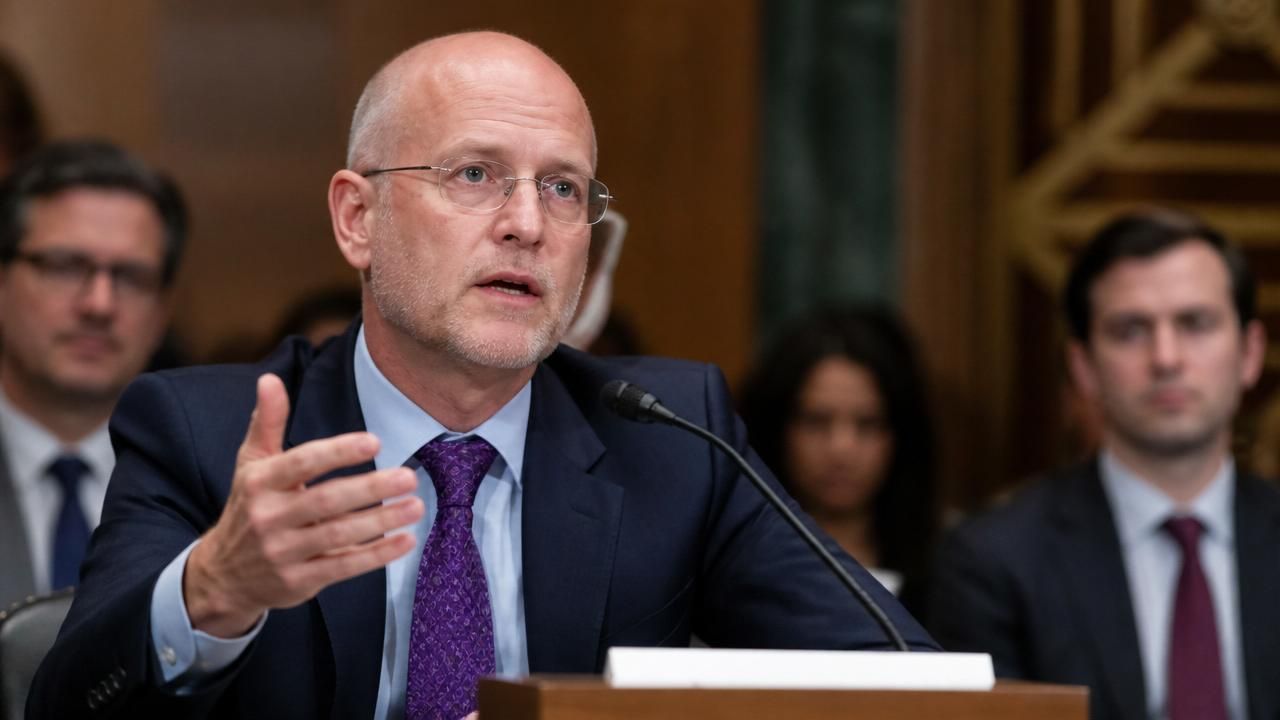
In a series of escalating actions that critics call an unprecedented assault on press freedom, Federal Communications Commission Chairman Brendan Carr has threatened to revoke the broadcast licenses of major networks over their coverage of the Iran war and other content deemed unfavorable to the Trump administration. The moves, which include targeting ABC's late-night host Jimmy Kimmel, reviving rejected complaints against CBS and NBC, and launching a probe into the BBC, have ignited a firestorm of controversy and drawn rebukes from both Democrats and some Republicans.
The Iran War Coverage Controversy
The most direct threat came in early 2025 when Carr warned that broadcasters could lose their licenses if they aired what he called "biased" or "inaccurate" coverage of U.S. military operations in Iran. In a statement, Carr said that the FCC would consider networks' reporting on the conflict when reviewing license renewals. "The American people deserve fair and accurate news coverage, especially during wartime," Carr said. "We will not hesitate to act if broadcasters fail in their public interest obligations."
President Donald Trump quickly endorsed Carr's stance, telling reporters: "Brendan Carr is doing a fantastic job. The fake news media needs to be held accountable. They put our country in danger with their negative stories." The president's backing signaled a coordinated administration effort to pressure news outlets.
However, legal experts and First Amendment advocates warn that such threats are unconstitutional. "The FCC cannot revoke a license based on the content of news coverage," said Lucy Dalglish, a media law professor at the University of Maryland. "The Supreme Court has repeatedly held that broadcasters have First Amendment rights, and the government cannot use its licensing power to punish disfavored speech."
Targeting Jimmy Kimmel and ABC
Earlier in his tenure, Carr targeted ABC after the network briefly pulled Jimmy Kimmel's late-night show following a joke about the president. Carr's intervention led to Kimmel's temporary suspension, sparking widespread condemnation. A bill introduced in Congress, dubbed the "Jimmy Kimmel Protection Act," would allow individuals to sue the FCC chair for First Amendment violations. "This is about protecting free speech from a rogue official who thinks he can silence comedians," said the bill's sponsor, Senator Chris Murphy (D-CT).
ABC has fired back, accusing the FCC of "chilling speech" ahead of the 2026 election. In a formal response to the commission's investigation, ABC's lawyers argued that the probe into comments made on 'The View' violates the First Amendment. "The government cannot use its licensing authority to punish disfavored viewpoints," the network wrote.
Reviving Rejected Complaints
Carr has also revived complaints against CBS and NBC that were previously rejected by his predecessor as "at odds with the First Amendment." These complaints, filed by conservative groups, alleged bias in news coverage. Carr's decision to reopen them suggests a broader campaign to reshape broadcast journalism. "This is a clear attempt to intimidate the media into favorable coverage," said Jane Fonda, whose Committee for the First Amendment issued a statement condemning Carr's actions. "We will not stand by while the Trump administration tries to turn the FCC into a propaganda arm."
Bipartisan Backlash
The threats have drawn unusual bipartisan criticism. Republican Senator Rand Paul rebuked Carr, saying, "The FCC should not be in the business of threatening broadcast licenses over news coverage. That is flagrantly anti-First Amendment." Even some small-government conservatives have called for abolishing the FCC, arguing that the agency's pro-Trump tilt undermines its mission. "If the FCC is going to be used as a political weapon, maybe it's time to get rid of it," wrote conservative commentator Ben Shapiro.
Meanwhile, California Governor Gavin Newsom slammed Carr's actions as "a dangerous overreach" and called on Congress to investigate. The International Press Institute (IPI) also condemned the threats, stating: "The Trump administration's attacks on media freedom are a grave threat to democracy."
Historical Context and Legal Precedent
The FCC's authority over broadcast licenses stems from the Communications Act of 1934, which requires stations to operate in the "public interest." However, the Supreme Court has consistently held that the government cannot condition license renewals on content. In FCC v. League of Women Voters (1984), the Court struck down a ban on editorializing by public broadcasters, reaffirming that "the First Amendment's hostility to content-based regulation extends to the broadcast media."
Nevertheless, Carr and his allies argue that broadcasters have a special responsibility because they use public airwaves. "The First Amendment is not absolute," said Carr in a speech. "Broadcasters who knowingly spread falsehoods endanger national security and betray the public trust." Legal scholars counter that this argument has been rejected by courts. "The government cannot be the arbiter of truth," said First Amendment lawyer Floyd Abrams. "That's the very essence of a free press."
Broader Implications
Carr's war on the First Amendment extends beyond news coverage. He has also targeted inclusive children's television programming, launching an investigation into shows that feature transgender stories, calling them "woke indoctrination." Additionally, he has proposed rules that would allow internet providers to charge hidden fees, a move that consumer advocates say would harm low-income Americans.
The FCC chair's actions have been described by critics as a "grave threat to democracy" and an "unlawful assault on the First Amendment." The U.S. Press Freedom Tracker has documented a surge in government actions against journalists, with Carr's FCC leading the charge. "This is the most dangerous moment for press freedom in modern American history," said Trevor Timm, executive director of the Freedom of the Press Foundation.
As the battle lines harden, all eyes are on the courts. Legal challenges are expected to test the limits of Carr's authority. For now, broadcasters are left navigating an uncertain landscape where the government's power to license could be wielded as a cudgel against disfavored speech. The outcome will shape not only the future of broadcast journalism but the fundamental contours of the First Amendment in the digital age.