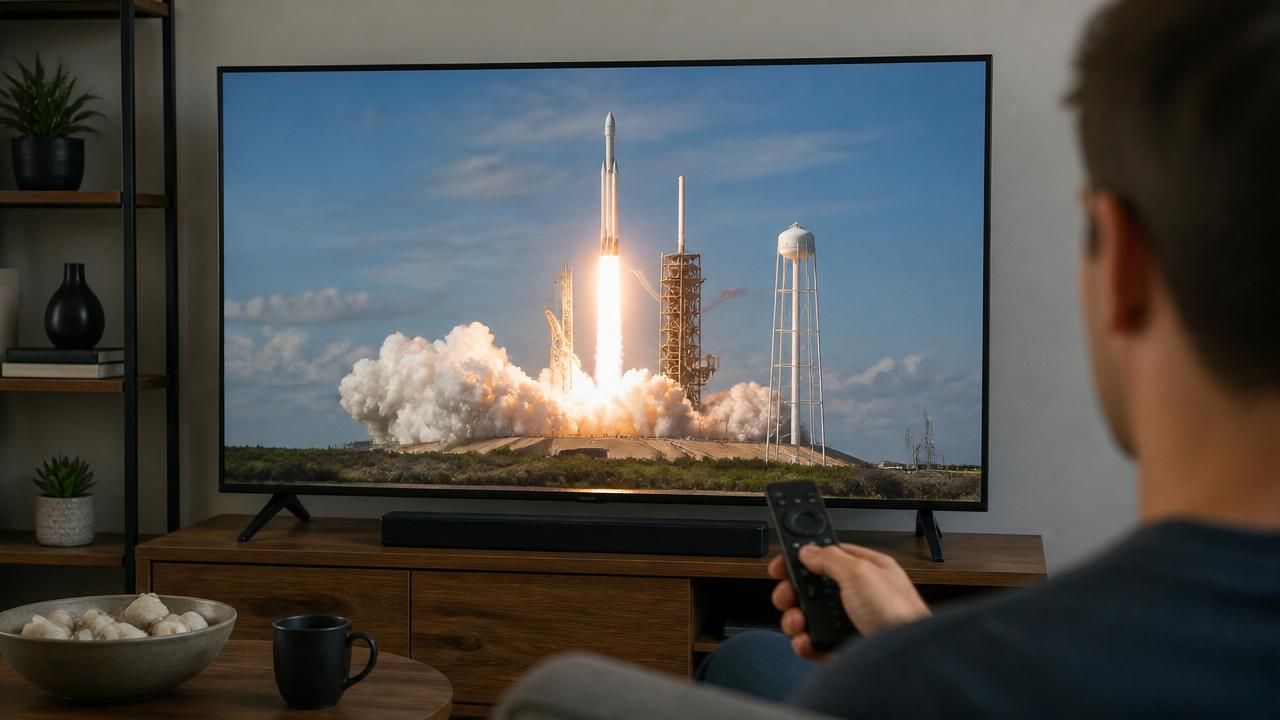
NASA is making it easier than ever for space enthusiasts to follow humanity's return to the Moon. The agency announced Thursday that its free, ad-free streaming service, NASA+, is now available as a FAST (Free Ad-Supported TV) channel on Amazon Fire TV. Fire TV customers can access NASA+ content by asking Alexa+ on compatible devices, bringing live launches, mission coverage, and original programming directly to their televisions.
A New Era of Space Broadcasting
NASA+ first launched in 2023 as the agency's answer to streaming services like Netflix, offering a central hub for live events, documentaries, and educational content. The service has since expanded to multiple platforms, including iOS, Android, Roku, Apple TV, and now Amazon Fire TV. According to NASA, the move is part of a broader effort to fulfill the National Aeronautics and Space Act of 1958, which calls on the agency to share its story with the widest possible audience.
“The National Aeronautics and Space Act of 1958 calls on us to share our story of space exploration with the broadest possible audience, and our streaming partners help us accomplish that,” said Rebecca Sirmons, general manager of NASA+ at NASA Headquarters in Washington. “Artemis II captured the hearts and minds of viewers globally, inspiring the Artemis generation. As we work toward building humanity’s first Moon Base, we will continue to provide transparent, engaging content coverage every step of the way.”
The announcement comes amid a flurry of streaming deals for NASA content. In 2024, Netflix teamed up with NASA to stream live rocket launches and spacewalks, while Apple TV+ secured exclusive rights to certain documentaries through 2030. The agency's own NASA app, which offers live streams, on-demand videos, and interactive features like ISS tracking, has been praised by users for its comprehensive coverage. A review on Space.com noted that the app “brings the universe to your fingertips,” with features including augmented reality models of spacecraft and real-time notifications for launches.
What's Coming to NASA+ on Fire TV
NASA+ on Fire TV will feature a slate of upcoming missions, including science mission launches, test flights for human landing systems, robotic lunar deliveries, and the first crewed mission to the Moon under Artemis. The service will also carry coverage of the Artemis II mission, which is set to carry astronauts around the Moon — the first crewed lunar flyby since Apollo 17 in 1972. While an exact launch date for Artemis II has not been finalized, NASA has indicated it could occur as early as late 2025 or 2026.
Beyond Artemis, NASA+ will provide live streams of International Space Station expeditions, SpaceX Crew missions, and other key events. The agency has also hinted at original programming, including behind-the-scenes documentaries and educational series aimed at inspiring the next generation of scientists and engineers.
How to Watch
NASA+ is available for free with no ads on the following platforms:
- Amazon Fire TV (via Fire TV Channels)
- NASA app (iOS, Android)
- NASA website (plus.nasa.gov)
- Roku, Apple TV, and other streaming devices
Fire TV users can simply say “Alexa, open NASA+” to start watching. The service requires no subscription or login.
Context: NASA's Streaming Evolution
NASA's push into streaming is not new. The agency has long provided NASA TV, a traditional broadcast feed, but the shift to on-demand and FAST channels reflects changing viewer habits. In 2023, NASA TV was dropped by Hulu Live TV, prompting the agency to accelerate its own streaming efforts. The NASA+ service was designed to be platform-agnostic, ensuring that anyone with an internet connection can access space content.
The expansion to Fire TV is particularly significant given Amazon's vast user base. According to a 2025 report, over 80 million U.S. households use Fire TV devices, making it one of the most popular streaming platforms. By partnering with Amazon, NASA can reach millions of viewers who might not otherwise seek out space content.
TechRadar called NASA+ “NASA’s answer to Netflix,” while TV Technology highlighted the FAST channel model as a smart way to distribute content without requiring a subscription. The Verge noted that the partnership with Netflix for live events could set a precedent for future collaborations between space agencies and streaming giants.
Implications for the Artemis Generation
The timing of the Fire TV launch is strategic. NASA is preparing for a busy decade of lunar exploration, including the Artemis II crewed flyby, the Artemis III landing, and the construction of the Lunar Gateway — a small space station that will orbit the Moon. The agency has also announced plans for a Moon Base, which could be operational by the 2030s. By making its content widely available, NASA hopes to build public support and inspire students to pursue careers in STEM fields.
“Earlier this year during its Ignition event, NASA shared plans for a bold path forward for the agency, including increasing its cadence of Artemis missions to the lunar surface, and building the first Moon Base, among other agency priorities. This distribution partnership is another step in executing NASA’s promise to the public for a greater sharing of our journey,” the agency said in a statement.
Experts see the move as a win for public engagement. Dr. Sarah Johnson, a space policy analyst at the University of Texas, said: “NASA is recognizing that to maintain public interest, they need to meet people where they are — on their TVs, phones, and streaming devices. The Fire TV deal is a smart way to do that, especially for families who may not have a dedicated space news app.”
However, some critics argue that the proliferation of streaming platforms could fragment audiences. “With NASA+ on Fire TV, Netflix, and the NASA app, viewers might be confused about where to find specific events,” said media consultant Mark Thompson. “NASA needs a clear, unified strategy to avoid diluting its brand.”
Nevertheless, the agency remains committed to expanding access. In addition to Fire TV, NASA+ is expected to launch on other platforms in the coming months, including Samsung TV Plus and LG Channels. The goal, as Sirmons put it, is to ensure that “everyone, everywhere can join us on our journey back to the Moon and beyond.”
As the Artemis generation looks to the stars, NASA+ is poised to be their window into the cosmos — one stream at a time.