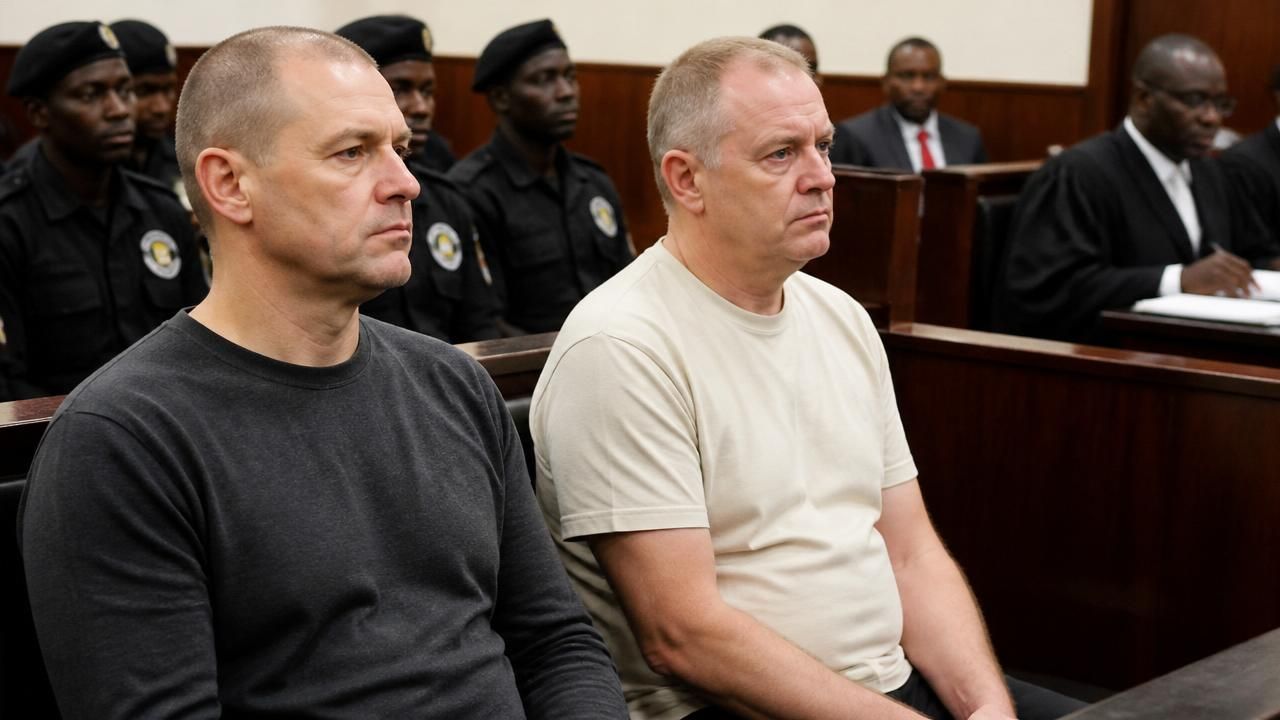
An Angolan court has convicted two Russian men on charges of terrorism and espionage, sentencing them to lengthy prison terms for allegedly plotting a coup and orchestrating deadly demonstrations over fuel prices last year. The case has drawn international attention, highlighting Russia’s growing influence operations in Africa and Angola’s efforts to assert its sovereignty.
The Verdict
On [date of verdict], the Provincial Court of Luanda found Lev Lakshtanov, 44, and Igor Ratchin, 53, guilty of planning to overthrow the Angolan government and organizing violent protests that erupted in May 2023 over rising fuel costs. Lakshtanov received an eight-year sentence, while Ratchin was handed 11 years in prison. Both men denied the charges, claiming they were in Angola for cultural and business activities.
According to court documents, prosecutors alleged the pair were operatives of Russia’s GRU military intelligence service, tasked with destabilizing the country ahead of the 2022 elections. The plot reportedly involved funneling money to opposition groups, spreading disinformation, and coordinating with local activists to incite unrest.
Broader Context: Russia in Africa
The case is part of a wider pattern of Russian interference in African politics. The BBC reports that Russia has been accused of meddling in elections, supporting mercenaries, and exploiting resource-rich nations. A 2023 investigation by the BBC found evidence of a covert operation to influence Angolan politics, with Russian agents offering cash and propaganda support to opposition figures.
Angola, a former Portuguese colony and major oil producer, has been a key battleground for influence between Russia, China, and the West. The ruling MPLA party, in power since independence, has historically close ties with Moscow, but recent years have seen a shift toward Western partnerships. The 2022 elections, which saw President João Lourenço re-elected amid fraud allegations, were marked by tensions over foreign interference.
Different Perspectives
Western media outlets, such as the Guardian and BBC, have framed the convictions as a blow to Russian espionage in Africa. The Kyiv Post described the men as “Russian spies,” emphasizing the threat to global security. In contrast, Russian state media has downplayed the verdict, with some outlets questioning the fairness of the trial. The Africa Report highlighted the economic sabotage angle, noting that the protests disrupted oil production and cost the economy millions.
Angolan authorities have portrayed the sentences as a victory for national security. “This court has sent a clear message: Angola will not tolerate foreign interference,” said Attorney General Hélder Pitta Grós in a statement. Human rights groups, however, have expressed concern over due process, noting that the defendants were denied access to consular assistance for weeks after their arrest.
Historical Parallels
The case echoes other incidents of Russian espionage in Africa. In 2018, three Russians were arrested in the Central African Republic for attempting to destabilize the government. More recently, in 2023, a Russian national was detained in Mozambique for allegedly plotting attacks. The GRU’s involvement in Africa has been linked to the Wagner Group, a private military contractor with ties to the Kremlin.
Angola itself has a history of foreign intervention. During the Cold War, Cuba and the Soviet Union backed the MPLA against US-supported rebels. Today, the country is navigating a complex geopolitical landscape, balancing ties with China, the US, and Russia while facing internal challenges like corruption and economic inequality.
Implications
The convictions could strain relations between Angola and Russia. Moscow has called for the men’s release, but Luanda is unlikely to comply. The case may also deter other Russian operatives from operating in Africa, though experts warn that the Kremlin will simply adapt its tactics.
For the Angolan public, the trial has been a reminder of the fragility of their democracy. “We must remain vigilant against those who seek to divide us,” said civil society leader Ana Gomes. The verdict comes amid a broader crackdown on dissent, with opposition figures and journalists facing harassment.
As the two Russians begin their sentences, the world watches to see whether Angola can maintain its independence in an era of great-power competition. The case serves as a cautionary tale of how foreign interference can destabilize even the most resource-rich nations.