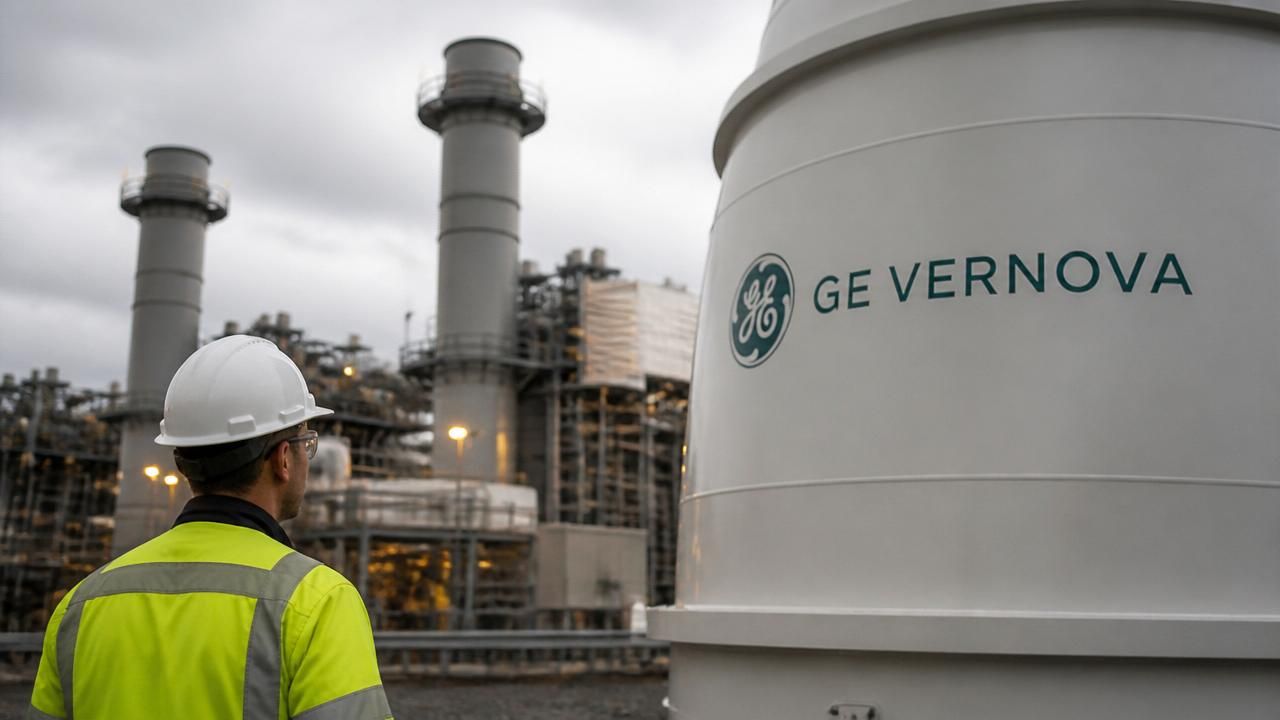
GE Vernova Inc., the energy equipment maker spun off from General Electric, saw its shares slump sharply on Wednesday even after the company reported better-than-expected earnings and raised its full-year revenue guidance. The selloff underscores a growing disconnect between the red-hot expectations surrounding companies that supply the AI data center boom and the actual financial performance they deliver.
Earnings Beat, Guidance Raise — But Not Enough
GE Vernova reported quarterly earnings that topped analyst estimates and lifted its revenue forecast for the year, citing strong demand for its gas turbines and power equipment. According to sources, the company's order book swelled dramatically, with one quarter's orders exceeding all of last year's total — a clear sign of the AI-driven surge in demand for reliable power generation.
Yet the stock fell sharply, with some sources noting a decline that took it below a key technical level. The market's reaction highlights a central tension: while GE Vernova is a direct beneficiary of the AI infrastructure buildout, valuations have been priced for perfection. As Bloomberg Markets reported, "a higher revenue outlook failed to impress investors, a sign that it's getting harder for companies that sell equipment to data centers to meet the market's sky-high hopes."
"GE Vernova's results were solid, but the bar has been set impossibly high by the AI narrative," said one analyst quoted by Seeking Alpha, which warned investors not to chase the stock even amid the AI power boom.
The AI Power Trade Under Pressure
GE Vernova has been a poster child for the so-called "AI power trade" — the thesis that the massive energy demands of AI data centers will drive years of outsized growth for power generation companies. The company builds some of the world's largest gas turbines, which are increasingly being deployed to provide baseload power for data centers that cannot rely solely on intermittent renewables.
CNBC recently profiled how GE Vernova constructs these massive machines, which are critical to keeping AI servers running. However, the market's reaction suggests that even strong fundamentals may not be enough to sustain the elevated valuations that have been built into stocks like GE Vernova and rival Vistra.
One source from 24/7 Wall St. argued that GE Vernova's order pipeline — with one quarter's orders exceeding all of last year's — makes it a superior AI power play compared to Vistra. But other sources pointed to a "300% pricing surge" in certain AI-related bottlenecks, raising questions about sustainability.
Divergent Perspectives on the Selloff
The coverage of GE Vernova's post-earnings decline reveals sharply different frames among financial media:
- Bloomberg focused on the clash between raised guidance and "too high" AI hopes, framing the selloff as a market sanity check.
- MSN headlines highlighted the paradox: "GE Vernova beat earnings and raised guidance. Why the stock is falling anyway."
- AOL questioned whether the stock remains a buy given the pricing surge and potential bottlenecks.
- Seeking Alpha advised caution, warning against chasing stocks even in an AI power boom.
- 24/7 Wall St. took the most bullish view, arguing that the order book makes GE Vernova the AI power trade worth owning.
These contrasting takes illustrate the broader uncertainty in the market: is the AI infrastructure buildout a durable multi-year trend, or are investors getting ahead of themselves?
Historical Context and Implications
GE Vernova's trajectory mirrors the boom-and-bust cycles that have historically accompanied transformative technologies. From the railroad era to the dot-com bubble, periods of intense infrastructure investment have often led to inflated expectations and subsequent corrections.
Data center energy demand is projected to grow at a compound annual rate of 15-20% through the end of the decade, according to industry estimates. GE Vernova is well-positioned to capture a significant share of that spending. However, the company's stock price already reflects years of anticipated growth, leaving little room for error.
The implications extend beyond GE Vernova. If the market begins to punish AI power plays for failing to meet unrealistic expectations, it could spill over into other corners of the AI ecosystem, from chipmakers to cloud providers. Conversely, if the company's order book continues to swell, the current selloff may prove to be a buying opportunity.
What's Next for GE Vernova?
Investors will now watch for further updates on order momentum and margin expansion. The company's ability to convert its record backlog into profitable revenue will be key. Meanwhile, the broader narrative around AI's energy needs — and the stocks that benefit — remains a central theme in financial markets.
As one source put it, the AI power trade is not dead, but it may be entering a phase where fundamentals matter more than hype. For GE Vernova, the message from the market is clear: great results are no longer enough — they need to be extraordinary.