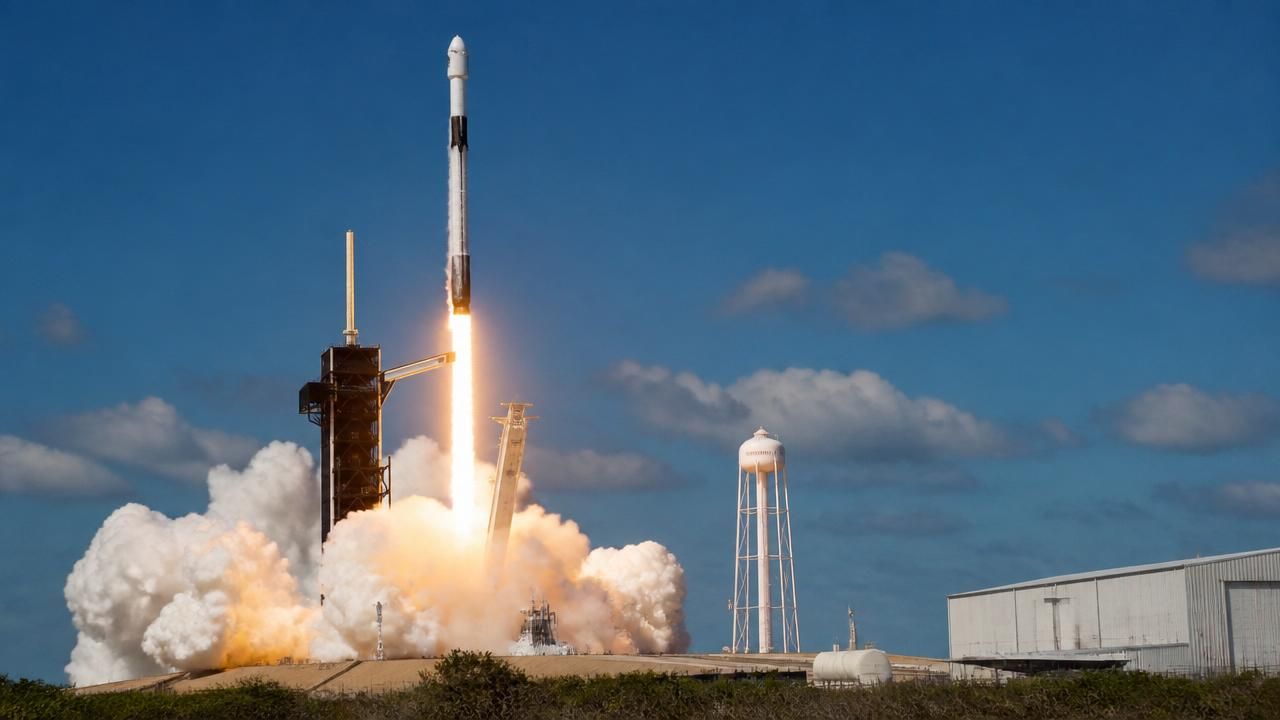
On July 21, a SpaceX Falcon 9 rocket lifted off from Cape Canaveral, carrying Northrop Grumman's Mission Robotic Vehicle (MRV) with the NASA-supported Robotic Servicing of Geosynchronous Satellites (RSGS) payload. This mission, funded by the Defense Advanced Research Projects Agency (DARPA), is a landmark step toward routine robotic servicing of satellites in geosynchronous Earth orbit (GEO). The spacecraft is equipped with twin dexterous robotic arms developed by the U.S. Naval Research Laboratory, designed to inspect, repair, and upgrade satellites, as well as install small propulsion modules called mission extension pods that can extend the operational life of existing spacecraft by years.
A New Frontier in Space Servicing
The RSGS program is the nation's first multi-mission robotic in-space servicer, bringing together government agencies and industry to test advanced robotics. According to NASA, the mission aligns with the agency's broader goals to advance U.S. capabilities for in-space servicing, assembly, and manufacturing (ISAM), which can be applied to space commerce and exploration. The spacecraft will operate in GEO, where it can reach satellites that were never designed to be serviced. This capability could revolutionize the satellite industry by reducing the need for costly replacements and mitigating space debris.
Differing Perspectives on the Mission
While NASA and DARPA highlight the technological and economic benefits, some experts caution about the risks. A report from the U.S. Government Accountability Office (GAO) notes that in-space servicing, assembly, and manufacturing offer significant benefits but also face challenges, including technical complexity and policy issues. Meanwhile, commercial entities like Northrop Grumman see this as a gateway to a new market. "This is a transformative capability," said a Northrop Grumman spokesperson. "We're moving from a disposable model to a sustainable one."
The Race to Save the Swift Telescope
In a parallel effort, NASA is planning an unprecedented mission to rescue its aging Swift telescope, which is at risk of falling from orbit. Swift, launched in 2004, has been a vital tool for studying gamma-ray bursts. Without a boost, it could re-enter Earth's atmosphere as early as October. NASA has contracted with the startup Katalyst Space Technologies for a $30 million mission to dock with Swift and raise its orbit. The mission, dubbed "Link," would use a robotic spacecraft launched from a rocket dropped from a plane, as reported by multiple sources. "If it fails, the crash comes in October," warned an article from Okdiario. The rescue is a first-of-its-kind effort and underscores the growing importance of robotic servicing.
How Different Outlets Frame the Story
Coverage varies widely. Space.com focuses on the technical hurdles, noting that NASA will first have to locate Swift precisely. Reuters emphasizes the role of startups like Katalyst, calling it an "orbital rescue mission." Meanwhile, USA Today highlights the public interest angle, with headlines like "A space telescope is falling to Earth. NASA plans a mission to rescue it." The Orlando Sentinel, blocked for some readers, titled its piece "SpaceX launch sends Northrop Grumman's 2-handed rescue robot to space," conflating the two missions. Scientific American calls it "an unprecedented mission to save a dying space telescope." These differing frames reflect broader narratives about risk, innovation, and the commercialization of space.
Historical Context and Implications
The RSGS mission builds on earlier efforts like NASA's cancelled Restore-L program, which was a multibillion-dollar satellite servicing demo. Ars Technica reported that NASA cancelled that mission due to budget constraints. However, the current public-private partnership model, with DARPA funding and Northrop Grumman building the vehicle, appears more sustainable. The success of RSGS could pave the way for robotic fuel depots, as envisioned by some experts, and even humanoid robots for lunar and Martian exploration, as NASA has studied. The mission also has implications for space debris mitigation: by extending satellite life, it reduces the number of defunct spacecraft cluttering orbit.
Expert Views and Data Points
Dr. Bhavya Lal, a space policy expert, noted, "In-space servicing is a game-changer. It turns satellites from disposable assets into long-term investments." The RSGS mission is expected to operate for a decade, performing multiple servicing tasks. According to DVIDS, the spacecraft will use its robotic arms to install mission extension pods, which are essentially jetpacks for satellites. The technology could also support future space telescopes, such as the Habitable Worlds Observatory, which will require robotic assembly in space.
Conclusion
The launch of the RSGS mission and the planned Swift rescue mark a pivotal moment in space operations. As the industry shifts from a throwaway culture to one of maintenance and repair, these missions demonstrate the feasibility of robotic servicing. Whether it's extending the life of communication satellites or saving a valuable scientific instrument, the ability to work on orbit is opening new possibilities for space commerce and exploration. The next decade will likely see a proliferation of such missions, transforming how we think about spacecraft and their lifespans.