The Trump administration is simultaneously advancing two major Middle East policy initiatives: a broad civilian nuclear cooperation agreement with Saudi Arabia that critics say lacks essential nonproliferation safeguards, and a framework peace deal with Iran that could reshape regional dynamics. These moves, reported by multiple sources including The New York Times, Reuters, and CNN, have sparked intense debate among lawmakers, allies, and experts.
The Saudi Nuclear Deal
According to sources familiar with the matter, the Trump administration has reached a preliminary agreement with Saudi Arabia on a civilian nuclear energy pact that would allow the kingdom to enrich uranium and reprocess spent fuel—activities that could potentially be used to develop nuclear weapons. The deal, which requires congressional approval, reportedly omits standard 'gold standard' safeguards that prohibit enrichment and reprocessing. Reuters reported that the administration plans to submit the agreement to Congress despite missing these guardrails, setting up a potential confrontation with lawmakers from both parties who have expressed concerns.
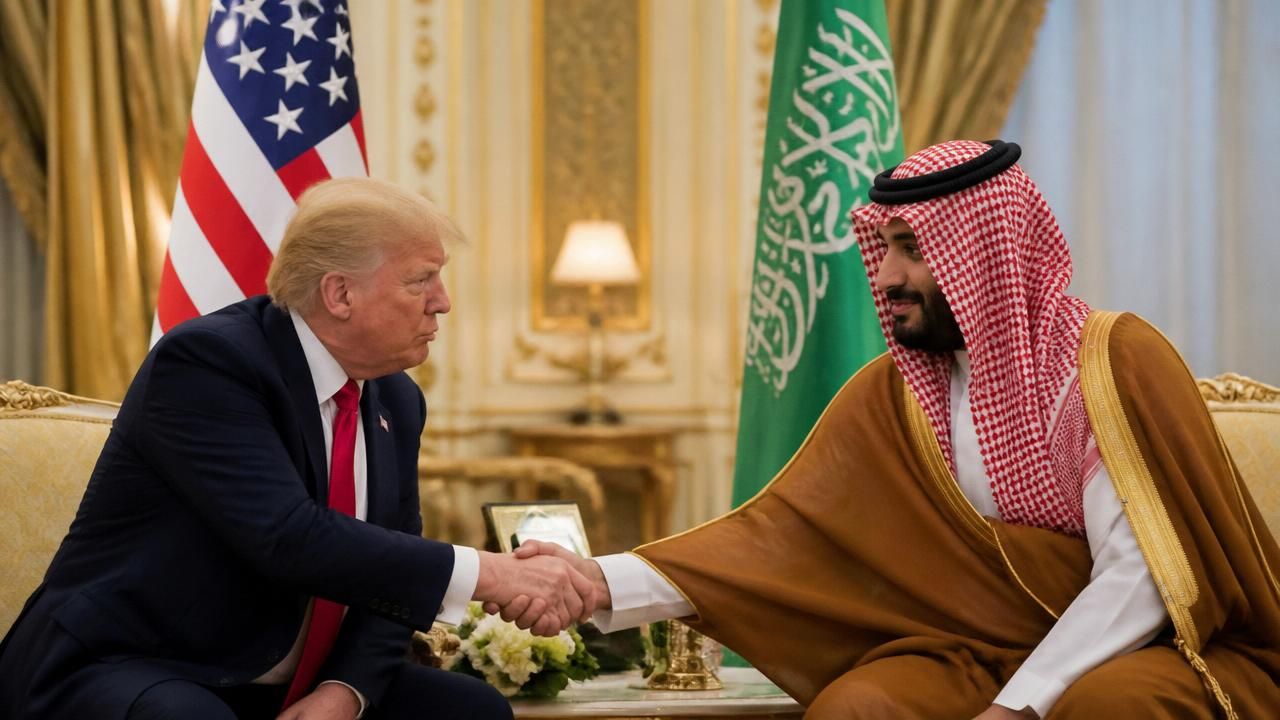
Intelligence Online reported that the deal includes a mega-contract for Saudi Arabia's nuclear program, with Crown Prince Mohammed bin Salman (MbS) and President Trump reaching a personal understanding. The New York Times noted that the administration has also approved the sale of F-35 fighter jets to Saudi Arabia, further deepening the strategic partnership.
Opposition and Concerns
Some U.S. lawmakers and Israeli officials have voiced strong opposition. The New York Times quoted sources saying that Israel fears a Saudi nuclear program could trigger a regional arms race. A letter obtained by Reuters detailed how the pact lacks strict guardrails, raising proliferation risks. The Atlantic warned that Trump might be pursuing a deal worse than the Obama-era Iran agreement, as it could enable Saudi enrichment without robust oversight.
Patheos.com highlighted the broader Middle East impact, suggesting that the deal could shift regional alliances and increase tensions with Iran. The Arab Weekly reported that the U.S. is removing guardrails from the proposed deal, a move that some experts argue undermines decades of nonproliferation policy.
Parallel Iran Peace Efforts
Simultaneously, the Trump administration has been engaged in intensive negotiations with Iran to end the ongoing conflict. Multiple sources, including the BBC, The Guardian, and Reuters, report that a framework peace deal is 'largely negotiated,' with key provisions including the reopening of the Strait of Hormuz and a suspension of Iranian nuclear activities for up to five years.
President Trump has made contradictory statements, sometimes claiming a deal is imminent and other times urging negotiators 'not to rush.' Politico reported that Trump said a peace deal with Iran is imminent, while The Guardian noted that Tehran says no final decision has been made. The New York Times detailed that Iran proposed suspending nuclear activity for up to five years, but progress remains muddy.
Military Posturing
Amid diplomatic efforts, the U.S. military has continued to build up forces in the region. The Pentagon ordered 2,000 airborne troops to the Middle East, and Trump has acknowledged weighing limited strikes on Iran. The New York Times reported exchanges of fire even as a declared truce was in place. Iran has rejected a ceasefire, and Trump has ramped up threats ahead of a deadline, according to Reuters.
Saudi Arabia's Role and Regional Dynamics
Saudi Arabia has played a pivotal role in the Iran conflict. According to a Facebook post citing people briefed on conversations, Crown Prince MbS pushed President Trump to continue the war against Iran, arguing it presents a 'historic opportunity' to remake the Middle East. The New York Times reported that MbS has been a key advocate for a hardline stance, while also seeking to secure U.S. nuclear technology and advanced weapons.
Ynetnews reported that Saudi Arabia warned that if Trump does not strike Iran, the regime will grow stronger. Meanwhile, Gulf Business noted that Trump called for Saudi Arabia and Qatar to join the Abraham Accords amid Iran deal negotiations, indicating a broader vision for regional normalization.
Implications and Analysis
The dual-track approach—pursuing a nuclear deal with Saudi Arabia while negotiating peace with Iran—has raised questions about U.S. strategy. Some analysts see it as a coherent policy to counter Iran by empowering its rivals, while others warn of proliferation risks and regional instability.
The Middle East Institute highlighted Pakistan's strategic defense pact with Saudi Arabia, suggesting a new security architecture emerging in the region. The Atlantic argued that Trump dreads an Iran deal worse than Obama's, as it might leave Iran with a residual nuclear capability.
“This is a high-stakes gamble that could either bring lasting peace or trigger a nuclear arms race in the most volatile region on earth,” said a senior analyst at the Arab Center Washington DC.
As the situation develops, all eyes are on Congress, where the Saudi nuclear deal faces an uncertain future, and on the Iran negotiations, which Trump says will become clear within 10 days.