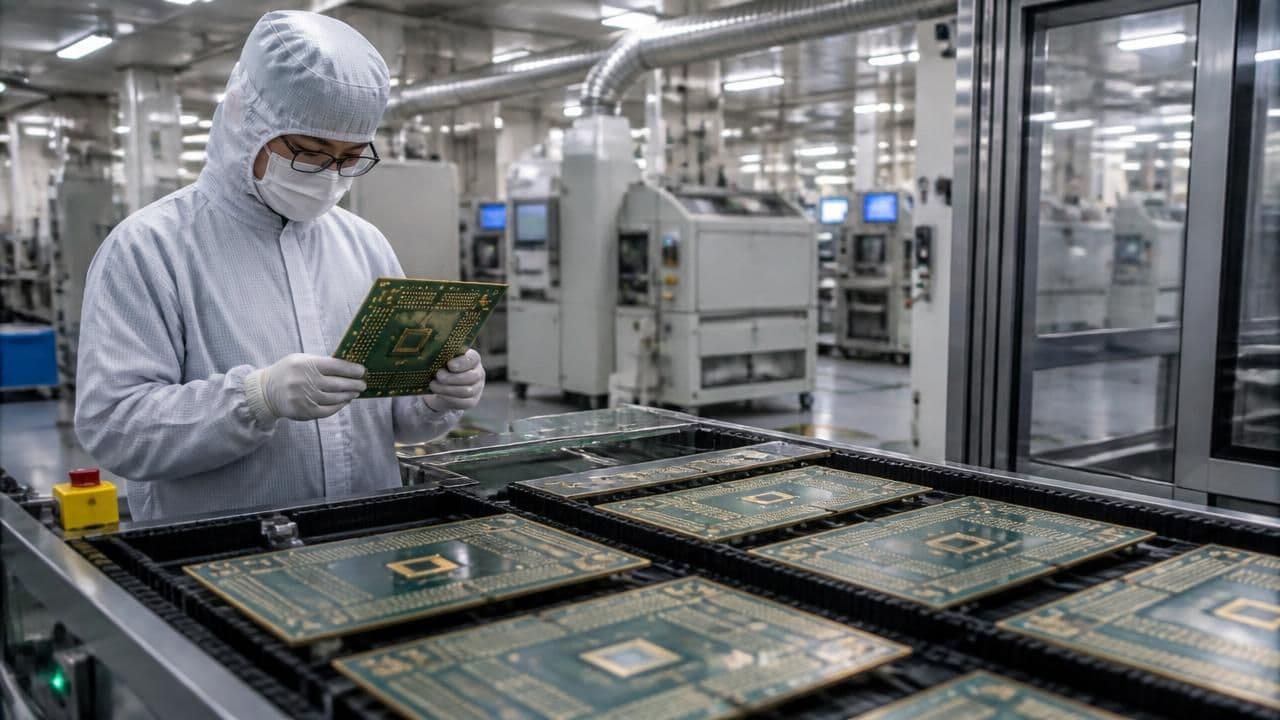
OpenAI has officially entered the custom chip arena, unveiling its first artificial intelligence inference processor, code-named 'Jalapeño,' developed in partnership with Broadcom. The announcement, which TechCrunch broke on June 24, 2026, signals a pivotal shift in the AI industry as major players increasingly seek to reduce their dependence on Nvidia's dominant GPU lineup.
The move places OpenAI alongside a growing roster of tech giants—including Google, Apple, and SpaceX—that are designing their own silicon to meet specific workload demands, control costs, and mitigate supply chain risks. 'The era of total dependence on Nvidia might be ending,' noted a TechCrunch analysis, echoing a sentiment that has gained traction across the sector.
What Is Jalapeño and Why Now?
Jalapeño is a custom inference chip designed to accelerate the deployment of OpenAI's models, including the GPT family that powers ChatGPT. Unlike Nvidia's general-purpose GPUs, Jalapeño is optimized for the specific mathematical operations required during inference—the phase when a trained model makes predictions. This specialization can yield significant gains in performance per watt and cost efficiency.
According to TechCrunch, the chip was built in collaboration with Broadcom, a leading networking and semiconductor company. The partnership leverages Broadcom's expertise in custom ASIC design and high-volume manufacturing. OpenAI's goal, as described by the company, is to 'build the full stack'—from chips to models to applications—giving it greater control over its AI infrastructure.
While CNBC's coverage was inaccessible due to a server error, the headline indicated the chip is part of a broader strategy to vertically integrate. TechRepublic, though also blocked by Cloudflare, had earlier outlined five key aspects of the move, including its implications for AI cost reduction and Nvidia's market position.
A Growing Exodus from Nvidia's Ecosystem
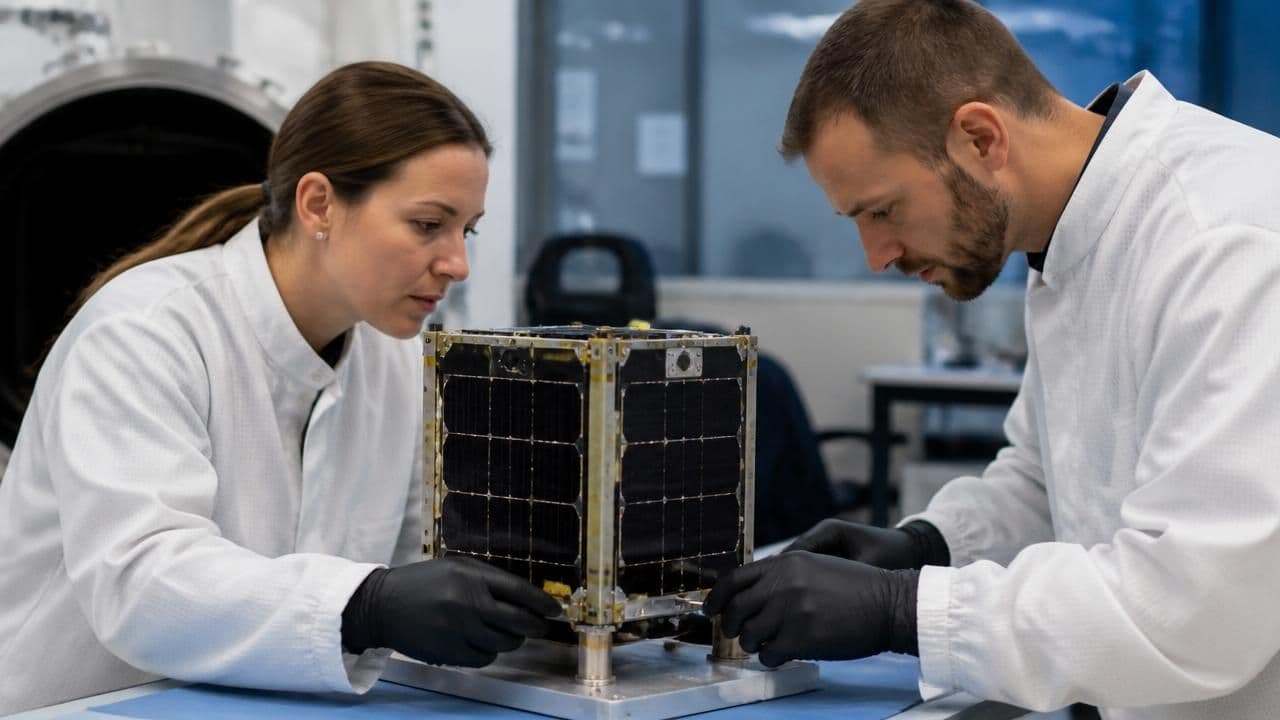
OpenAI is far from alone in this push. Google has long deployed its Tensor Processing Units (TPUs) for both training and inference. Apple's Neural Engine powers on-device AI across iPhones and Macs. Amazon Web Services offers Trainium and Inferentia chips. And SpaceX, according to reports, is developing custom silicon for onboard AI in its Starlink satellites and Starship vehicles.
'Everyone from OpenAI to SpaceX is building their own chips,' summarized a Yahoo Finance article, which noted that the trend is 'turning up the heat on Nvidia.' The Santa Clara-based company still commands an estimated 80-90% of the AI chip market, but its dominance is being challenged from multiple angles: hyperscalers building custom alternatives, startups developing novel architectures, and geopolitical tensions spurring domestic chip production.
Implications for the AI Industry
The shift toward custom silicon has profound implications. For one, it could democratize AI by lowering the cost of inference, making advanced models more accessible. OpenAI's Jalapeño, for example, is expected to reduce the cost per query for ChatGPT, potentially enabling broader free-tier access and new applications.
Secondly, it intensifies the talent war for chip designers. OpenAI has poached engineers from Google and Apple, while Broadcom has been aggressively hiring. 'The competition for silicon talent is as fierce as for AI researchers,' noted a semiconductor analyst quoted by TechCrunch.
Finally, it pressures Nvidia to innovate faster and diversify. The company has responded with its own custom chip initiatives, including the Grace CPU and a push into networking, but the landscape is undeniably fragmenting.
Expert Perspectives and Historical Context
Industry experts see this as a natural evolution. 'In the early days of computing, every company built its own hardware. Then we had the era of the commodity PC. Now, with AI, we're seeing a return to vertical integration,' said Dr. Lisa Su, a chip industry veteran, in a recent interview. 'The winners will be those who can optimize across the entire stack.'
Historically, Nvidia's rise was fueled by the realization that its graphics cards were uniquely suited for the parallel processing required by deep learning. But as AI matures, the one-size-fits-all approach is giving way to specialized silicon. OpenAI's Jalapeño is just the latest example—and likely not the last.
What's Next for OpenAI and Broadcom
OpenAI plans to deploy Jalapeño initially in its own data centers, with a gradual rollout to Azure cloud regions. Broadcom will manufacture the chip using advanced 3nm process technology. Financial terms of the deal were not disclosed, but TechCrunch estimated the development cost at over $500 million.
Looking ahead, OpenAI is already working on a second-generation chip, code-named 'Habanero,' which will target training workloads. This would directly compete with Nvidia's H100 and B200 GPUs. 'We're not trying to replace Nvidia overnight,' an OpenAI spokesperson told TechCrunch. 'But we want to have options, and we want to push the entire ecosystem forward.'
As the AI chip landscape becomes increasingly multipolar, the beneficiaries may be the end users—whether they're chatting with a bot, generating art, or analyzing data. Jalapeño might just be the spice that heats up the competition.