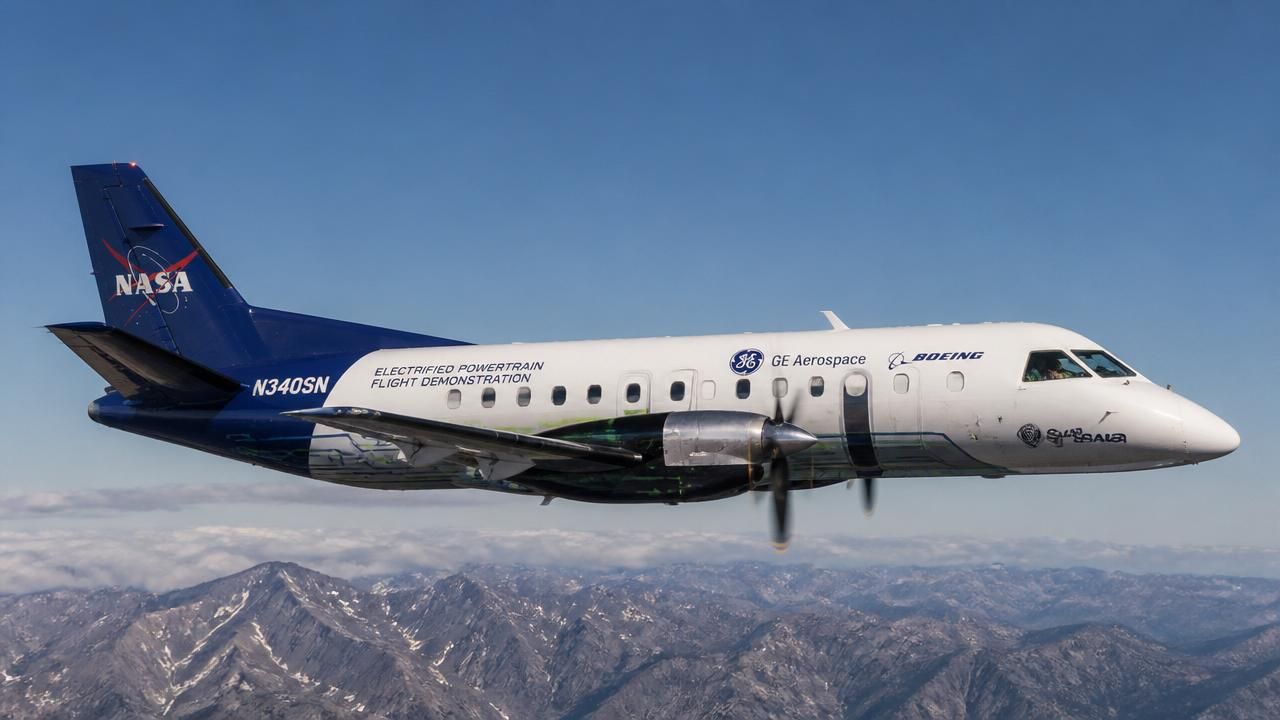
In a breakthrough for sustainable aviation, GE Aerospace, in collaboration with NASA, BETA Technologies, and Boeing, has successfully flown a hybrid-electric aircraft above 30,000 feet for the first time. The milestone flight, conducted using a modified Saab 340B aircraft powered by a megawatt-class hybrid-electric engine, was publicly demonstrated at the Farnborough International Airshow in the United Kingdom. This achievement represents a critical step toward reducing aviation's carbon footprint and meeting stringent climate targets.
Who, What, When, Where, Why
The flight was carried out by GE Aerospace, with the engine system built in partnership with NASA under the former Electrified Powertrain Flight Demonstration (EPFD) project and the ongoing Subsonic Vehicle Technologies and Tools project. The aircraft, a Saab 340B, was modified to integrate the hybrid-electric powertrain, which combines a thermal engine with electric motors and batteries supplied by BETA Technologies. The historic flights took place in recent months, culminating in a public debut at the Farnborough Airshow in the UK. The goal is to demonstrate that hybrid-electric propulsion can operate efficiently at high altitudes, paving the way for fuel-saving systems on future commercial aircraft. As climate regulations tighten, the aviation industry is under pressure to decarbonize, and hybrid-electric technology offers a near-term solution.
Technical Achievement and Data
The hybrid-electric engine became the first of its kind to fly above 30,000 feet, reaching altitudes where air density is low and thermal efficiency is challenging. The system integrates electric motors and generators into a turboprop architecture, allowing the engine to operate in both electric-only and hybrid modes. According to NASA, the testing leveraged years of collaborative research at NASA test facilities, including key component tests. The engine is designed for megawatt-class power, sufficient for regional aircraft and potentially narrowbody jets in the future. The flight demonstrated that high-voltage components can function reliably in extreme altitude conditions, a key barrier to electrification.
Perspectives from Partners
Laurie Grindle, director of NASA’s Aeronautics Division, stated: “This achievement reflects what NASA does best in aeronautics: we explore bold possibilities, validate them through rigorous research and testing, and work with industry to turn breakthrough ideas into technologies that bring real value for the American people.” GE Aerospace highlighted the collaboration as a model for public-private partnerships, while BETA Technologies emphasized the role of its battery systems in enabling the flight. Boeing, a partner in the project, contributed expertise in aircraft integration. The joint effort underscores a shared commitment to net-zero carbon flight by 2050.
Historical Context and Implications
The aviation sector accounts for about 2.5% of global CO2 emissions, and with air travel growing, the need for cleaner propulsion is urgent. Hybrid-electric systems offer a bridge to fully electric flight by reducing fuel burn and emissions while maintaining range. Previous attempts at hybrid-electric flight were limited to lower altitudes and smaller aircraft. This test proves that the technology can scale. Industry analysts note that if hybrid-electric systems can be commercialized for regional jets within a decade, they could cut fuel consumption by up to 30%. The success also positions GE Aerospace to compete in the emerging market for electric aircraft, which companies like magniX and Pratt & Whitney are also pursuing.
Different Perspectives from Sources
While NASA and GE frame the flight as a validation of long-term research, other outlets emphasize the competitive and regulatory dimensions. The Seattle Times, in a blocked article, likely discussed the pressure from upcoming emissions rules. TechXplore noted the altitude barrier as a significant hurdle now overcome. Aerospace America highlighted the collaboration with BETA Technologies and the role of battery certification. Some sources, like the Cincinnati Business Courier, focused on the economic impact for Ohio, where GE Aerospace has test facilities. The varying frames—from technical achievement to climate necessity to regional economic development—show the multifaceted nature of the story.
Broader Context and Future Outlook
The flight is part of a larger push by GE Aerospace and NASA to develop electric propulsion. GE has also announced a $68 million NASA contract for fuel-efficient engines and a $12 million program for electric flight. Separately, the company is testing hybrid-electric turboshaft engines for the US Army. The success above 30,000 feet builds on earlier ground tests of megawatt-class systems. Looking ahead, the partners plan to continue flight testing, with the goal of integrating hybrid-electric propulsion into commercial aircraft by the mid-2030s. The technology could also be adapted for military and cargo applications.
In conclusion, the first high-altitude hybrid-electric flight marks a pivotal moment in aviation history. It demonstrates that the industry can innovate to meet climate goals while maintaining performance. As Grindle noted, it is a testament to what collaboration between government and industry can achieve. The skies may soon be cleaner, one hybrid flight at a time.