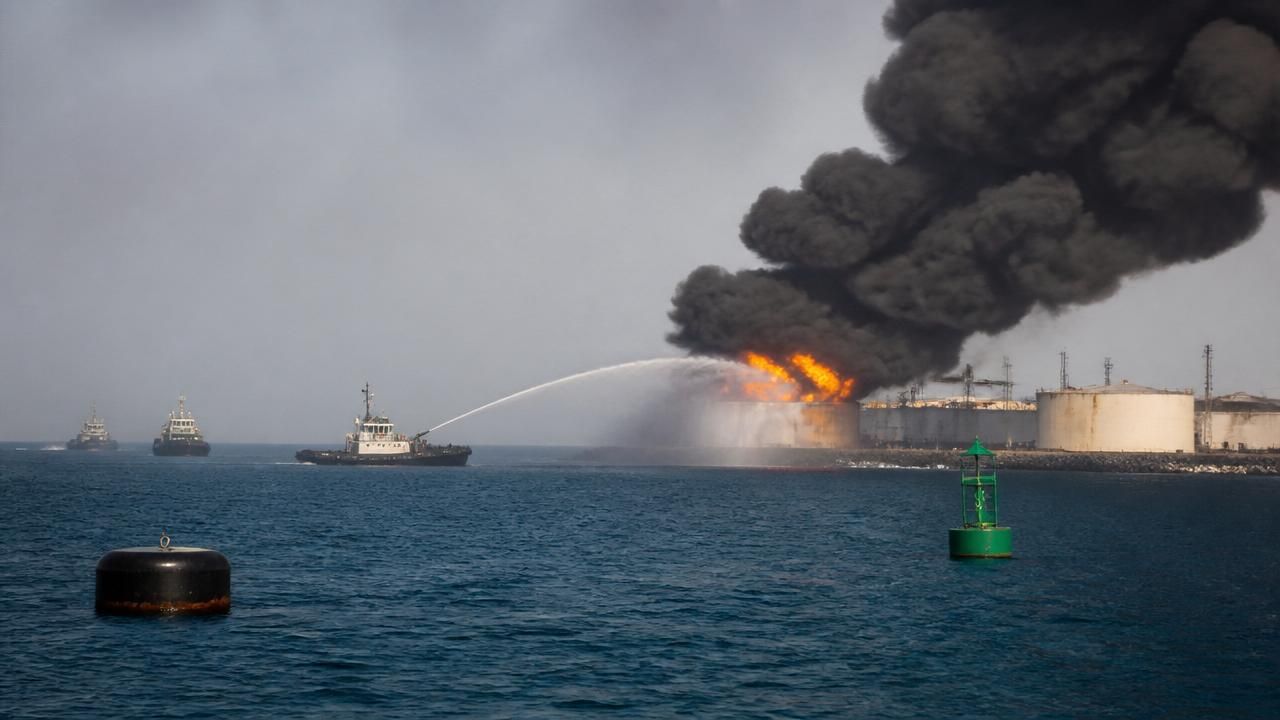
Global oil markets experienced a sharp spike on Monday as geopolitical tensions between the United States and Iran escalated over the weekend, with reports of vessels being targeted in the Strait of Hormuz and a key oil facility in Kuwait coming under attack. The developments sent Brent crude soaring, raising fresh concerns about supply disruptions in a market already grappling with limited spare capacity.
Geopolitical Flashpoint: Strait of Hormuz and Kuwait Attack
According to Bloomberg Markets, Brent crude jumped after the US and Iran escalated hostilities, including the targeting of vessels attempting to transit the Strait of Hormuz—a critical chokepoint for global oil shipments—and an attack on a major oil facility in Kuwait. The Strait of Hormuz, through which about 20% of the world's oil passes, has long been a flashpoint in US-Iran tensions. The attack on Kuwait's facility marks a significant broadening of the conflict, directly impacting a key US ally in the Gulf region.
"The targeting of commercial vessels and energy infrastructure represents a dangerous escalation that could quickly spiral into a broader regional conflict," said Dr. Sarah al-Hashimi, a geopolitical risk analyst at the Gulf Research Center.
IMF Warns of Dwindling Spare Capacity
Meanwhile, the International Monetary Fund (IMF) has issued a stark warning about the oil market's ability to absorb such shocks. In a blog post titled "The Oil Market Absorbed the War Shock, but Buffers Are Running Low," the IMF notes that while markets have so far weathered the impact of the Russia-Ukraine war and other disruptions, spare production capacity is dwindling. The IMF emphasizes that the world's ability to respond to further supply disruptions is limited, making the market vulnerable to price spikes.
Although the IMF blog was not directly accessible due to access restrictions, its key message aligns with broader concerns about the tightening oil market. The IMF has previously highlighted that global spare capacity—primarily held by Saudi Arabia and the UAE—has fallen to levels last seen before the 2020 pandemic, leaving little room for error.
Broader Economic Implications
The spike in oil prices comes at a delicate time for the global economy, with inflation still elevated in many countries and central banks maintaining tight monetary policy. Higher energy costs could reignite inflationary pressures, complicating the path for interest rate cuts. The IMF's quota proposals for China, South Korea, Mexico, and Turkey, reported by en.wikinews.org, reflect the shifting economic weight toward emerging markets, but rising oil prices could strain these economies, which are often net importers of energy.
The IMF's proposed quota increases are part of a broader reform to give emerging economies greater voting power, but the current crisis underscores the vulnerabilities these nations face. "The IMF's quota reforms are important for legitimacy, but they cannot shield countries from the fallout of geopolitical instability," commented Dr. Ravi Menon, an economist at the National University of Singapore.
Historical Context: From the 1973 Oil Embargo to Today
The current crisis echoes past oil shocks, such as the 1973 Arab oil embargo and the 1990 Gulf War, when geopolitical events triggered sustained price increases. However, the landscape has changed: the US is now a major oil producer, and renewable energy is gaining ground. Yet, the world remains heavily dependent on fossil fuels, and the transition to clean energy is still in its early stages. The attack on Kuwait's facility is a stark reminder of the fragility of the existing energy infrastructure.
According to data from the International Energy Agency, global oil demand is expected to continue growing through 2025, driven by emerging economies. This demand, combined with limited spare capacity, means that any disruption can have outsized price effects. The IMF's warning about "buffers running low" is a call to action for policymakers to accelerate the energy transition and diversify supply sources.
Differing Perspectives: Market Reaction vs. Policy Response
Market analysts are divided on the immediate outlook. Some, like those at Goldman Sachs, argue that the price spike may be short-lived if diplomatic channels reopen. Others, including many at JPMorgan, warn that the risk of a prolonged conflict could push oil above $100 per barrel. The IMF, meanwhile, is urging countries to maintain strategic petroleum reserves and invest in alternative energy sources.
On the campaign trail in the USA, as reported by en.wikinews.org, energy policy has become a hot-button issue. Candidates are using the crisis to argue for either increased domestic drilling or a faster shift to renewables. The Biden administration has faced criticism for its handling of the Iran situation, with some accusing it of being too lenient and others of being too hawkish.
What to Watch
In the coming days, traders will focus on: (1) any official statements from Iran and the US regarding further military actions; (2) the status of the Kuwait oil facility and its production capacity; (3) the response from OPEC+, which is scheduled to meet next month to discuss output levels; and (4) the US government's potential release of strategic petroleum reserves to cool prices.
The IMF's warning about dwindling buffers serves as a broader reminder that the global energy system is under strain. As the world watches the Strait of Hormuz and Kuwait, the stakes could not be higher—not just for oil prices, but for the stability of the global economy.