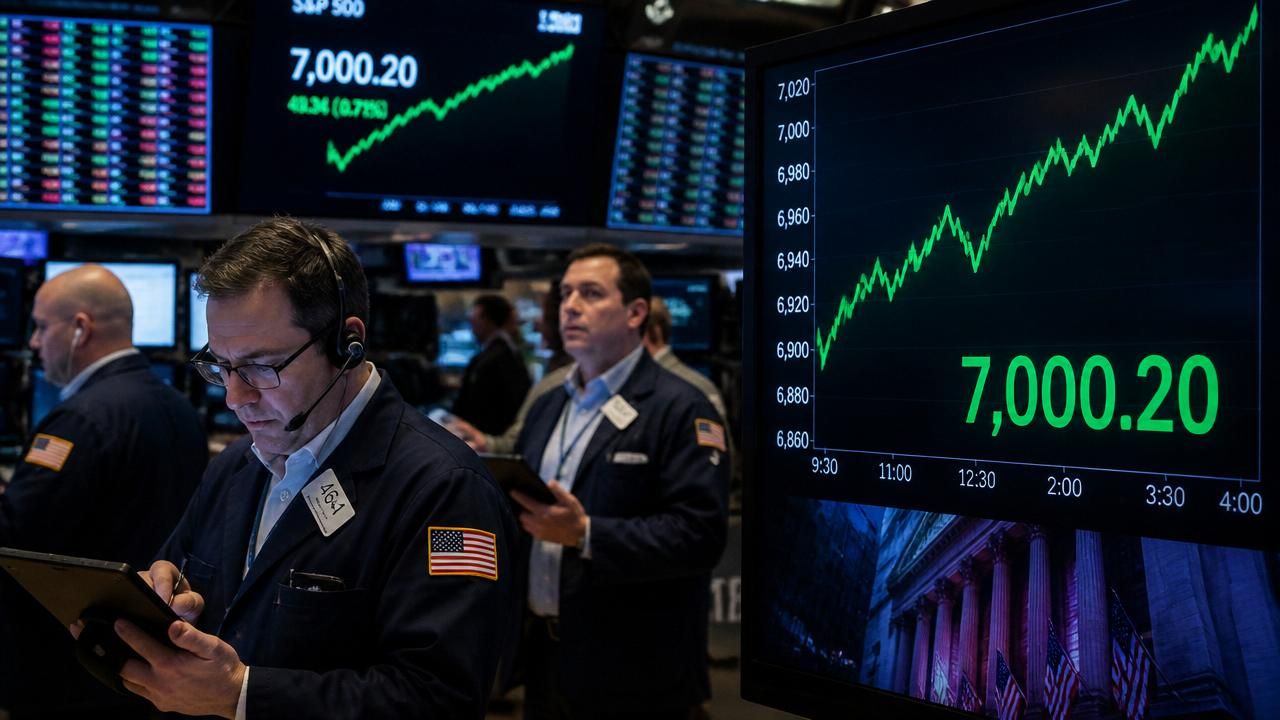
In a dramatic turn of events, the S&P 500 has surged past the 7,000 mark for the first time, marking a milestone in a bull market that continues to defy expectations. The rally, which broadened beyond technology stocks, has prompted a flurry of activity among hedge funds and Wall Street strategists, with some embracing contrarian bets and others raising their year-end targets. Meanwhile, geopolitical tensions and retail earnings loom large, keeping investors on edge.
A Milestone Rally with Broader Participation
The S&P 500's climb above 7,000 represents a 40% gain from its October 2022 low, driven by a broadening of market leadership beyond the mega-cap tech stocks that have dominated for years. According to Bloomberg, the rally has seen gains in sectors such as financials, industrials, and energy, signaling a healthier market breadth. This shift comes as the economy shows resilience despite higher interest rates, with corporate earnings holding up better than expected.
However, some analysts warn that the index's future is increasingly controlled by a handful of stocks. A Bloomberg analysis titled 'Too Few Stocks Control the S&P 500’s Future' highlights that the top 10 companies now account for over 30% of the index's market cap, a concentration not seen since the dot-com era. This narrow leadership poses risks: if those stocks falter, the entire index could suffer.
Hedge Funds Pivot to Reverse Dispersion Trades
In response to extreme stock swings, hedge funds are beginning to unwind the popular 'dispersion trade'—betting that individual stocks will be volatile while the S&P 500 remains calm. Instead, they are pivoting to the reverse trade, anticipating that the index itself will become more volatile. Bloomberg reports that this shift has gained traction as single-stock volatility has reached extreme levels, making the traditional dispersion strategy less profitable.
Whale Rock Capital Management, which suffered a first-quarter loss, has rebounded strongly as the rally broadened. The fund's recovery underscores the potential rewards for those who correctly anticipate market shifts.
JPMorgan Lifts Target Amid 'Blue Sky' Scenario
JPMorgan Chase has raised its S&P 500 year-end target to 7,800, citing a 'blue sky' scenario where the economy avoids recession and corporate profits accelerate. This optimistic forecast contrasts with more cautious views from other banks, reflecting the deep uncertainty about the path ahead. The bank's strategists argue that the broadening rally and strong earnings growth justify higher valuations.
Yet, not everyone is convinced. Some analysts point to the housing market, where Bloomberg notes that 'houses are no longer the best place for your money' as mortgage rates remain elevated. This shift in real estate dynamics could have spillover effects on consumer spending and the broader economy.
Geopolitical Risks and Steady Futures
Amid the market euphoria, geopolitical tensions continue to simmer. US stock futures held steady as oil prices rose on conflict unease, with investors eyeing the upcoming meeting between President Donald Trump and Ukrainian President Volodymyr Zelenskiy. The outcome of that meeting could influence energy markets and defense stocks. Additionally, retail earnings are in focus, with major retailers set to report their quarterly results, providing clues on consumer health.
Bloomberg reported that US stocks were steady ahead of these events, with the market in a wait-and-see mode. The combination of geopolitical risks and earnings reports could inject volatility in the coming weeks.
Implications for Investors
The current market environment presents both opportunities and pitfalls. The broadening rally suggests that investors should look beyond tech for growth, but the concentration risk in the S&P 500 warrants caution. Hedge funds' shift to reverse dispersion trades indicates that volatility may increase, which could benefit active managers. Meanwhile, JPMorgan's bullish target offers a potential upside, but investors must weigh that against geopolitical and housing market headwinds.
As the market navigates these crosscurrents, one thing is clear: the bull market is entering a new, more complex phase. Whether it can sustain its momentum depends on earnings, interest rates, and the unpredictable course of global events.