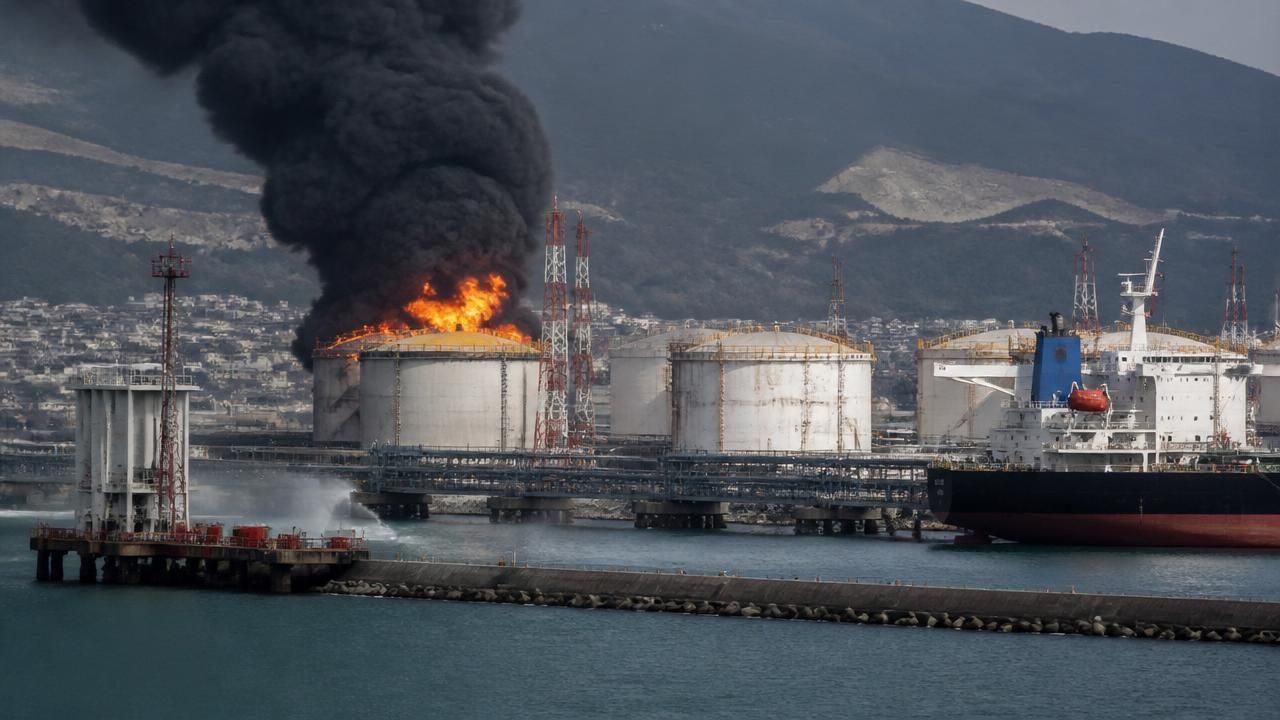
A series of Ukrainian drone strikes on Russia's Black Sea oil terminal at Novorossiysk has triggered a dramatic halt in crude loadings, disrupting a key export route for Kazakhstan and sending ripples through global energy markets. The attacks, which targeted the Caspian Pipeline Consortium (CPC) facility, have temporarily shut down operations at one of Russia's most important oil ports, cutting off approximately 2% of global supply, according to industry sources.
What Happened: A Coordinated Assault
On [date of event], Ukrainian naval drones and aerial UAVs struck the CPC terminal near Novorossiysk, igniting a fire and severely damaging tanker loading infrastructure. The attack forced an immediate suspension of all oil loadings, as reported by multiple sources including Bloomberg, Reuters, and The Moscow Times. The terminal, operated by the CPC—a consortium that includes Russian, Kazakh, and international oil companies—is the primary export outlet for Kazakh crude, handling over 1 million barrels per day.
According to Upstream Online, the attack specifically targeted the Grushovaya terminal, a key component of the CPC system. The Moscow Times confirmed that operations were halted by naval drones, while Euromaidan Press reported that drone boats struck the oil terminal directly. The assault was part of a broader Ukrainian campaign to disrupt Russian energy infrastructure and reduce revenue funding the war.
Immediate Aftermath: Chaos and Suspension
The CPC confirmed the suspension of loadings on [date], with a spokesperson stating that tanker operations were halted due to damage from drone attacks. Reuters noted that the halt affected not only Russian exports but also Kazakh crude, which transits through the pipeline. Kazakhstan's government, heavily reliant on this route for its oil exports, reacted with alarm. Kazakhstan called for an immediate end to such attacks, as reported by Reuters, while also scrambling to divert flows to alternative routes.
Weather conditions compounded the crisis. A severe storm in the Black Sea further hampered operations, as reported by OEdigital and Upstream Online, preventing tankers from approaching the terminal even after the initial attack. The combination of drone damage and natural elements created a perfect storm for disruption.
Resumption and Continued Uncertainty
After a two-day shutdown, the CPC partially resumed loadings from a single mooring point, according to Reuters and Euromaidan Press. However, operations remained far from normal. Upstream Online reported that Kazakhstan faced ongoing export troubles, with the terminal's intake of Kazakh crude temporarily stopped due to weather and damage. The Astana Times noted that Kazakhstan kept exports flowing by diverting some volumes via alternative routes, including the Baku-Tbilisi-Ceyhan pipeline and rail shipments.
Despite the partial resumption, the incident has exposed the vulnerability of Russia's energy export infrastructure. Transneft, the Russian pipeline operator, announced a 90-day suspension of one loading berth at Novorossiysk for repairs, as reported by qcintel. This prolonged outage could constrain export capacity for months.
Global Market Impact
The disruption sent shockwaves through oil markets. With global supply already tight due to OPEC+ cuts and geopolitical tensions, the loss of even a fraction of supply pushed prices higher. Analysts estimated that the halt affected up to 2% of global oil supply, according to Reuters. The attack also highlighted the fragility of energy transit routes in the Black Sea region, a critical artery for Russian and Kazakh oil.
Bloomberg Markets reported that the CPC terminal handles about 1.2 million barrels per day, making it one of the largest export points in the region. The suspension limited gains from soaring oil prices, as Russian exports were crippled by both drone attacks and severe weather, according to Reuters.
Differing Perspectives: Who Is to Blame?
The narrative surrounding the attack varies sharply between sources. Ukrainian outlets, such as Euromaidan Press and Kyiv Post, framed the strike as a legitimate military operation targeting Russian energy infrastructure that funds the war. They emphasized the precision of naval drone attacks and the strategic value of hitting the CPC terminal.
Russian sources, including The Moscow Times (which has independent editorial stance), reported the attack as a dangerous escalation that risks global energy security. They highlighted the damage to civilian infrastructure and the potential for environmental disaster from oil spills.
Kazakhstan's position was particularly complex. While not directly involved in the conflict, Kazakhstan's economy depends on CPC exports. Reuters reported that Kazakhstan told Ukraine to stop attacking the terminal after exports were halted. However, Ukraine blamed Kazakh silence for the attack, suggesting that Astana's neutral stance enabled Russian aggression, as reported by Upstream Online.
Western media, including Bloomberg and Reuters, focused on the market implications and the broader geopolitical context, noting that the attack demonstrates Ukraine's growing capability to strike deep into Russian territory and disrupt key economic assets.
Historical and Strategic Context
The CPC pipeline has been a flashpoint in the Russia-Ukraine war. Previous drone attacks had targeted the terminal, but this was the most damaging. The pipeline was built in the early 2000s to export oil from Kazakhstan's Tengiz field, bypassing the Bosporus Strait. It is jointly owned by Russian, Kazakh, and international companies, including Chevron and ExxonMobil.
Ukraine has increasingly used naval drones to attack Russian Black Sea ports, aiming to degrade Russia's ability to export oil and fund its military. The Novorossiysk port is a critical hub for Russian oil exports, handling both crude and refined products. The attack also comes amid heightened tensions over grain exports from Ukrainian ports, which have been blocked by Russia.
What Comes Next
The partial resumption of loadings provides some relief, but the damage to infrastructure and the ongoing threat of further attacks mean that exports from Novorossiysk will remain vulnerable. Kazakhstan is already diversifying its export routes, but alternative pipelines have limited capacity. The 90-day berth suspension will constrain flows, and any new attacks could trigger a complete shutdown.
For global oil markets, the incident serves as a reminder of the precarious balance between supply and demand. With the war showing no signs of abating, the risk of further disruptions to Russian energy exports remains high. The coming weeks will test the resilience of both Russian infrastructure and the global oil supply chain.