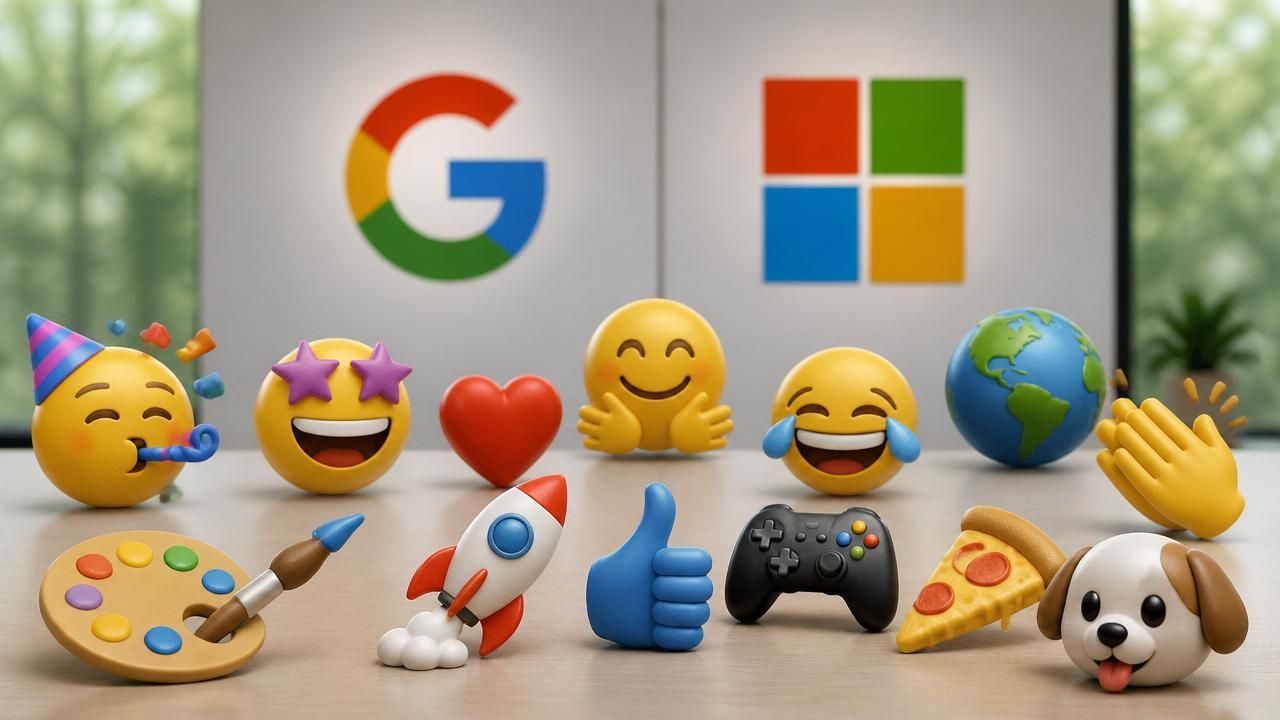
In a landmark move for digital communication, both Google and Microsoft have announced the open-sourcing of their 3D emoji sets, providing creators worldwide with thousands of high-quality, three-dimensional pictograms to use, remix, and customize. The announcements, timed to coincide with World Emoji Day on July 17, 2026, mark a significant shift in how emoji are created and shared, moving from proprietary assets to community-driven resources.
A Dual Announcement Shakes the Emoji World
Google unveiled its Noto 3D emoji set, a complete redesign of over 4,000 emoji with a 3D look, as part of its Android 17 preview. The company detailed its design process in a blog post, explaining how it tackled challenges such as whether a smiley face should be a sphere, a mask, or a flat disc. Google’s open-source release includes raw .OBJ files, allowing developers to use them in VR worlds, games, and other 3D applications. The Verge reported that Google is handing over these files to the community to "build immersive VR worlds."
Simultaneously, Microsoft open-sourced over 1,500 of its 3D emoji designs, though notably excluding the iconic Clippy. Ars Technica highlighted the cuteness of Microsoft’s designs, while Windows Central noted that these emoji are now part of the latest Windows 11 Insider Build. The Verge emphasized that Microsoft’s move enables creators to remix and customize the emoji freely.
Design Philosophy and Technical Challenges
Google’s design team shared insights into their creative process. In a blog post titled "Designing emoji for the way we communicate today," they explained how design, data, and AI shaped the Noto 3D emoji. The team considered the transition from 2D to 3D, where factors like lighting, texture, and perspective become critical. "Things you might not necessarily worry about in a 2D illustration suddenly become very important when you're talking about a 3D model," Google noted. The result is a set of emoji that feel more tangible and expressive, aiming to bridge the gap between digital and physical communication.
Microsoft’s approach similarly focused on expressiveness. The company’s open-source repository includes detailed 3D models that can be used in various platforms. However, as Windows Central quipped, "no Clippy though," referring to the infamous Office assistant that many hoped would return.
Industry Reactions and Broader Implications
The open-sourcing of 3D emoji has been met with enthusiasm from developers and designers. The move is seen as a way to standardize emoji across platforms while fostering creativity. Emojipedia, the authoritative source on emoji, noted in its World Emoji Day roundup that 2026 marks a turning point for emoji design. However, the Electronic Frontier Foundation (EFF) cautioned that while open-sourcing is positive, legislation like California’s attempt to censor 3D printing could threaten the freedom to create and share such assets.
Some sources, like MyBroadband, focused on Microsoft’s contribution, highlighting that the open-source release allows anyone to use the emoji in their projects. Notebookcheck, meanwhile, covered an unrelated but parallel development: open-source 3D-printed shoes, indicating a broader trend toward open-source 3D assets.
Historical Context and Future Outlook
Emoji have evolved from simple pictograms to complex 3D models. The rise and fall of animated emoji, as documented by Emojipedia, shows that 3D static emoji may offer a balance between expressiveness and simplicity. Google’s Android Central reported that the Emoji 15 update brings new emoji with emphasis on colors and customization, aligning with the 3D trend.
Both Google and Microsoft’s open-source releases are available under permissive licenses, allowing commercial and non-commercial use. The .OBJ files from Google and the collection from Microsoft can be found on their respective GitHub repositories. This openness is expected to accelerate innovation in digital communication, from VR chat rooms to personalized messaging apps.
Different Perspectives on the Story
The coverage varied across outlets. The Verge and Ars Technica provided in-depth analysis of the design choices and technical details. Android Headlines and Neowin focused on the visual impact and the first look at the emoji. MSN simply aggregated the news without additional commentary. The EFF’s piece, while not directly about emoji, warned of legislative threats to 3D assets. Overall, the consensus is that open-sourcing 3D emoji is a positive step for digital expression, though challenges remain in ensuring they are used ethically and legally.
Conclusion
World Emoji Day 2026 will be remembered as the day emoji went 3D and open-source. By releasing thousands of high-quality 3D emoji, Google and Microsoft have empowered creators to build more immersive and expressive digital experiences. As the lines between virtual and physical blur, these tiny pictograms are poised to play a bigger role than ever. The community now has the tools to remix, customize, and innovate—ushering in a new era of digital communication.