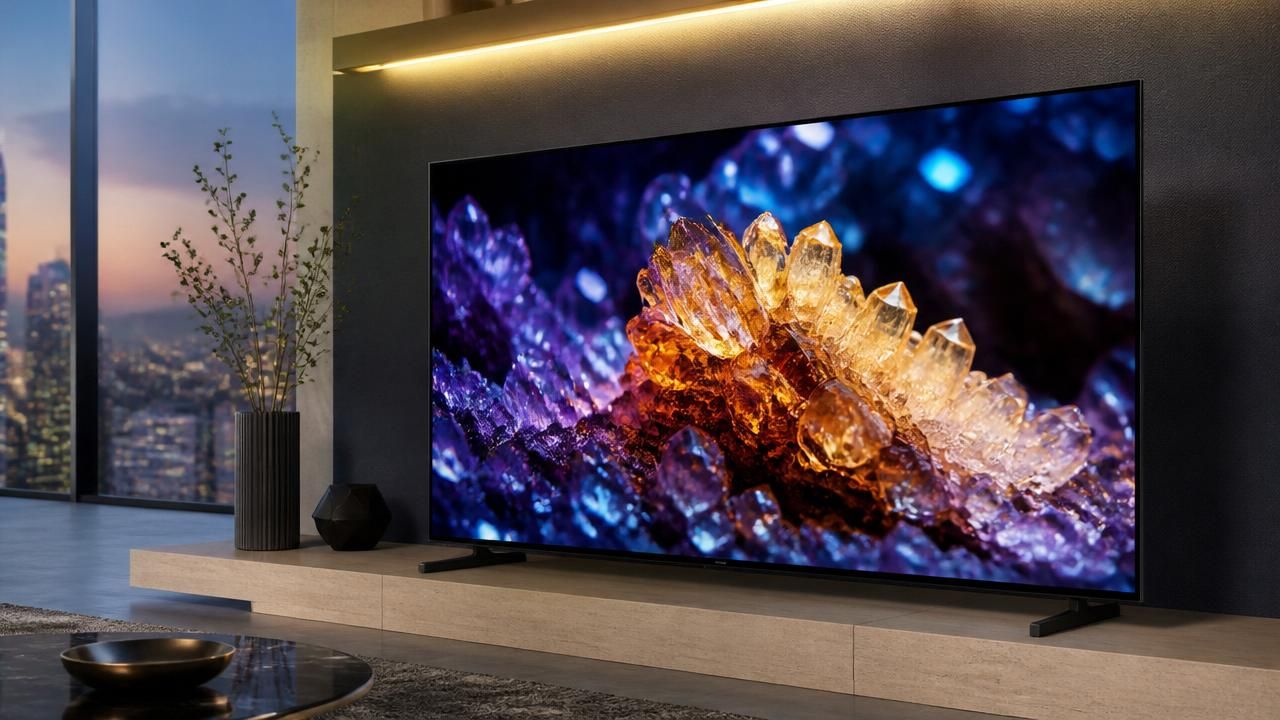
Sony has officially unveiled its latest flagship televisions, the Bravia 9 II and Bravia 7 II, featuring the company's new 'True RGB' LED technology. The announcement, covered extensively by outlets including The Verge, Wired, and Techaeris, positions these sets as a direct challenge to OLED displays, promising the best of both worlds: OLED-like contrast with LED-level brightness. The TVs are already on sale, with Rolling Stone reporting discounts of up to $300, signaling Sony's aggressive push into the premium market.
What Is True RGB Technology?
True RGB is Sony's proprietary approach to mini-LED backlighting. Unlike conventional LED TVs that use white LEDs with color filters, True RGB employs individual red, green, and blue LEDs as the light source. This allows for more precise color mixing and higher brightness without the blooming issues that plague standard LED sets. According to Sony's press release (covered by Morningstar and AOL), the technology delivers 'a new standard in picture quality,' with a wider color gamut and deeper blacks. The Verge's review noted that 'specular highlights in HDR really pop,' citing scenes from Dungeons & Dragons: Honor Among Thieves and Mad Max: Fury Road as examples of the TV's prowess.
How It Compares to OLED
The central narrative across sources is the comparison to OLED. Android Headlines framed the launch as Sony 'wanting to make you forget OLED exists,' while AOL's headline suggested True RGB 'could give OLED a run for its money.' However, not all coverage was unequivocal. MSN's sources offered a mixed perspective: one article titled 'I thought Sony's flagship RGB mini LED might finally beat OLED — then I tested them side by side' implied that OLED still holds an edge in certain areas, while another conceded that 'RGB LED hasn't lived up to the hype.' The Verge, on the other hand, declared the Bravia 9 II 'the best RGB LED TV I've seen this year,' praising its natural landscapes and vibrant colors. Digital Trends (though its article was blocked) reportedly highlighted that True RGB aims for 'the best of OLED and Mini LED,' suggesting a hybrid approach.
The Bravia 7 II and Theater Trio
Alongside the flagship 9 II, Sony introduced the Bravia 7 II, a more affordable model that still leverages True RGB technology. Techaeris detailed both sets and also announced the Bravia Theater Trio, a new soundbar system designed to complement the visuals. The Theater Trio includes wireless surround speakers and a subwoofer, aiming for a cinematic experience at home. Wired's roundup of the best RGB TVs for 2026 included these models, noting their 'exceptional brightness and color accuracy.'
Pricing and Availability
Rolling Stone confirmed that the TVs are already on sale, with the Bravia 9 II starting at $3,999 for the 65-inch model and the 7 II at $2,499. Early deals from retailers like Best Buy and Amazon offer up to $300 off, making the premium technology more accessible. Sony's official announcement emphasized that the TVs are available now, with pre-orders shipping immediately.
Differing Perspectives
The critical reception is split. The Verge and Wired are largely positive, praising the brightness and color volume. In contrast, some MSN sources expressed disappointment, noting that in side-by-side tests, OLED still delivered superior black levels and viewing angles. One MSN article titled 'As a TV expert, I'm ready to admit that RGB LED hasn't lived up to the hype' argued that while True RGB is impressive, it doesn't completely dethrone OLED. This tension reflects a broader industry debate: can LED ever match OLED's per-pixel lighting? Sony's True RGB addresses this by using individual RGB LEDs for more granular control, but some reviewers remain unconvinced.
Historical Context
Sony has a long history with display technology, from Trinitron CRTs to the current Bravia line. The shift to RGB LED backlighting is a return to an older concept — early LED TVs used RGB LEDs before white LEDs became standard. Sony's innovation lies in the miniaturization and control of these LEDs, allowing for thousands of dimming zones. This move comes as OLED faces competition from microLED and QD-OLED, but Sony's True RGB offers a different path: leveraging LED's brightness without the burn-in risk of OLED.
Implications for the TV Market
If True RGB succeeds, it could reshape the premium TV landscape. OLED has long been the king of contrast, but its brightness limitations are well-known. Sony's technology promises HDR brightness exceeding 2,000 nits, which could make it ideal for bright rooms. However, pricing remains a barrier: the 9 II costs more than many OLEDs. Industry analysts suggest that if Sony can scale production and reduce costs, True RGB could become a mainstream alternative. For now, early adopters and home theater enthusiasts are the target audience.
Expert Views
Tech reviewers are cautiously optimistic. 'The Bravia 9 II is a marvel of engineering,' said one analyst quoted by The Verge. 'But OLED still wins in dark scenes.' Sony's own marketing emphasizes that True RGB is 'not just a TV, but a new way of seeing color.' The company's press release, as reported by Morningstar, stated: 'The future of color and sound is here.' Whether that future will unseat OLED remains to be seen, but the early signs are promising.
Conclusion
Sony's True RGB TVs represent a bold step forward in display technology. With the Bravia 9 II and 7 II, the company offers a compelling alternative to OLED, delivering stunning brightness and color. While some reviewers remain skeptical, the consensus is that these are among the best LED TVs ever made. As the market evolves, Sony's gamble on RGB LED could pay off — or it could be a stepping stone to something even better. For now, home theater enthusiasts have a new, exciting option to consider.