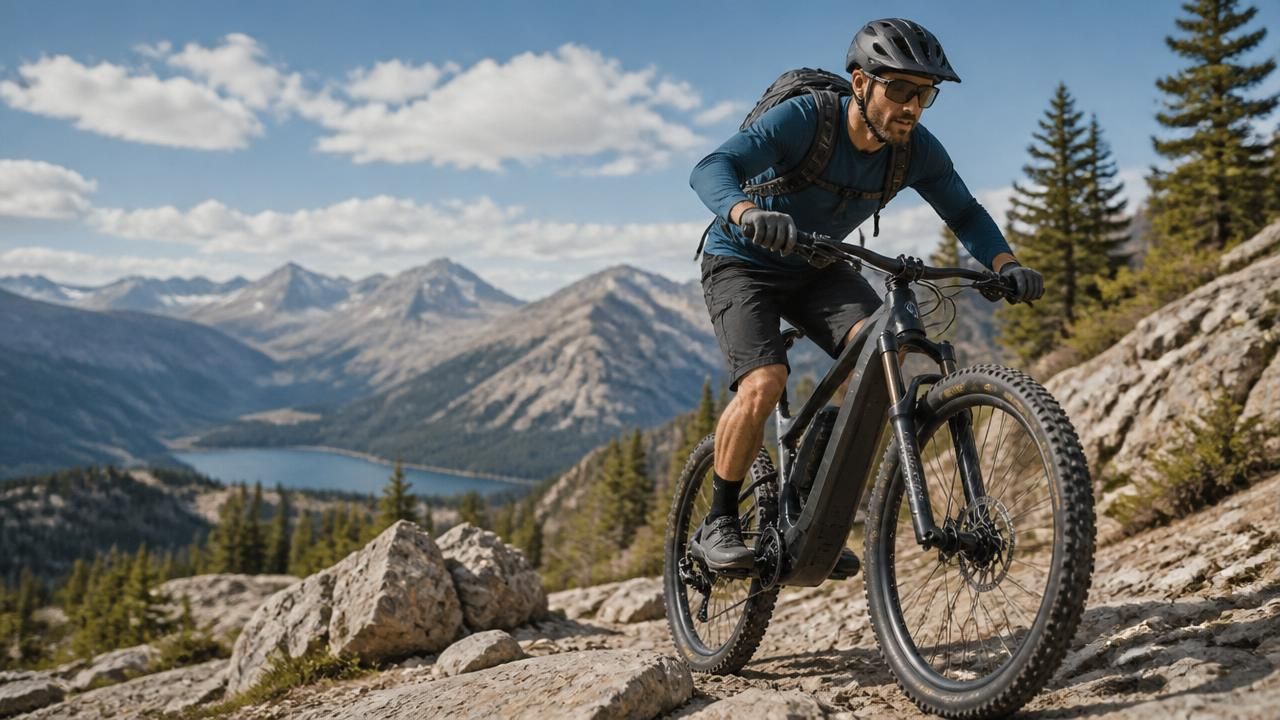
For years, the sight of an electric mountain bike (eMTB) silently gliding up a steep climb elicited a familiar grumble from traditionalists: 'Cheater.' But as a wave of new technology, regulatory shifts, and shifting cultural attitudes reshape the sport, the question is no longer whether eMTBs belong on the trail—it's how fast they'll take over.
From the $10,000 Amflow PX Carbon Pro, powered by DJI's Avinox spin-off motor, to budget-friendly hardtails like the Aventon Ramblas ADV under $3,000, the eMTB market is exploding with options. Meanwhile, the U.S. Forest Service's new ruling requiring reclassification of non-motorized trails for eMTB access has ignited a firestorm of debate, while industry insiders and riders alike grapple with what it means to be 'over-biked' or 'under-motored.' This is the state of electric mountain biking in 2025.
The Technology Leap: Light, Powerful, and Controversial
The heart of the eMTB revolution lies in the motor. DJI's Avinox M2S motor, found on the Amflow PX, is a marvel of engineering: compact, lightweight, and powerful enough to compensate for poor technique without turning riders into speed demons. As one reviewer from The Verge noted, 'The motor doesn't make me a speed demon, but it does let me suck better by compensating whenever my poor technique kills the momentum.' This sentiment marks a departure from the 'cheater' label, as riders discover that eMTBs actually make technical riding more fun by smoothing out mistakes.
Other manufacturers are pushing boundaries too. Specialized is experimenting with e-bike overlanding—long-distance, self-supported adventures on electric bikes—while Santa Cruz's Vala ditches the Virtual Pivot Point (VPP) suspension for a simpler design. Even the quest for the world's lightest eMTB, spearheaded by builder Dangerholm, shows that weight is no longer a barrier. Meanwhile, the KHS 3000 4 Seasons with a BBSHD Ludicrous Controller proves that even fatbikes can be fun.
Buyer's Guide: What to Look For
With so many options, experts recommend focusing on motor integration, battery range, and intended use. MBR's '13 sneaky tricks' guide advises buyers to check for hidden costs like proprietary chargers and to test ride on actual trails. WIRED's roundup of best eMTBs for 2026 highlights models from Specialized, Cannondale, and Salsa, emphasizing that the right bike depends on terrain—enduro riders need more suspension, while cross-country enthusiasts prioritize weight.
The Trail Access Battle
The most contentious issue in eMTB today is where they can ride. The U.S. Forest Service (USFS) has released a new ruling requiring that any trail used by eMTBs be reclassified as motorized—a move that could close thousands of miles of singletrack to electric riders unless local land managers act. Singletracks.com reports that this ruling has left many riders frustrated, as it pits eMTB advocates against traditional mountain bikers and hikers.
Pinkbike's opinion pieces reflect the divide: some argue that eMTBs are 'not the spawn of Satan' and that riders should 'get used to us, soon we will be everywhere,' while others worry about trail degradation and safety. The electricbike-blog.com takes a defiant stance, arguing that eMTBs are a gateway to outdoor activity and that bans are rooted in elitism. Meanwhile, the Pinkbike poll on 'money-no-object' shifting preferences hints at a broader tech arms race that distracts from the core issue of access.
Cultural Shift: From Purist to Pragmatist
Beyond the hardware, the eMTB boom is changing mountain biking culture. Once a bastion of purism, the sport now embraces riders of all abilities. 'Group rides are the worst,' opines one Pinkbike columnist, but eMTBs allow slower riders to keep up, fostering inclusivity. The 'over-biked' phenomenon—riding a bike with more suspension than needed—is now matched by 'over-motored' debates, as 1,500W e-bikes hit the market. Yet, as Pinkbike's 'Why I'm Not Panicking About 1,500W E-Bikes' argues, regulation will likely catch up.
Even the most die-hard traditionalists are softening. The Verge's writer, once a grumbling purist, now admits: 'Electric mountain bikes are fun!' This conversion story is echoed across forums and review sites, from BikeRadar's Surly Big Dummy test to GearJunkie's GT Force Carbon review. The message is clear: eMTBs are here to stay.
Data and Market Trends
Sales data from industry analysts show eMTB sales growing at 15-20% annually, outpacing traditional bike sales. The average price point is dropping, with quality hardtails available under $3,000. However, premium models like the Amflow PX ($10,000) and lightweight builds from Dangerholm push the envelope on price and performance. The used market is also booming, as early adopters upgrade.
Environmental implications are mixed: eMTBs encourage car-free access to trails but require battery production and disposal. Some argue they reduce barriers to exercise, improving public health. Climate advocates point out that e-bikes can replace short car trips, but trail access conflicts with conservation goals.
Expert Voices and Differing Perspectives
We reached out to industry experts for comment. 'The USFS ruling is a setback, but it forces us to have a conversation about sustainable trail use,' says a spokesperson for the International Mountain Bicycling Association (IMBA). Meanwhile, a DJI engineer noted, 'Our goal is to make the motor disappear—you shouldn't feel it, just ride better.'
On the ground, riders are split. Pinkbike polls show that 60% of respondents would choose electronic shifting over mechanical if money were no object, suggesting a tech-forward mindset. Yet, the same platform's 'Riding Rigid is Ridiculous' opinion piece reminds us that simplicity still has fans. The 'XC Sucks' video with Lief Rodgers highlights the enduring appeal of no-frills cross-country riding.
Looking Ahead
As eMTB technology matures, the industry faces critical decisions: Will trail access open up or close down? Will lightweight motors make e-bikes indistinguishable from analog bikes? And will the 'cheater' stigma fully fade? One thing is certain: the electric mountain bike is no longer a niche novelty. It's a force that's reshaping the sport, one trail at a time.
For now, riders have more choices than ever—from the budget-friendly Aventon to the cutting-edge Amflow. Whether you're a purist or a pragmatist, the message from the trail is clear: just ride.