In a breakthrough that could fundamentally change how society manages plastic waste, researchers in China have developed a 'living plastic' that self-destructs on command, degrading completely within six days and leaving no microplastics behind. The innovation, reported by multiple sources including Science Daily, The Independent, and New Scientist, embeds engineered bacteria within the plastic matrix, which activates when exposed to specific environmental triggers to break down the material into harmless byproducts.
How the Living Plastic Works
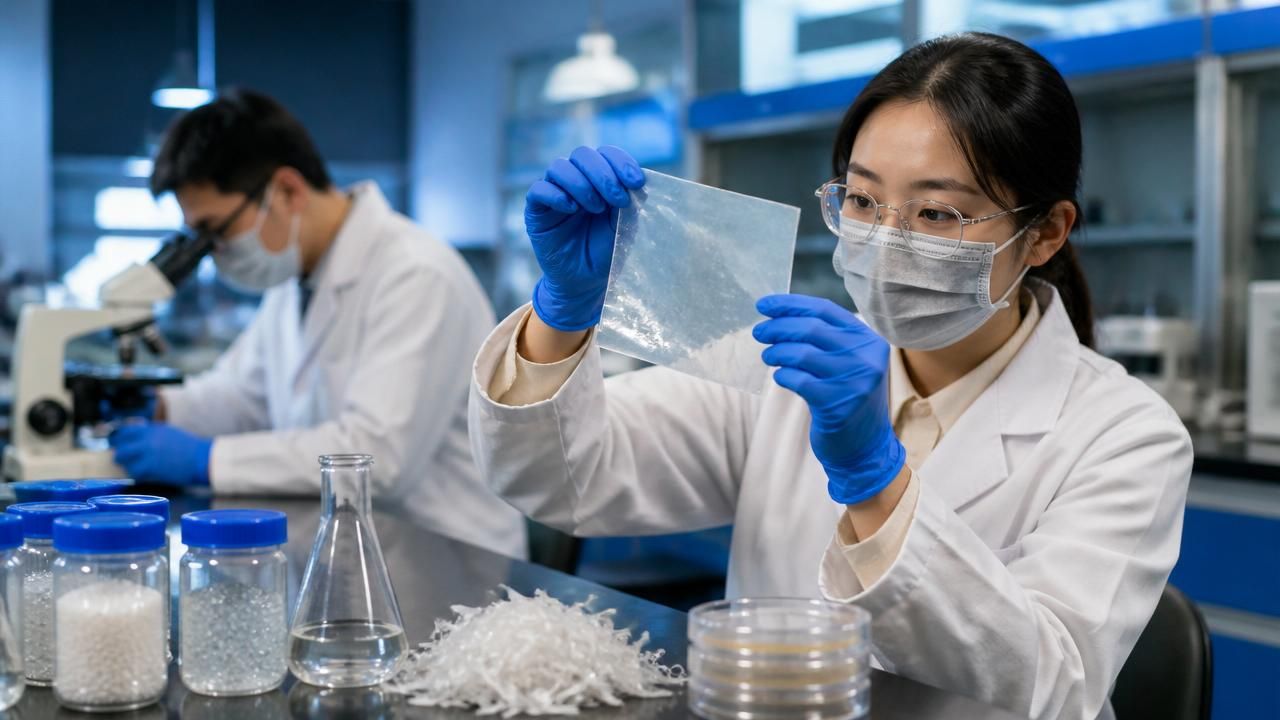
The living plastic is created by incorporating spores of a specially engineered strain of Bacillus subtilis into a thermoplastic polyurethane (TPU) base. Under normal use, the spores remain dormant, keeping the plastic stable. However, when exposed to specific conditions—such as nutrient-rich environments or mechanical stress—the spores germinate, and the bacteria begin producing enzymes that degrade the polymer chains. According to Science Daily, the material fully degrades in just six days, a stark contrast to traditional plastics that can persist for centuries.
New Scientist adds that the lifespan of the plastic can be programmed by adjusting the bacterial strain or the trigger mechanism, potentially allowing it to last for days, months, or even years. This tunability could enable applications ranging from single-use packaging with short lifespans to durable goods designed for long-term use that can be triggered to degrade at end-of-life.
Why This Matters: The Plastic Pollution Crisis
The world produces over 400 million tonnes of plastic annually, and less than 10% is recycled. The rest ends up in landfills, oceans, or is incinerated, contributing to a global crisis. Microplastics have been found in the deepest ocean trenches, Arctic ice, and even human blood. As The Guardian notes in a related feature on plastic-eating bacteria, 'We are just getting started' in finding biological solutions to plastic waste.
This living plastic addresses two critical issues: the persistence of plastic in the environment and the generation of microplastics during degradation. Many biodegradable plastics break down into tiny fragments that remain harmful. The new material, however, is designed to fully metabolize into carbon dioxide, water, and biomass, leaving no trace.
Differing Perspectives and Skepticism
While the research is promising, experts urge caution. Some sources, like TechSpot, highlight that the current prototypes are still in the lab stage and require scaling up. The cost of production and the stability of the bacteria during long-term storage remain challenges. Independent.co.uk quotes environmental scientists who warn that 'living plastics' must not become a license for continued overconsumption. 'The best plastic is the one we don't use,' one expert noted.
On the other hand, optimists point to commercial applications already emerging. Mini Me Insights reports that Tealive, a beverage company, has partnered with Lyfecycle to roll out self-destructing cups, indicating market readiness for such technologies.
Historical Context and Future Implications
This development builds on decades of research into biodegradable polymers and synthetic biology. Earlier efforts, such as PLA (polylactic acid) plastics, required industrial composting facilities to degrade. The living plastic, by contrast, can degrade in natural environments, making it more versatile.
The implications are vast. For single-use plastics—straws, packaging, medical supplies—this could dramatically reduce landfill burden. In agriculture, biodegradable mulch films could be programmed to degrade after harvest. However, as EnvironmentJournal notes, infrastructure for collection and activation must be developed. 'We need to ensure these materials don't end up degrading prematurely or releasing engineered organisms into the wild,' the journal warns.
Data Points and Expert Views
- Degradation time: 6 days (Science Daily, Daily Galaxy)
- Microplastic residue: None confirmed (PlasticsToday)
- Bacterial strain: Engineered Bacillus subtilis (New Scientist)
- Potential lifespan range: Days to years (New Scientist)
Dr. Liang Wang, a lead researcher quoted by Science Daily, stated, 'Our living plastic represents a paradigm shift. We are moving from passive materials to active, responsive systems.'
Conclusion
The creation of self-destructing living plastic is a landmark achievement in materials science and environmental technology. While obstacles remain, the convergence of synthetic biology and polymer chemistry offers a tangible path toward solving the plastic pollution crisis. As The Guardian puts it, 'We are just getting started,' and this innovation may be the first step toward a future where plastics no longer outlast the products they serve.