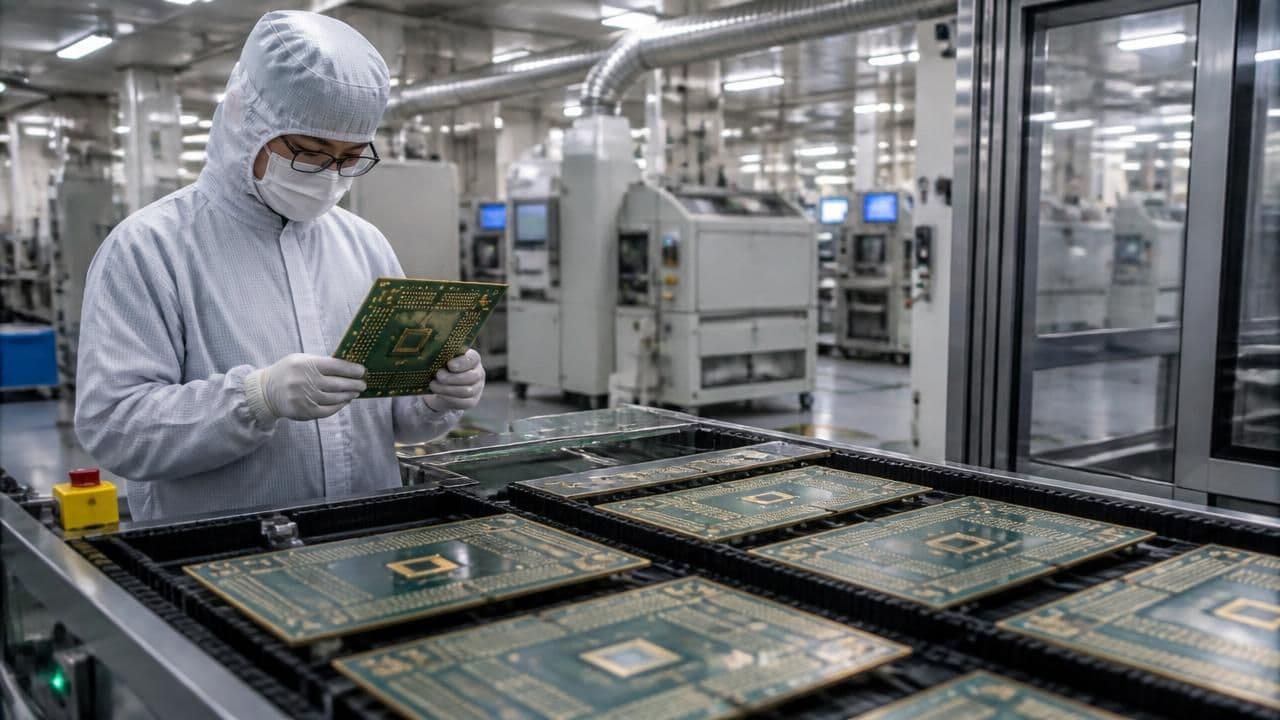
Semiconductor stocks suffered a sharp decline this week, with major players like Nvidia, AMD, Micron, and SK Hynix seeing significant losses. The selloff, which wiped out hundreds of billions in market value, reflects growing investor anxiety over whether massive spending on artificial intelligence infrastructure can justify the sector's lofty valuations. The downturn comes after a prolonged rally that had pushed chip stocks to record highs, fueled by AI euphoria.
What Happened and Why
The selloff began after a series of earnings reports and forecasts from key chipmakers failed to meet the market's sky-high expectations. Micron Technology, a leading memory chip manufacturer, saw its stock crash 22% after issuing a cautious outlook, sparking fears that the AI-driven demand boom may be slowing. Similarly, Qualcomm's forecast disappointed investors, contributing to a broader rout. The Philadelphia Semiconductor Index fell sharply, dragging down the S&P 500 and Nasdaq, which had recently hit record highs.
According to Bloomberg Markets, the decline was driven by 'concerns over whether massive artificial-intelligence investments will justify lofty valuations,' with geopolitical risks also weighing on sentiment. The Wall Street Journal noted that the stock rally 'collided with a new slate of worries,' including trade tensions and uncertainty about Federal Reserve policy.
Market Impact and Data
The selloff erased approximately $2.3 trillion from the so-called 'Magnificent Seven' tech stocks, according to MSN. However, some investors remain bullish on chipmakers, with MSN reporting that 'investors are still backing chipmakers' despite the jitters. SK Hynix, which had seen its shares jump 14% in its US debut earlier this month, also fell sharply, highlighting the volatility in the sector.
'The year's hottest rally is losing steam. Investors are asking what comes next,' noted MSN, capturing the market's uncertainty.
Despite the downturn, some analysts see opportunity. Invezz asked, 'is this AI chip selloff a rare buying chance?' while Morningstar reported that Nomura analysts believe 'overlooked bottlenecks and hyperscalers forced to keep spending will keep the chip-stock rally alive.'
Differing Perspectives
The selloff has sparked debate about whether the AI trade is in a bubble. Beincrypto.com raised the question, 'AI Bubble Fears Grow: Is This the End of the Memory Stock Rally?' while Investopedia noted that 'no one is short' the chip stocks, suggesting that the slide may not be over. On the other hand, 247wallst.com highlighted '5 Chip Stocks Riding the AI Fab Spending Wave,' indicating continued optimism about long-term demand.
Some outlets focused on the broader market implications. The Honolulu Star-Advertiser reported that 'Wall Street falls as chip stocks slide on AI spending concerns,' while MSN noted that 'Axon and Rocket Lab rallied while chip stocks sank,' showing divergence within the tech sector.
Historical Context and Expert Views
The current selloff echoes past boom-and-bust cycles in the semiconductor industry, which has historically been prone to sharp swings based on supply-demand dynamics. The AI-driven rally began in earnest in early 2023, with companies like Nvidia seeing their valuations soar as demand for AI chips skyrocketed. However, the recent downturn suggests that investors are becoming more discerning about which companies will ultimately benefit.
Experts are divided. Some argue that the selloff is a healthy correction, allowing valuations to come back to earth. Others warn that if AI spending fails to generate expected returns, the downturn could deepen. 'The market is pricing in perfection, and any sign of weakness triggers a selloff,' said one analyst quoted by Bloomberg.
Implications for Investors
For investors, the key question is whether the AI trade is over or just taking a breather. The selloff has created opportunities for bargain hunters, but also risks for those caught in the downdraft. With geopolitical tensions and interest rate uncertainty adding to the mix, the near-term outlook remains cloudy.
As the market digests the latest developments, one thing is clear: the era of easy gains in chip stocks may be giving way to a more selective environment. Investors will need to focus on fundamentals and long-term trends, rather than riding the AI wave indiscriminately.