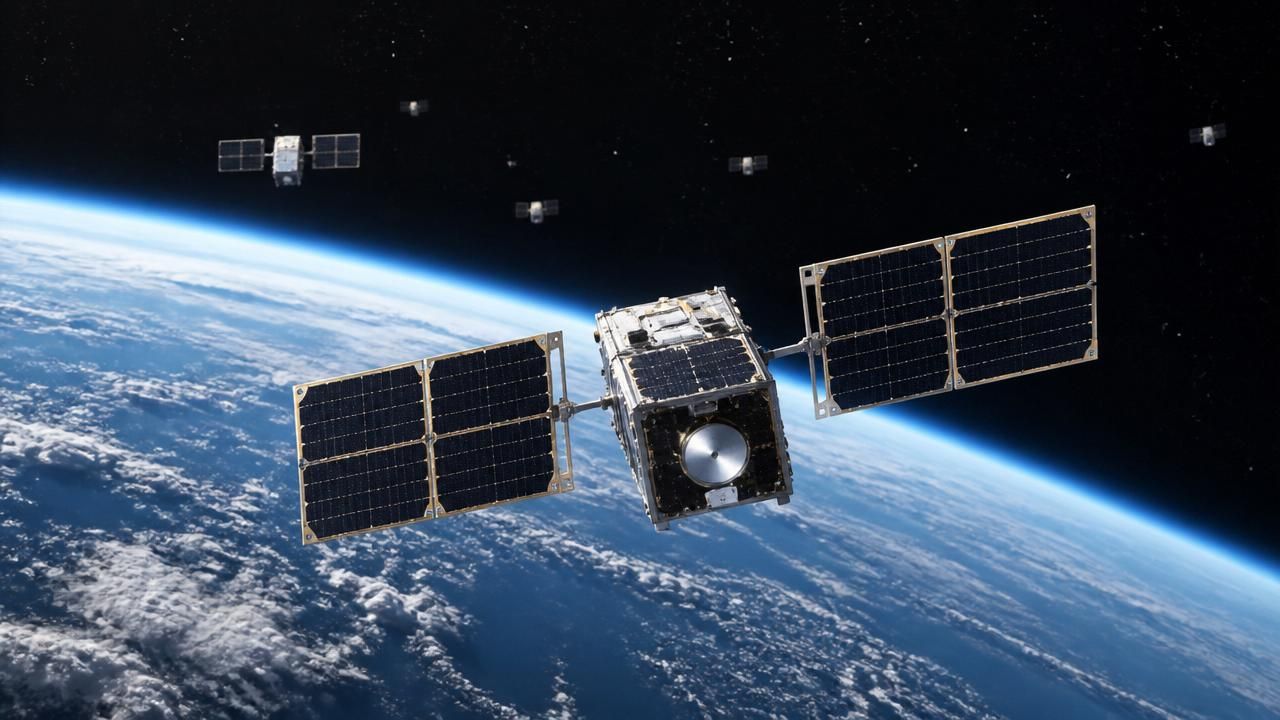
The global positioning system (GPS) has become an invisible utility, underpinning everything from smartphone maps to airline navigation and military operations. But its vulnerabilities—weak signals, susceptibility to jamming, and limitations in dense urban environments—are driving a transformative shift. A new wave of satellite navigation systems operating in low-Earth orbit (LEO) promises to deliver signals up to 100 times stronger than traditional GPS, enabling centimeter-level accuracy indoors and under heavy foliage, while also being far more resilient to interference. This emerging technology, led by companies like Xona Space Systems and supported by the European Space Agency (ESA) and others, could redefine how we navigate the world.
The GPS Vulnerability Crisis
GPS satellites orbit at an altitude of about 20,200 kilometers in medium-Earth orbit (MEO), where their signals are weak by the time they reach Earth's surface—roughly equivalent to the light from a 25-watt bulb from thousands of miles away. This makes them vulnerable to jamming, spoofing, and natural obstructions. According to a report from Undark, GPS jamming incidents have surged, affecting commercial flights, maritime shipping, and even smartphone apps. The BBC notes that GPS-denied environments are a growing concern for military operations, while the Economist highlights the strategic importance of assured positioning, navigation, and timing (PNT) services. The U.S. Space Force and other defense agencies are actively exploring alternatives, as detailed by Space.com and the Heritage Foundation.
LEO Navigation: The New Frontier
Low-Earth orbit, typically between 500 and 2,000 kilometers in altitude, offers a solution. Satellites closer to Earth can transmit stronger signals with lower power, enabling better penetration of buildings and foliage. Xona Space Systems, a California-based startup, is at the forefront. As reported by Ars Technica, Xona plans to launch its first six production satellites in October 2026, with early service starting in 2027. The full constellation of 258 Pulsar satellites aims to provide global centimeter-level accuracy. “That added power means that we can get into that indoor environment that GPS can't get to today,” said Adrien Perkins, co-founder and VP of engineering at Xona. “Our higher power allows you to get into those jamming environments a lot further than you would with GPS by itself.”
The European Space Agency is also active. ESA's Celeste IOD-1 satellite, built by a consortium including Beyond Gravity, recently transmitted its first navigation signal from LEO, as reported by GPS World and Phys.org. This testbed validates the technology for future operational systems. Meanwhile, the CYGNSS constellation, originally designed for hurricane monitoring, has demonstrated how LEO satellites can repurpose GPS signals for Earth science, as noted by Nature and Phys.org.
Starlink and OneWeb: Unintended Navigation Aids
Even communications constellations like SpaceX's Starlink and OneWeb are being explored for navigation. Researchers at the Ohio State University and Virginia Tech have developed algorithms that use signals from these mega-constellations for positioning, as reported by E&T and news.osu.edu. Starlink satellites, originally designed for internet, can be used for PNT with appropriate modifications. However, SpaceX has moved to block a GPS-alternative location feature on its network, according to Digital Today, highlighting the competitive tensions in this emerging market.
Commercial and Military Implications
The race to LEO navigation is not just about convenience; it's a matter of national security and economic competitiveness. The U.S. military is increasingly interested in LEO constellations for resilient PNT, as Space.com reports. China's BeiDou system and its growing LEO ambitions are also a factor, with the Foreign Policy Research Institute warning of a “LEO war” for digital dominance. South Korea has announced plans to establish its own LEO communications network by 2035, per UPI.
On the commercial side, Xona's recent $170 million funding round, reported by SpaceNews, underscores investor confidence. Amazon's reported $11.6 billion acquisition of Globalstar, as covered by TechSpot, further signals the value of LEO assets. The Congressional Budget Office has also published a primer on large LEO constellations, noting their potential benefits and challenges, including space debris and orbital congestion.
Technical Innovations and Challenges
New algorithms are enabling LEO satellites to act as GPS substitutes. A team from Ohio State developed an algorithm that can use satellite signals from any constellation for positioning, as reported by news.osu.edu. Researchers at Virginia Tech are exploring Doppler-shift measurements from LEO satellites for navigation, according to news.vt.edu. These innovations promise to make PNT more robust and versatile.
However, challenges remain. Space debris in LEO threatens all satellites, as noted by the Baltimore Sun. The sheer number of satellites—Starlink alone has thousands—requires autonomous management to avoid collisions and communication bottlenecks, as Universe Today reports. Moreover, the U.S. Space Force emphasizes that diversifying orbits is not a one-size-fits-all solution, as per a Space Force article.
Global Navigation Jamming: A Growing Threat
The urgency of developing LEO navigation is underscored by the rise in GPS jamming. SpaceNews notes that jamming will only worsen, and the U.S. needs to move fast. MSN's mapping of GPS interference shows a massive footprint of disruption, from the Strait of Hormuz to civilian cockpits. The IoT Insider highlights the need for assured PNT (A-PNT) as a backup. Military Embedded Systems reports that soldiers in GPS-denied environments require sensor-powered navigation.
Looking Ahead
The transition to LEO-based navigation is not without risks. The space environment is becoming increasingly congested, and the potential for orbital warfare is a real concern, as discussed by The Space Review and BBC Science Focus. Yet the benefits—stronger signals, centimeter accuracy, and resilience—are too compelling to ignore. As Xona's Perkins puts it, the goal is to bring GPS-like capability to places it has never reached before. With launches scheduled for 2026 and a flurry of research and development, the era of LEO navigation is dawning, promising a more reliable and precise foundation for our connected world.