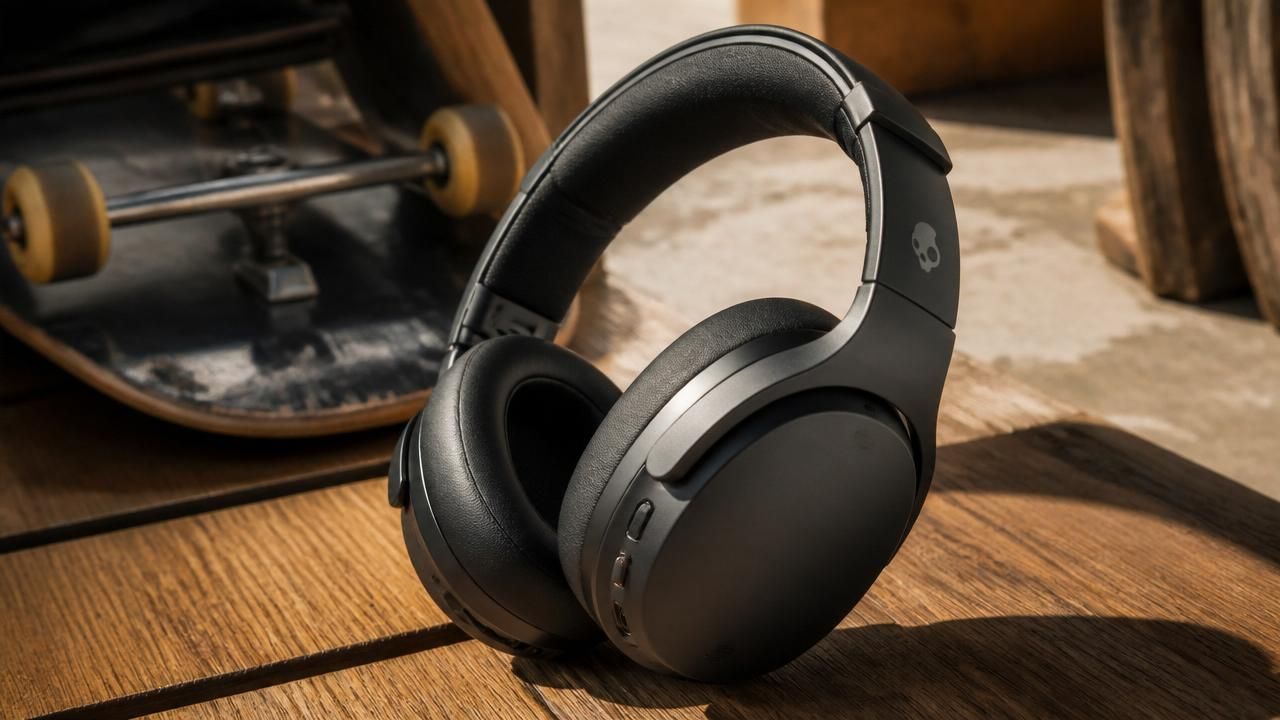
Skullcandy has long been known for delivering ear-rattling bass at accessible prices, but the brand has often struggled to shake its bargain-bin image. That could change with the launch of the Crusher 1080 ANC, a new over-ear wireless headphone that integrates key technologies from audio giant Bose, including its acclaimed QuietControl active noise cancellation (ANC) and head-tracking spatial audio. Available starting today for $279.99 in black, candy, primer, and cement color options, the Crusher 1080 ANC represents Skullcandy's most ambitious attempt yet to compete with premium players like Sony, Apple, and Bose itself.
A Marriage of Extremes: Bass and Balance
The Crusher line has always differentiated itself through a unique dual-driver design: full-range drivers handle mids and highs, while dedicated bass drivers in each earcup deliver deep, tactile low-end rumble. Skullcandy admits that this approach can sometimes compromise overall audio quality when the bass is heavily boosted. The Crusher 1080 ANC aims to address that shortcoming with Bose's help. According to Skullcandy, Bose's QuietControl ANC not only cancels ambient noise more effectively than previous Skullcandy models but also allows for more precise tuning of the frequency response, resulting in clearer sound even at maximum bass levels.
“We’ve always believed that bass should be felt, not just heard. With Bose’s technology, we’re able to deliver that experience without sacrificing the clarity our fans deserve.” — Skullcandy spokesperson
Head-Tracking Spatial Audio: A New Dimension
Beyond ANC, the Crusher 1080 ANC incorporates Bose head-tracking spatial audio, a feature that creates an immersive, 360-degree soundstage by adjusting the audio based on head movement. This technology, previously reserved for Bose's own premium headphones like the QuietComfort Ultra, brings a cinematic quality to music and movies. Early hands-on impressions from The Verge note that the spatial audio implementation is “surprisingly effective,” though it may not dethrone Apple’s Spatial Audio or Sony’s 360 Reality Audio in terms of content ecosystem.
Can Bose Help Skullcandy Shed Its Bargain-Bin Reputation?
This partnership is a strategic move for both companies. For Skullcandy, licensing Bose’s technology lends instant credibility and could help it attract audiophiles who previously dismissed the brand as all bass and no finesse. For Bose, it's an opportunity to extend its reach into a younger, more bass-obsessed demographic without diluting its own premium lineup. Wired’s headline asks directly: “Can Bose Help Skullcandy Shake Its Bargain-Bin Reputation?” The answer may hinge on real-world performance and long-term durability.
However, some analysts caution that Skullcandy’s legacy of inconsistent build quality and middling battery life could undermine the partnership. Previous models like the Crusher ANC 2 received mixed reviews: TechRadar praised its “bass in your face” but noted that “the ANC isn't class-leading,” while AppleInsider called it “banging headphones but not for everyone.” The Crusher 1080 ANC promises improved ANC performance thanks to Bose’s QuietControl, but battery life figures have not yet been confirmed.
Pricing and Positioning
At $279.99, the Crusher 1080 ANC sits squarely between mid-range and premium territory. It undercuts Bose’s own QuietComfort Ultra ($349) and Sony’s WH-1000XM5 ($349), while competing with the likes of the Sony WH-CH720N ($149) and Skullcandy’s own Crusher ANC 2 (often discounted to around $150). The pricing strategy suggests Skullcandy is aiming for value-conscious consumers who want premium features without the premium price tag.
Retailers like Amazon have already begun clearing out previous-generation Crusher models, with the Crusher Evo seeing discounts up to 52% off, as reported by Kotaku. This is a common tactic to make room for new inventory and could indicate that Skullcandy is betting big on the 1080 ANC’s success.
Context: Skullcandy’s Evolution
Founded in 2003, Skullcandy built its brand on bold designs and thumping bass, targeting skaters, snowboarders, and bassheads. Over the years, the company has expanded into true wireless earbuds (like the Sesh ANC), workout headphones, and even gaming headsets. Yet it has consistently lagged behind in the premium ANC market, where Sony and Bose dominate. The Crusher 1080 ANC is a clear attempt to close that gap.
Industry observers note that Skullcandy’s partnership with Bose is reminiscent of other cross-brand technology licensing deals, such as the use of Dolby Atmos in various headphones. If successful, it could pave the way for more collaborations between audio brands traditionally seen as competitors.
Expert Views and Early Verdict
Review outlets are cautiously optimistic. SoundGuys, in a preview, noted that “if Skullcandy can deliver on its promise of improved clarity without sacrificing bass, the Crusher 1080 ANC could be a game-changer for bass lovers.” Rtings has yet to publish a full review but has included the Crusher 1080 ANC in its “best bass headphones” roundups for 2026.
However, some skeptics point out that Skullcandy’s previous attempts at ANC, such as the Hesh ANC, received lukewarm reviews for mediocre noise cancellation and plasticky build. The integration of Bose’s QuietControl should address the ANC performance, but build quality remains an open question.
Implications for the Audio Market
The Crusher 1080 ANC could disrupt the mid-range headphone market by offering a unique combination of extreme bass and premium noise cancellation. If it succeeds, it may force competitors to rethink their feature sets. For consumers, it means more choice: you no longer have to choose between bone-rattling bass and effective ANC.
As Black Friday approaches, deal aggregators like Blacker Friday are already highlighting Skullcandy discounts, suggesting that the brand is aggressively pushing volume. Whether the Crusher 1080 ANC will become a top seller or remain a niche product for bass enthusiasts remains to be seen.
Conclusion
The Skullcandy Crusher 1080 ANC is more than just another headphone launch; it's a statement of intent. By partnering with Bose, Skullcandy is signaling that it wants to be taken seriously in the premium audio space. For bass fans who crave thumping low-end but don’t want to sacrifice noise cancellation or sound quality, this could be the perfect compromise. Early indicators are promising, but the true test will come when consumers get their hands—and ears—on the final product.