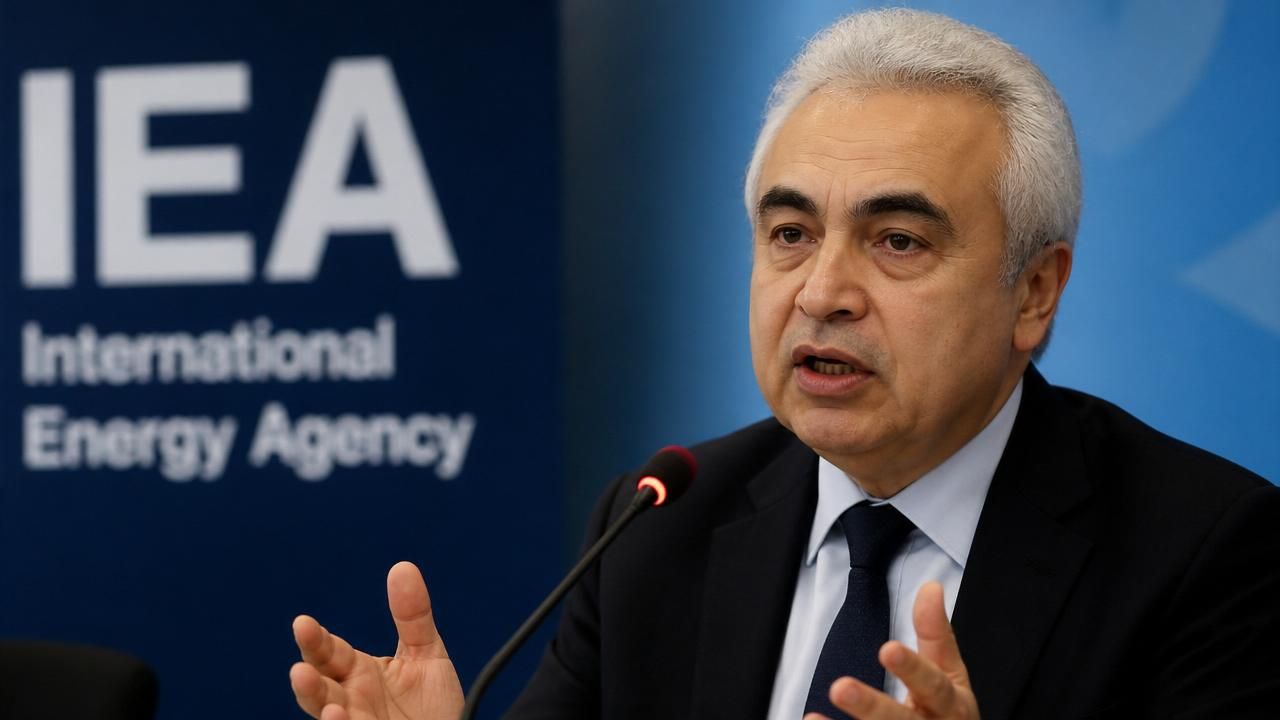
The International Energy Agency (IEA) has issued a stark warning that the global economy faces a renewed challenge if the conflict choking the Strait of Hormuz is not resolved within weeks. In a series of alarming statements, IEA Executive Director Fatih Birol cautioned that the crisis poses the greatest threat to global energy security 'in history,' with Europe having as little as six weeks of jet fuel supply left.
Who, What, When, Where, Why, and How
Fatih Birol, the head of the IEA, made the comments during a press conference on [date], highlighting the severe impact of the ongoing Iran conflict on the Strait of Hormuz, a critical chokepoint for global oil shipments. The strait, located between Iran and Oman, sees about 20% of the world's oil pass through daily. The crisis began after [trigger event], leading to disruptions that have sent oil prices soaring and threatened supply chains worldwide.
Birol warned that if the situation persists, the global economy could tip into recession. 'The global economy faces a renewed challenge if the conflict that’s choked the Strait of Hormuz isn’t resolved in a matter of weeks,' he told Bloomberg Markets. The Financial Times quoted him as saying this is 'the greatest threat to global energy in history.'
Europe's Jet Fuel Crisis
Perhaps the most immediate impact is on Europe's aviation sector. The BBC and The Independent both reported that Europe has 'maybe six weeks of jet fuel left,' according to the IEA chief. The Guardian echoed this, stating that Europe has only six weeks' supply of jet fuel owing to the Iran war. This has raised fears that summer holidays could be under threat, as airlines may be forced to cancel flights if fuel runs out.
'Warning summer holidays are under threat with oil markets nearing the red zone,' The Independent reported, capturing the anxiety among travelers and industry executives. The Guardian's Heather Stewart wrote that 'with oil markets nearing the danger zone, a US-Iran deal can’t come soon enough,' emphasizing the need for diplomatic resolution.
Global Economic Implications
The crisis extends beyond jet fuel. The Strait of Hormuz disruption has caused oil prices to spike, impacting everything from transportation costs to heating bills. The IEA boss warned that the global economy is 'in peril' if the Hormuz crisis persists, as reported by The Edge Malaysia and The Edge Singapore. This sentiment was echoed across multiple sources, highlighting the interconnected nature of energy and economic stability.
Historically, similar disruptions have led to recessions. The 1973 oil crisis, triggered by an OPEC embargo, caused a global economic downturn. Today, the stakes are even higher given the world's reliance on just-in-time supply chains and the post-pandemic recovery's fragility.
Differing Perspectives
While the IEA's warnings are dire, some analysts urge caution. The Guardian's Stewart notes that a US-Iran deal could de-escalate tensions, but negotiations remain fraught. The Financial Times emphasizes the 'greatest threat in history' language, while Bloomberg focuses on the economic peril. The BBC and The Independent zero in on the jet fuel shortage, a tangible and near-term concern for European consumers.
Chartmill, a financial analysis site, did not provide direct news but its mention suggests markets are closely watching the situation. The varying frames—from geopolitical risk to consumer impact—reflect the multifaceted nature of the crisis.
Historical Context and Expert Views
The Strait of Hormuz has been a flashpoint for decades. During the Iran-Iraq War in the 1980s, both sides attacked oil tankers, leading to US naval intervention. Today, the conflict involves not only Iran and the US but also regional proxies and global powers. Energy experts warn that a prolonged closure could lead to oil prices exceeding $150 per barrel, dwarfing the 2008 spike.
Birol urged immediate diplomatic action: 'We need a resolution within weeks, not months.' He also called for strategic reserves to be released, though many countries have already drawn down their stocks.
Implications for the Future
The crisis underscores the vulnerability of global energy systems. It may accelerate investments in renewable energy and alternative supply routes, but in the short term, consumers face higher prices and potential shortages. Airlines may need to raise fares or reduce schedules, while industries reliant on petrochemicals could see cost increases.
As summer approaches, the threat to holidays is real. The Independent reported that 'summer holidays are under threat,' a sentiment that resonates with millions of Europeans. The IEA's warning serves as a call to action for governments to diversify energy sources and secure supply chains.
In conclusion, the Hormuz crisis represents a pivotal moment for global energy security. With the IEA's stark warnings and Europe's jet fuel clock ticking, the world watches for diplomatic breakthroughs—or prepares for economic fallout.