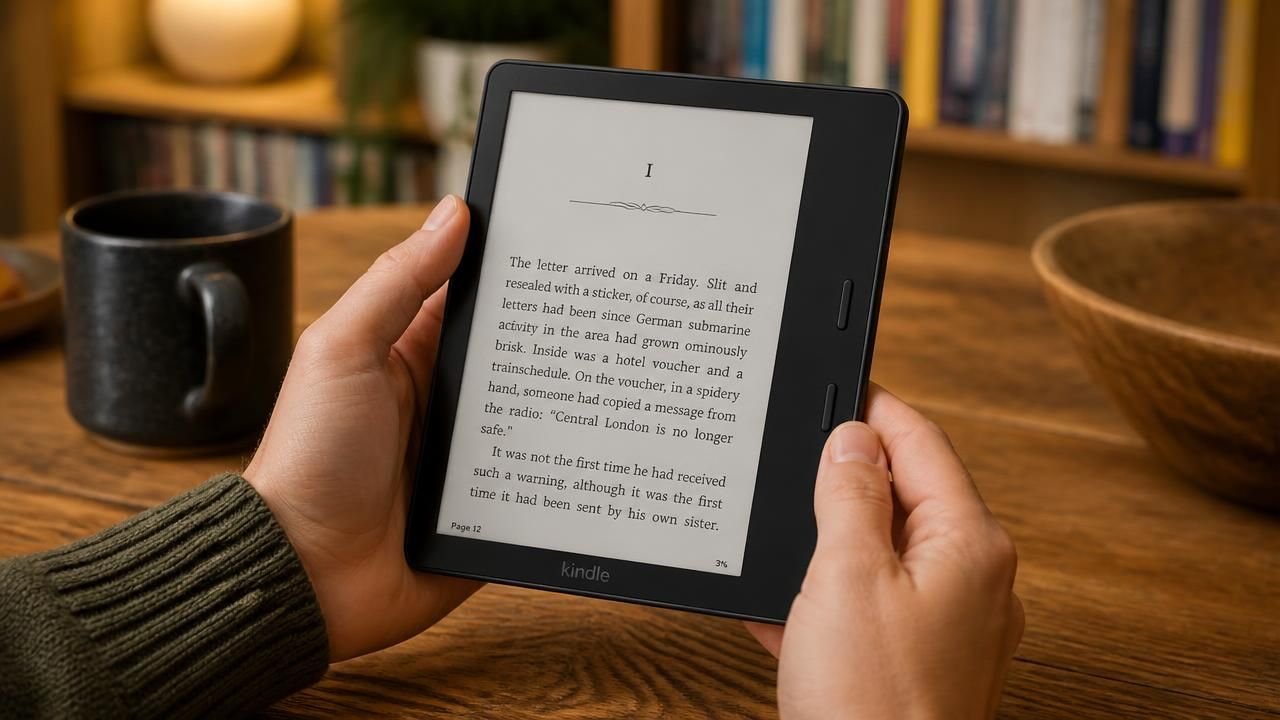
Amazon has overhauled its Kindle lineup for 2026, and the headline change is one that longtime e-reader fans have demanded for years: page-turn buttons are back. But the return of physical page navigation arrives alongside something else readers have grown accustomed to—higher prices and a more crowded, more expensive product ladder. The new family spans five monochrome models plus the color-capable Kindle Colorsoft, with the flagship Paperwhite Signature Edition priced at $250, the standard Paperwhite at $200 and the entry-level Kindle at $150.
Reviews published this week tell a story that is unusually split for a single product launch. Some outlets call the new Paperwhite the best Kindle Amazon has ever built; others document compromises hidden beneath the aluminum and the redesigned chassis. Together, they sketch a company confident enough in its e-reader dominance to charge more—and a customer base that may not follow it all the way up the price ladder.
The Buttons Return, For a Price
Ars Technica's review frames the launch as a case study in hardware inflation. The publication notes that the $160 Kindle Paperwhite of two years ago outperforms this year's $150 entry-level Kindle in nearly every measurable way—screen size, front-light quality and waterproofing included—and warns buyers to weigh a refurbished older model against the newest budget device.
The flagship of the five-model monochrome family is the $250 Paperwhite Signature Edition, which takes the core specifications of the $200 Paperwhite and wraps them in a rigid, iPad-like aluminum enclosure in place of the traditional plastic shell. That material upgrade, plus the premium positioning of physical controls, is where the added cost accumulates.
Fast Company's coverage led with the simplest possible summary—"Kindle page-turn buttons are back"—while The New York Post pointed to a lower-cost route to the same feature. The publication highlighted a $35 accessory, the Kindle Click, which may end up stealing attention from the e-readers themselves: a cheap add-on that delivers tactile page turning without requiring buyers to step up to a more expensive device.
A Survey Suggests Readers Aren't Convinced
Android Authority reported on a reader survey indicating that Kindle owners "aren't buying Amazon's pricey page-turning solution," a signal that the physical-button revival may be addressing a vocal minority rather than the mass market. The same outlet argued the moment is a "critical" one for Amazon's e-reader business—a transition point where the company must justify premium pricing against modest year-over-year gains.
"New thing, better features, same price" used to be a reliable formula, but now you're lucky if you can get the same thing for barely more than before.
— Ars Technica
The Downgrade Nobody Advertised
Forbes promised a close look at the new Paperwhite that revealed a "surprise downgrade," a reminder that spec sheets for redesigned devices rarely move in only one direction. The framing contrasts sharply with MSN's assessment, which labeled the 2026 Paperwhite "the best Kindle ever made." Both can be true at once: the device may be the finest e-reader Amazon has produced in absolute terms while still representing a value regression relative to its predecessors.
Coverage of the budget model was more uniformly warm. Mashable credited "subtle design changes" for making the 2026 Kindle Amazon's best budget-friendly e-reader, and MSN argued the base Kindle proves "you don't need all the bells and whistles." For cost-conscious buyers—and for anyone upgrading from a device five or more years old—the entry model remains the lineup's persuasive argument.
From 2007 to Now: A Long Chapter
Telegraph India situated the launch in the longer arc of Kindle history, tracing the product from the original 2007 device through to this redesigned range. That context matters. Amazon spent nearly two decades building an ecosystem in which hardware is frequently sold near cost and recouped through ebook sales—a model that made the Kindle's low entry price its defining feature. The 2026 lineup tests how much of that logic still applies when component costs, supply pressures and inflation have pushed prices relentlessly upward across the entire gadget market.
The broader industry picture reinforces the point: even hobbyist hardware has been affected, with basic single-board computers now commanding prices that would have seemed implausible a few years ago. E-readers, with their specialized low-power displays and long refresh cycles, have been somewhat insulated—but not immune.
What It Means for Buyers
- Upgrading from an older Paperwhite? Reviewers broadly agree the screen and light improvements are real, but check whether the specific model you want includes the features you're paying for.
- Considering the Signature Edition? The $250 price buys aluminum construction and the top specification set; the $200 Paperwhite carries much of the same core hardware.
- Want buttons cheaply? The $35 Kindle Click is the least expensive path to tactile paging—and, per the New York Post, possibly the most interesting product in the launch.
- Shopping on a budget? Multiple outlets argue a refurbished prior-generation Paperwhite beats the new $150 base Kindle on screen, lighting and waterproofing.
Amazon has not yet commented publicly on the survey findings or on criticism of the pricing structure. But the divergence in coverage—enthusiasm from budget-focused reviewers, caution from those tracking value—captures the central tension of the 2026 Kindle generation. Amazon has made its best hardware yet. The open question is whether readers, staring at a $250 price tag and a $35 workaround, will agree it's worth paying for.