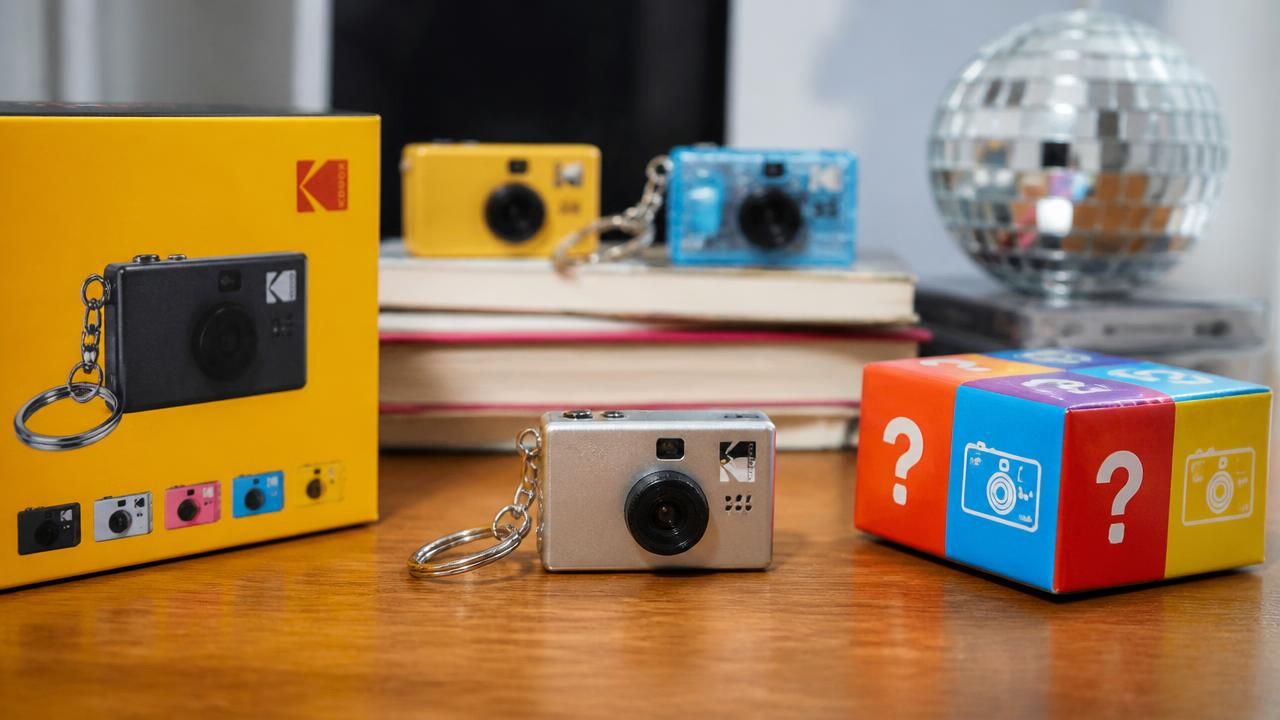
Kodak’s Charmera has turned a tiny, deliberately low-tech keychain camera into one of the season’s most talked-about gadget drops. The blind-box digital camera, which sells for around $35 and has recently fallen to $29.74 at Amazon and B&H Photo, is small enough to hang from a keyring, cute enough to fuel Y2K nostalgia, and imperfect enough that reviewers describe it as charming rather than capable. That combination has proven potent: the Charmera sold out in 24 hours, prompted fans to call for restocks, and is now being restocked by retailers such as Urban Outfitters.
The pitch is simple. The Charmera is a point-and-shoot toy camera with a tiny LCD screen that captures 1,440×1,080-pixel photos. It comes in a blind box, so buyers do not know which of six retro designs they are getting—or whether they have landed the rarer transparent version—until they open the package. Kodak has also leaned into the Y2K aesthetic with a Millennium Edition, a $35 drop that The Gadgeteer described as the kind of keychain camera Pinterest was made for. The product is less about photographic performance than about the pleasure of carrying a playful object and experimenting with it.
A toy camera with deliberately low stakes
That framing matters because the Charmera is not trying to compete with a smartphone. The Verge’s Andrew Liszewski found that its photos often look fuzzy and washed out, and that video and audio quality are poor, with few adjustments available to improve them. Yet he kept using it anyway. The appeal comes from its built-in effects: a black-and-white mode and red, blue, yellow, and gray pixel filters can produce bolder, two-tone images that make the camera feel more like a creative toy than a serious imaging device.
“It takes pretty lackluster photos, yet it’s charming enough that he kept using it anyway,” The Verge wrote of Liszewski’s experience.
That is an unusual recommendation for a camera, but it fits the product’s purpose. The Charmera is not for weddings, news events, or important occasions. It is for the same impulse that drives people to buy disposable cameras, novelty film stocks, and tiny digital gadgets: a desire for images that feel less polished and more playful. At $30, the trade-off is easier to accept. The Verge noted that it would not normally recommend a bad camera, but made an exception because the Charmera offers a surprising amount to play with for the price.
Why the Charmera went viral
The Charmera’s rise follows a familiar viral-gadget pattern, but with a few specific ingredients. First, the blind-box format adds collectibility and surprise. Buyers are not simply purchasing a camera; they are opening a package to see which design they received. Second, the Y2K styling taps into a broader nostalgia cycle that has made early-2000s aesthetics fashionable again. Third, the price is low enough for an impulse buy and giftable enough for the holidays. MSN framed it as a retro holiday gift everyone will want, while The Gadgeteer positioned it as a Pinterest-friendly object—something to be photographed, posted, and given as a stocking stuffer.
- Nostalgia: The Y2K look and keychain form factor make the Charmera feel like a fashion accessory as much as a camera.
- Blind-box appeal: Six retro designs plus a rarer transparent version create surprise and collectibility.
- Low price: At roughly $30 to $35, it is cheap enough to buy on a whim and easy to give as a gift.
- Low-stakes creativity: Built-in filters and poor-but-fun image quality encourage experimentation rather than perfection.
Different outlets have emphasized different parts of the story. Deal-focused coverage from The Verge and Digital Camera World has highlighted the Charmera’s all-time-low price, now under $30. News and retail coverage from USA Today, the Democrat and Chronicle, and Syracuse.com has focused on sellouts and restocks, including Urban Outfitters’ restock of the viral blind-box camera. TechSpot characterized the Charmera as a sellout hit powered by a clever stunt, while CNBC reported that Kodak had launched a vintage-style toy camera with strong sales. The common thread is that the Charmera’s weakness as a camera has not hurt its strength as a product.
Sellouts, restocks, and a growing retro-cam rivalry
The retail arc has been almost as important as the product itself. Reports that the Charmera sold out within a day created scarcity and urgency, and fans quickly began calling for restocks. The fact that a $30 novelty camera could generate that kind of demand says something about how gadget culture now works: a product does not need to be the best at what it does; it needs to be distinctive, shareable, and affordable enough to take a chance on. The blind-box format amplifies that dynamic by turning each purchase into a small reveal.
Kodak is already trying to extend the formula. The Kodak SlideTag is a $35 color E Ink photo keychain that works with Google Find Hub, effectively combining a tiny digital photo frame with an AirTag-like tracking function. Coverage from TalkAndroid and MSN framed it as a follow-up aimed at the same Charmera-style audience: cute, small, and designed to live on a bag or keychain. At the same time, Digital Trends reports that a new $30 keychain camera is coming for the Charmera with a flip screen for selfies, a sign that competitors see a viable niche in retro-styled, low-cost digital cameras.
That competition is likely to shape the next phase of the story. The Charmera proved that there is demand for cameras that are more toy than tool. A rival with a flip screen could appeal to buyers who want selfies and video, while the SlideTag suggests Kodak wants to turn the keychain form factor into a broader family of accessories. The risk is that the market becomes crowded with similar novelty gadgets, but the opportunity is that the category grows beyond a single viral product.
What the Charmera says about the gadget business
The Charmera’s success is a reminder that not every tech product is judged by specs. In a market dominated by smartphones with sophisticated cameras, a $30 keychain camera can still find an audience by offering something phones do not: a sense of occasion, a bit of friction, and a visual style that feels intentionally imperfect. Kodak, a brand with deep nostalgic associations, is well positioned to exploit that impulse. The company’s challenge is to keep the charm without oversaturating the market or letting quality slip too far.
For buyers, the calculus is straightforward. The Charmera is not a reliable camera, and it is not meant to be. It is a gift, a conversation piece, and a cheap way to experiment with retro-looking images. The recent price drop to $29.74 makes that proposition more attractive, but the sellouts and restocks suggest that price alone does not explain the phenomenon. The Charmera works because it is cute, collectible, and just capable enough to be fun. In a gadget landscape full of serious devices, that may be the most important feature of all.