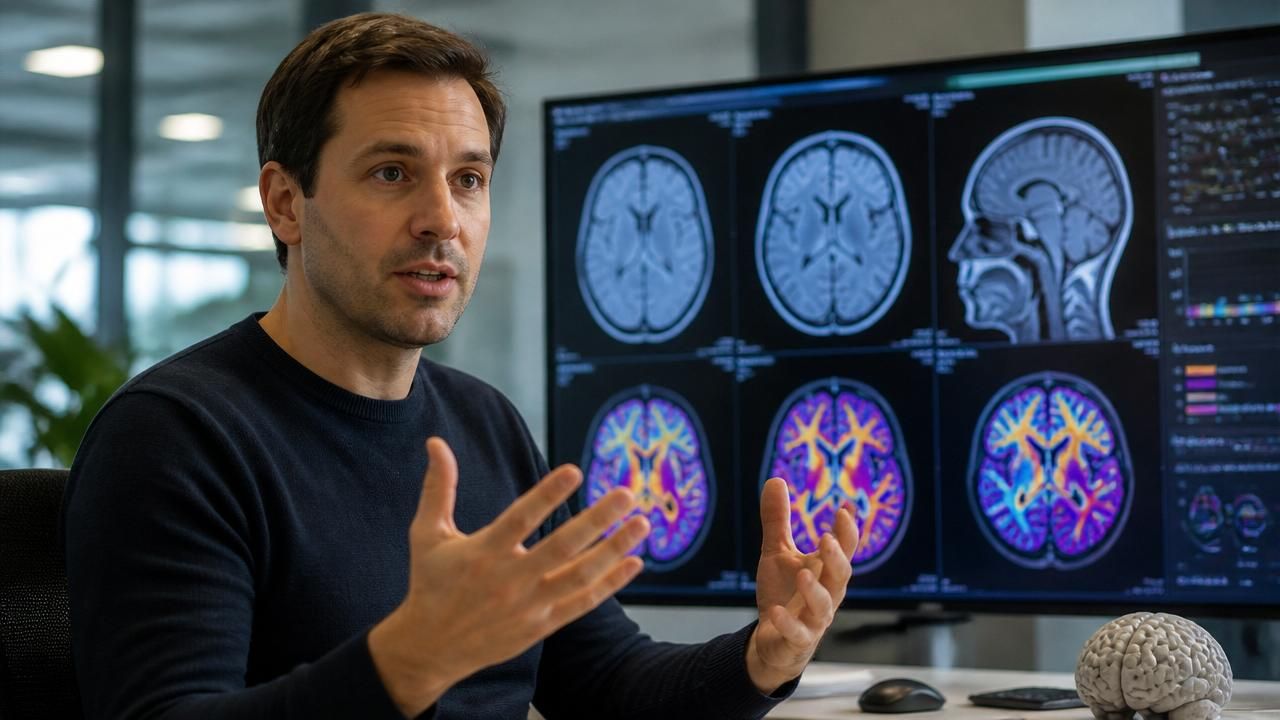
Gidi Littwin, a key inventor behind Apple's FaceID technology, has unveiled a new AI startup called Hemispheric that aims to transform brain health diagnostics. The company uses artificial intelligence to analyze brain scans for conditions such as depression, PTSD, and Parkinson's disease, with the goal of making these scans as cheap and easy as a routine blood test.
From FaceID to Brain Health
Littwin, who previously worked at Apple on the neural networks powering FaceID, is now applying similar pattern recognition techniques to medical imaging. Hemispheric's platform leverages deep learning to detect subtle biomarkers in brain scans that may indicate neurological or psychiatric disorders. The technology could enable earlier diagnosis and intervention, potentially improving outcomes for millions of patients worldwide.
“We want to make diagnostic brain scans as accessible and affordable as a blood test,” Littwin said in an interview. “The goal is to democratize brain health.”
How It Works
Hemispheric's AI models are trained on thousands of brain scans, learning to identify patterns associated with specific conditions. The system can analyze MRI and CT images, flagging abnormalities that might be missed by the human eye. According to the company, the technology can detect early signs of Parkinson's disease years before symptoms appear, and can help differentiate between types of depression for more targeted treatment.
Key Features
- AI-powered analysis of brain scans for depression, PTSD, Parkinson's, and other conditions
- Designed to be low-cost and scalable, similar to blood test workflows
- Potential for early detection and personalized treatment plans
Industry Context and Expert Views
Neurologists and psychiatrists have long sought better diagnostic tools. Current methods for diagnosing conditions like depression rely heavily on patient self-reporting and clinical interviews, which can be subjective. Brain scans are used but are expensive and require specialist interpretation. Hemispheric's AI could streamline this process.
Dr. Sarah Chen, a neurologist at Johns Hopkins University, commented: “AI has enormous potential in neuroimaging. If Hemispheric can deliver accurate, affordable scans, it could be a game-changer for early diagnosis of Parkinson's and other neurodegenerative diseases.”
However, some experts caution that AI in medical diagnostics must be rigorously validated. Dr. Mark Rivera, a bioethicist at Stanford, noted: “We need to ensure these tools are tested on diverse populations and don't perpetuate biases. The promise is real, but so are the challenges.”
Broader Implications
Hemispheric's launch comes amid a surge of AI applications in healthcare. The global AI in diagnostics market is expected to reach $5.5 billion by 2028, according to Grand View Research. Littwin's background in consumer technology could help bring a user-friendly approach to medical devices.
If successful, Hemispheric could make brain health monitoring routine, much like cholesterol checks. This could lead to earlier treatment for mental health conditions, reducing stigma and improving quality of life. For Parkinson's disease, early intervention might slow progression.
The Bigger Picture
While Hemispheric focuses on brain health, other news this week highlights the intersection of technology and daily life. From smart scales that track body metrics to sleep masks for better rest, innovation continues to shape how we monitor our health. Even pop culture—like Star Trek auctions and World Cup memes—reflects our fascination with technology and the future.
But Littwin's venture stands out for its potential to address a critical need: accessible mental health diagnostics. As he puts it, “Your brain is the most important organ. It's time we gave it the attention it deserves.”