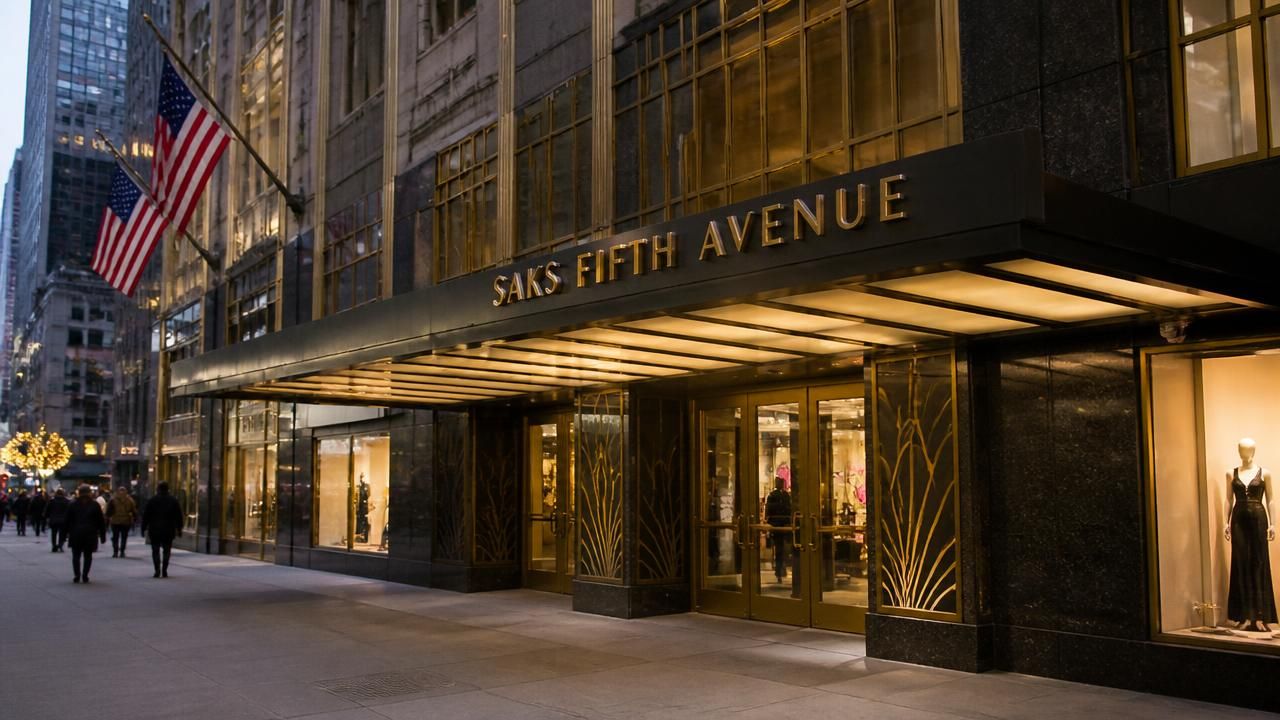
Saks Global has formally emerged from Chapter 11 bankruptcy and renamed itself Exemplar Luxury Group, closing one of the most closely watched restructurings in American retail and staking its future on a simple, if perilous, proposition: that wealthy shoppers will pay for service, not square footage.
The company announced the exit alongside a sweeping repositioning, describing the new entity as offering "unrivaled customer experiences across Neiman Marcus, Saks Fifth Avenue and Bergdorf Goodman." The three banners — consolidated under one corporate roof during the 2024 merger of Saks Fifth Avenue and Neiman Marcus Group — now sit inside a leaner, creditor-owned parent with a new name, a new leadership roster and a markedly smaller store estate.
From Chapter 11 to 'Exemplar'
The filing and subsequent emergence cap a turbulent two years for the luxury department-store sector. The takeover of Neiman Marcus by HBC, Saks's then-parent, created a group with enormous brand equity but a balance sheet strained by high interest rates, soft discretionary spending and the fixed costs of legacy real estate. Lenders and noteholders ultimately took ownership in the restructuring, a hallmark of so-called loan-to-own deals that have reshaped retail in the post-pandemic era.
Reuters framed the exit as a wager on high-end luxury to revive sales — a bet that the ultra-affluent, less rate-sensitive consumer can carry the business even as middle-income shoppers pull back. Robb Report emphasized the "slimmed-down" nature of the newly emerged company, while Retail Dive focused on the operational housekeeping: the title noted the company also "dumped" five other things along the way, from redundant corporate functions to underperforming locations.
The new group is positioning itself around "unrivaled customer experiences across Neiman Marcus, Saks Fifth Avenue and Bergdorf Goodman."
A Slimmer Footprint, a Sharper Thesis
Industry coverage converges on the mechanics of the turnaround: fewer stores, less debt, and a marketing and merchandising strategy tilted decisively upmarket. Home Accents Today and Fox Business both emphasized the reduced store footprint, with the latter describing a leaner physical presence as central to the relaunch. The company has not disclosed a full closure list in every outlet's reporting, but the direction is unmistakable — fewer doors, more investment per door.
The logic is familiar to luxury analysts. Department stores that chased volume through discounting eroded the exclusivity that underpins brands like Bergdorf Goodman. Exemplar's thesis inverts that: concentrate capital on flagships and clienteling, use data to serve top-spending customers, and let the Neiman Marcus and Saks nameplates do the aspirational work online.
Leadership Shuffle Signals Priorities
The rebrand came with personnel moves that telegraph where the group believes the value sits. Exemplar appointed Gretchen Koback Pursel as Chief People Officer, a hire that suggests the company sees talent retention and service culture as operational infrastructure rather than back-office overhead. Separately, Lanessa Elrod — a Louis Vuitton executive, according to Retail Dive — was named President of Bergdorf Goodman, handing the group's most rarefied banner to a leader steeped in the brand-first discipline of European luxury houses.
CEO Geoffroy van Raemdonck remains the public face of the strategy, and Bloomberg Markets' Romaine Bostick examined the relaunch with a panel that included van Raemdonck, Exemplar President and Chief Creative Officer Darcy Penick, FIT associate professor Shawn Grain Carter and Telsey Advisory Group CEO Dana Telsey. The breadth of that lineup reflects the story's dual nature: a balance-sheet event for credit watchers and a cultural repositioning story for merchandising specialists.
Marketing Kicks In
Even as the corporate machinery settled, the customer-facing side moved quickly. MediaPost reported that Saks is leaning into "main character energy" for its holiday campaign — a phrase borrowed from internet vernacular and aimed squarely at self-expressive, fashion-forward shoppers. The same outlet noted that Saks and Neiman Marcus are jointly trying to "put a fresh foot forward," a reminder that the two banners must now coexist inside one portfolio without cannibalizing each other.
That balance is delicate. Bergdorf Goodman serves the apex clientele; Neiman Marcus occupies the upper-middle luxury tier with a strong regional footprint; Saks Fifth Avenue carries national recognition and a deep beauty business. Consolidating back-office functions while preserving distinct brand identities is the central operational test of the merger.
The Skeptics' Case
- Luxury demand is softening. Global luxury growth has decelerated sharply from its 2022–2023 peak, pressuring even the strongest European houses and, by extension, their wholesale and concession partners.
- Debt remains. Exiting Chapter 11 reduces leverage but rarely eliminates it; the new owners will expect performance quickly.
- The department-store model is under structural threat. Brand-owned e-commerce and mono-brand boutiques continue to siphon the highest-value customers.
- Real estate optionality cuts both ways. Store closures save cash but can erode the local relevance that drives beauty and accessory volume.
Still, the counterargument carries weight. Physical retail in the luxury tier has proven more resilient than mid-market apparel, and a consolidated Saks–Neiman–Bergdorf platform controls a substantial share of the American luxury wholesale channel — giving it negotiating leverage with the European houses it depends on. A cleaner balance sheet, a smaller store base and a management team drawn from Louis Vuitton and kindred brands give the group a credible shot at rebuilding margins.
What to Watch
Three indicators will reveal whether the Exemplar rebrand is substance or signage. First, comparable sales at Bergdorf Goodman and the flagship Saks Fifth Avenue stores, which the company will need to disclose or leak persuasively. Second, vendor terms — whether luxury maisons deepen concessions and exclusive capsules with the group or continue shifting toward direct-to-consumer. Third, customer-service investment: staffing ratios, clienteling technology and loyalty-program integration across three historically separate databases.
For now, the message from Exemplar is that the era of expansion is over and the era of curation has begun. Whether Wall Street, the luxury houses and — most importantly — the affluent shopper accept that framing will determine if this exit marks a genuine fresh start or merely the first chapter of the next restructuring.