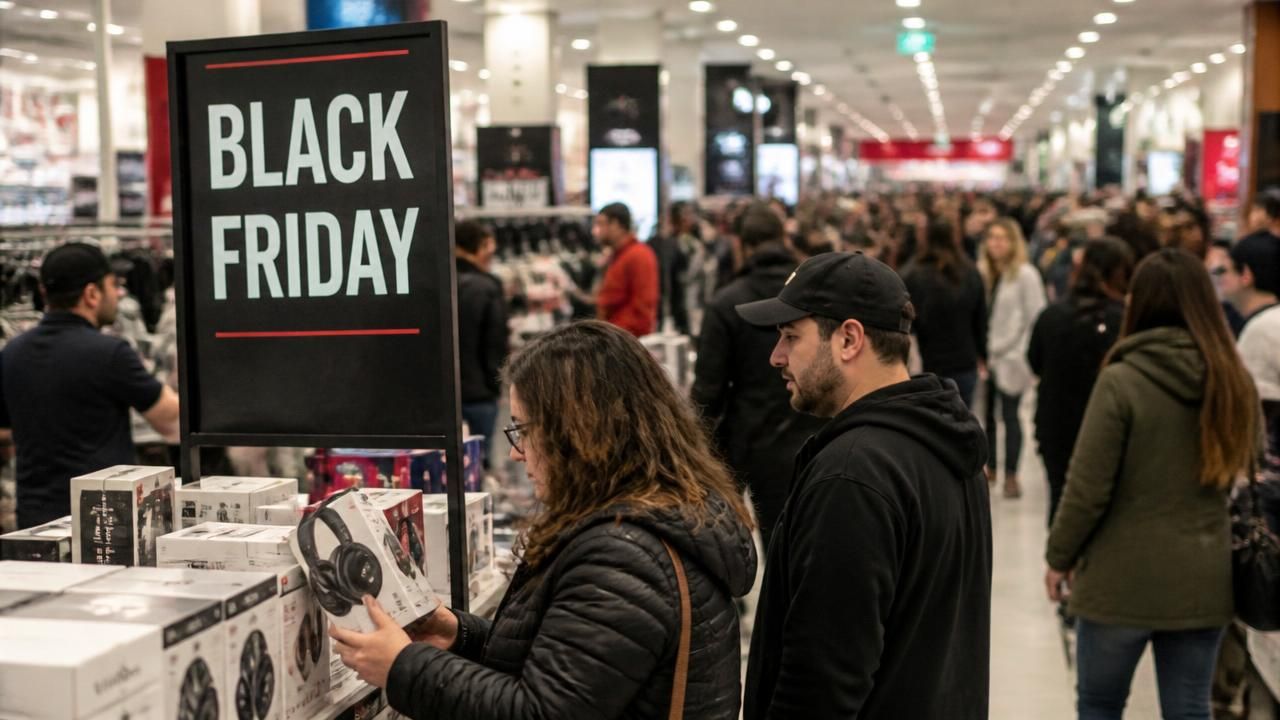
The Friday after Thanksgiving long ago stopped being a single day of shopping. It is now a season-long media event, one in which publishers compete not merely for readers' attention but for the credibility of their recommendations. This year's coverage — drawn from The New York Times, CNN, NJ.com, MSN and Ars Technica — describes an industry that has industrialized the art of the deal roundup: hundreds of sales individually price-checked, dozens of lists published, and a retail calendar that now stretches from late October to Cyber Monday.
First, a history lesson — with robots
Ars Technica, a technology site better known for deeply reported hardware and policy coverage, took an unusual route into the seasonal fray this year with a tongue-in-cheek retelling of the holiday's origin. Rather than trace Black Friday to the Philadelphia traffic police of the 1950s and 1960s — the conventional, documented history — Ars reached instead for the animated 1986 film The Transformers: The Movie, which is set in the year 2005 and dramatizes the death of Optimus Prime during a Decepticon assault on Autobot City.
The site's account is knowingly overwrought, complete with parenthetical curses upon Megatron's energon and a lament for the Autobots lost in the fighting. But it has a thesis, delivered through the franchise's most famous line:
Megatron must be stopped, no matter the cost.
The joke works because the cost, in the film, is Prime himself — and because that is roughly how shoppers describe the calculus of a good doorbuster. Ars' framing also quietly captures something true about the modern holiday: Black Friday is now so thoroughly mediated by storytelling, ranking and ritual that a site can publish a lore essay instead of a price list and still land squarely on the beat.
The numbers game: how many sales can one desk shop?
The volume claims in this year's coverage are striking, and they are themselves a form of marketing. CNN's commerce team reported shopping 126 early Black Friday sales to surface 80 worth buying, and separately shopping 147 sales to find 98 deals. The implication is editorial labor as a service: the reader is spared the sorting, and the outlet claims the mantle of the person who did the tedious work.
The New York Times took a different editorial angle, narrowing by price and by retailer rather than by sheer count. Its deals desk published a list of 75 best Black Friday deals under $100 — a constraint that speaks to budget-conscious readers — alongside a separate roundup of 50-plus Walmart Black Friday offers. NJ.com went broader still, promising 120 of the best deals from Target, Walmart, wearable maker Oura, kitchen brand Ninja and others, an approach that mixes big-box retail with direct-to-consumer gadget brands.
Across all of them, the same verbs recur: shopped, tested, verified, worth buying now. The language of consumer journalism has converged on the vocabulary of inspection, because in a market saturated with affiliate content, verification is the only differentiator left.
The retailer-by-retailer beat
Where general-interest outlets chase breadth, service coverage now breaks down by merchant. MSN's guide to Walmart's Black Friday sale promised the full operational picture — store hours, the best deals, and highlights from the printed ad — the kind of practical detail that determines whether a shopper actually leaves the house. That format, closer to a briefing than a wish list, reflects how central a handful of retailers have become to the entire event: Walmart, Target and Amazon each command dedicated coverage cycles rather than a paragraph in a master list.
Amazon, predictably, gets its own scrutiny. One MSN feature offered a tool for judging whether a given Amazon Black Friday deal is genuinely good — an implicit admission that listed discounts are not always what they appear, and that historical pricing data has become a consumer-protection issue in its own right.
A niche worth covering: LEGO
MSN also carved out space for a category list on LEGO sets, including Star Wars and Animal Crossing builds. The existence of such a list is telling: collectible toys have become a serious discount category with dedicated audiences, release schedules and aftermarket values, and publishers now treat them with the same rigor as laptops or headphones.
Why the lists keep getting longer
Three forces are inflating the format. First, economics: commerce content earns affiliate commissions, making deal coverage one of the few reliably monetizable corners of digital publishing. Second, competition for search traffic: the outlet that publishes first and updates most often tends to win the query. Third, the calendar itself — retailers have pushed promotions earlier each year, which is why CNN's headlines emphasize early Black Friday sales rather than the day itself.
There is a cost to readers, too. Several of this year's roundups were delivered behind JavaScript walls or ad-blocker gates, a reminder that the business model funding all this price-checking depends on the very advertising readers try to avoid.
How to read a deal list
- Check the reference price. A discount is only meaningful against a product's real historical price, not a manufacturer's suggested retail.
- Prefer constrained lists. A roundup limited to under $100 or to one retailer is usually more useful than an undifferentiated mega-list.
- Assume affiliate incentives. Most commerce desks earn commissions; look for explicit statements about testing and price monitoring.
- Shop the calendar, not the day. Early promotions now often match or beat the Friday itself.
What emerges from this year's coverage is a holiday that has split in two. One version is the ritual Ars Technica gently mocks — a narrative of sacrifice, heroism and loss, retold annually. The other is a sprawling, data-driven service industry in which CNN counts sales shopped, the Times counts dollars saved, and MSN builds calculators to tell you whether the number on the tag means anything at all. Both, in the end, are about the same thing: the cost of getting what you came for.