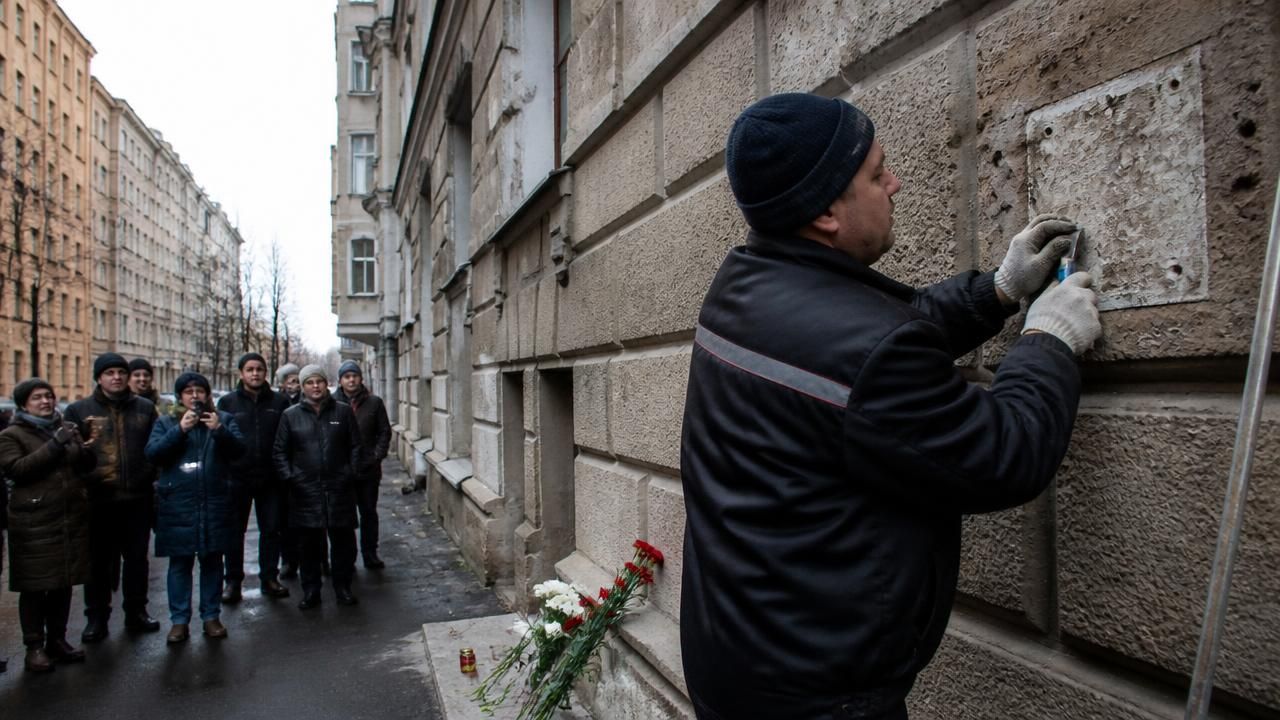
Memorials to the victims of Joseph Stalin's repressive regime are disappearing across Russia, plaque by plaque, in what critics and several European governments describe as a deliberate attempt to erase public memory of the Gulag and the Great Terror. The New York Times, reporting from Moscow, documents individual cases of commemorative plaques being quietly removed from the facades of apartment buildings and public squares, while European states have publicly accused Russia of trying to obliterate the historical record of Soviet-era repression.
The removals are unfolding against a backdrop of intensifying domestic repression. As the war in Ukraine grinds on, Russian courts have jailed a growing number of war critics, and the same legal machinery — foreign-agent designations, extremism charges and "discreditation" laws — has been turned against human rights organizations that maintained the country's independent memory of Soviet terror.
What Is Happening — and Where
According to the Times' Moscow correspondent Valerie Hopkins, the erasure operates not through dramatic demolition but through quiet administrative action. Plaques honoring named victims of Stalin's purges — often small markers bearing the name and dates of a person arrested and executed in the 1930s — are being taken down with little public notice and no official explanation. The cumulative effect, Hopkins reports, is the slow dismantling of a grassroots memorial network built over three decades by activists, historians and relatives of the dead.
European governments have seized on one particularly visible case: the disappearance of a monument from a site associated with the Gulag system. According to reporting on the case, European states have framed the removal as evidence of a state policy of memory erasure, an accusation that carries particular weight given the international distinctions awarded to Russia's own memory defenders.
Why It Matters: The Politics of Memory
The fading of Gulag memory is not a historical footnote. Stalin's Great Terror of 1936 to 1938 saw roughly 750,000 people executed, while millions more passed through the Gulag camp system; the broader Soviet period is estimated to have cost well over a million lives through repression, famine and forced labor. For decades, survivors and their descendants catalogued these crimes while the Soviet state alternately glorified and suppressed Stalin's legacy.
A post-Soviet reckoning took hold in the 1990s and 2000s. It produced archival projects, naming monuments across the country, and the October 2017 unveiling in Moscow of the Wall of Grief — a monumental sculpture created by artist Georgy Frangulyan on the initiative of human rights advocates, and a rare state-endorsed memorial to victims of political repression. That momentum has since reversed sharply. In 2021, Memorial International, the organization that documented Stalin's crimes and compiled lists of the executed, was liquidated by court order and branded a foreign agent; the following year it was awarded the Nobel Peace Prize.
Analysts writing in outlets such as the American Enterprise Institute have argued that Vladimir Putin's Russia has moved from ambivalence about Stalin to a selective rehabilitation of him — emphasizing industrialization and the victory in World War II while minimizing the camps and executions. From that perspective, the dismantling of plaques is not incidental but a component of legitimacy-building: a state that justifies present-day repression benefits from a sanitized past.
What is happening is the erasure of memory — not by decree, but plaque by plaque, name by name.
Differing Frames
The framing of the story varies widely across outlets and borders. The Times approaches the removals through on-the-ground reporting, centering the activists and relatives who maintain the plaques and who now risk prosecution for doing so. Conservative policy analysts in Washington, by contrast, frame Stalin's return to the pedestal as a deliberate ideological project of the Russian state, linking the rehabilitation to the broader authoritarian turn. European governments treat the disappearances as a diplomatic and normative issue, calling them an attempt to erase the memory of Stalin's crimes and implicitly invoking the debates over Soviet responsibility that have divided Europe for decades.
Russian authorities have not publicly acknowledged a coordinated campaign; such removals are typically attributed to building renovations, administrative decisions or local property disputes. The absence of transparent legal process is itself part of the story, allowing each removal to be denied individually even as the pattern accumulates.
What Comes Next
- Legal pressure: Activists who document repression face the same laws used against war critics, making memory work increasingly hazardous.
- Archival risk: The dissolution of organizations like Memorial threatens the institutional infrastructure that preserved access to Soviet-era records.
- Diplomatic friction: European accusations signal that memory politics is becoming another front in Russia's confrontation with the West.
- Chilling effect: When history is contested under threat of prosecution, the cost falls first on the families of the dead.
The deeper question, scholars note, is whether memory can survive when its custodians are jailed and its memorials removed. The plaques themselves are small — a name, a date, the words "arrested" and "executed." Their disappearance does not erase the crimes. But it makes remembering them an act of defiance.