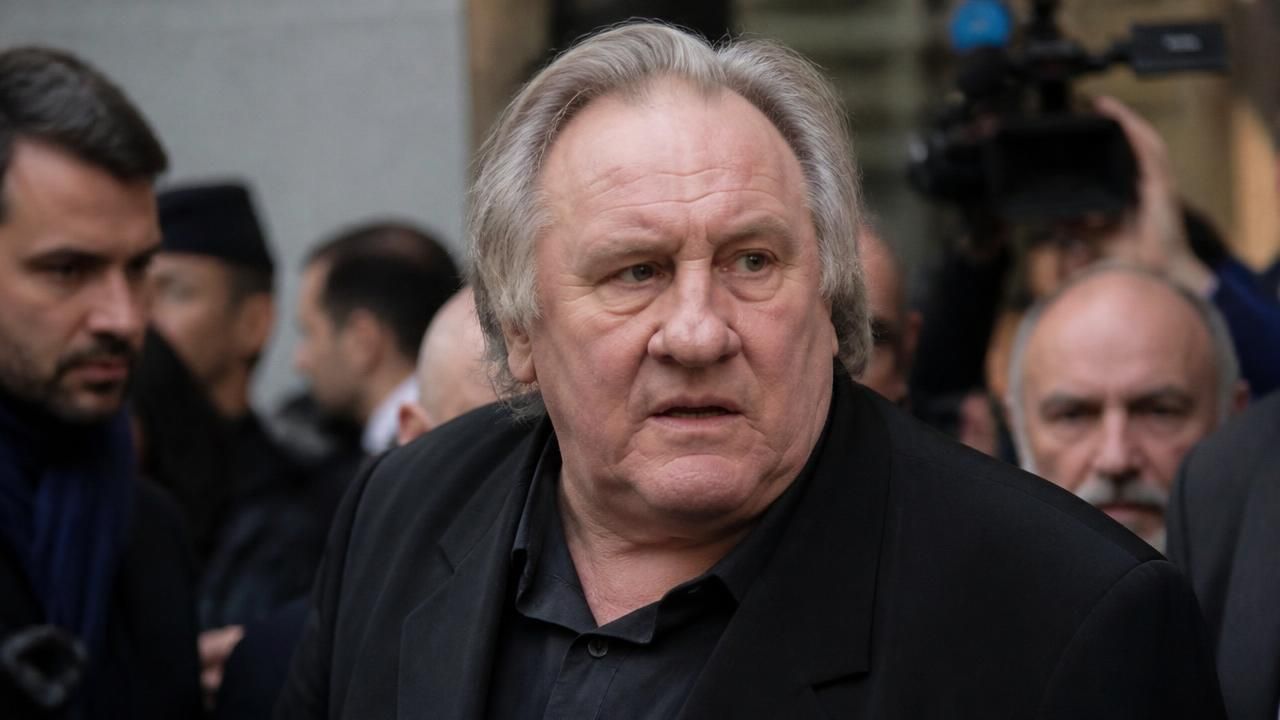
A French court has ordered Gérard Depardieu, one of the country's most celebrated and most controversial screen actors, to stand trial on charges of rape and sexual assault, according to his lawyer and multiple outlets including The Guardian, NBC News, NPR and the New York Times. The decision, handed down by investigating magistrates, sends the case toward a criminal trial years after the allegations first surfaced — though the proceedings remain contested, with the actor's legal team moving to challenge the order.
The complaint was filed by Charlotte Arnould, a French actor who alleges Depardieu raped her in 2018 at his home in Paris. The Sun, which reported the story with the most granular detail, described the encounter as arising from a visit to the actor's residence to rehearse. Arnould was 22 at the time, according to the paper; Depardieu is 77. He has consistently denied the allegations.
The Case at the Center of a Reckoning
The allegations date back roughly eight years, as Euro Weekly News noted in framing its coverage: Arnould first came forward in 2018, and the case has moved through the French judicial system in fits and starts. Depardieu was formally placed under investigation for rape and sexual assault in 2020 after an initial complaint was dropped and later revived — a procedural history that explains why a trial order arrived only now.
The story has become a litmus test for France's reckoning with sexual violence, a subject that has divided the country's cultural establishment. NPR put the stakes bluntly:
The case has become one of the most prominent in France's reckoning with sexual violence, as the #MeToo movement has faced resistance in the country, particularly in the arts.
That framing is echoed across much of the international coverage. Outlets outside France — HuffPost, NBC News, the New York Times — treated the trial order primarily as an accountability story, casting it against the broader global #MeToo reckoning that reached French cinema later and with more friction than it did Hollywood.
Coverage Splits Along Geographic Lines
The French outlets and the international wires diverged in emphasis. French-language reporting from RFI and France24 led with the legal mechanics — specifically, that Depardieu is appealing the order sending him to trial, and that a French court is set to hear that challenge. RFI's headline was unambiguous: "Depardieu appeals court order sending him to trial on rape charges." France24 reported that the court would hear "Depardieu's appeal against rape trial order," citing sources.
Much of the English-language coverage, by contrast, presented the trial order as a settled endpoint. Headlines from the Guardian, HuffPost, Yahoo, NBC and MSN announced simply that the actor had been "ordered to stand trial." The distinction matters: the trial order is a procedural milestone, not a conviction, and the appeal means the path to a courtroom is not yet cleared.
The Economic Times took the broadest approach, pairing the news with an explainer format — "Who is he and what are the allegations against him?" — reflecting international audiences' familiarity with Depardieu as a screen icon rather than as a defendant. The Times of India stuck to the wire basics, attributing the development to his lawyer.
A Separately Settled Conviction
In a parallel thread that some readers may conflate with the Paris case, the Hindustan Times reported that Depardieu had dropped an appeal against a separate sexual assault conviction and offered what the paper described as "sincere apologies" to victims. That matter stems from a different set of allegations. The two proceedings are legally distinct, but together they form the backdrop against which the Arnould case will now unfold — an actor facing multiple fronts at once.
Why It Matters
Depardieu's career spans more than five decades and includes more than 200 film credits and an Academy Award nomination for Cyrano de Bergerac (1990), which made him arguably France's most recognizable living actor abroad. His stature is precisely what has made him a symbolic figure in the French debate over sexual violence in the arts — a debate that has been notably more fraught in France than in the United States, where #MeToo reshaped Hollywood's power structure more quickly.
The case has already produced cultural fractures in France, dividing the film industry and prompting public disputes about whether an artist's conduct should be separated from his work. The trial order — and the appeal now pending — will keep that argument in the open through whatever comes next.
What Happens Next
- The appeal: A French court is expected to hear Depardieu's challenge to the trial order, a process that could delay any eventual courtroom proceedings.
- The charge: He faces prosecution for rape and sexual assault over the 2018 allegations; he denies wrongdoing, and no finding of guilt has been made.
- The wider context: The case is expected to keep France's #MeToo reckoning — particularly in the film industry — in the spotlight, irrespective of how the appeal is decided.
For Arnould, the trial order represents a step forward in a case that has stretched across nearly a decade. For Depardieu, it represents another legal front in a late-career period that has seen his artistic legacy increasingly contested. For France, it is the latest test of whether its courts and its cultural institutions are prepared to hold their most decorated figures to account.