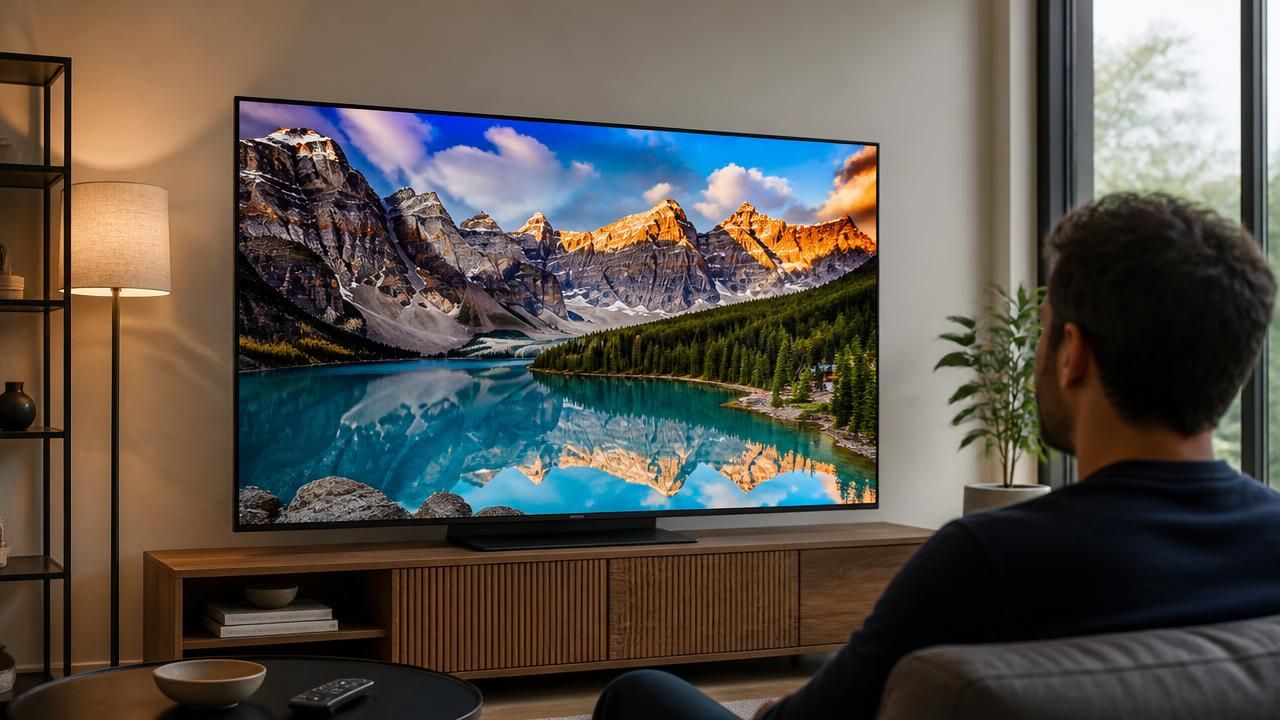
Samsung's R95H has arrived as the most closely watched TV of 2026's new RGB LED wave, and the early reviews point to a familiar first-generation story: a real technical advance, wrapped in caveats. The set, sold in 65-inch and 75-inch versions as Samsung pushes a Micro RGB lineup, replaces the conventional white LED backlight with individual red, green and blue LEDs. The result, reviewers say, is a wider color palette and more light output than many LCD rivals—and a serious challenge to OLED's long-standing claim on picture quality.
The Verge found the R95H capable of the widest color gamut it has measured this year, crediting the combination of brightness and a matte screen for making the TV especially strong in bright rooms. It called the set a solid TV that shows off the benefits of new backlight technology, even as it stressed that RGB LED TVs are still in their infancy.
It can display more colors than other TVs I've seen so far this year, and the combination of light output and its matte screen makes it great for a bright room.
Other reviews echoed that enthusiasm, but with different emphases. AndroidHeadlines ran a headline declaring that the R95H ruined every other TV in the reviewer's house—an attention-grabbing endorsement of its impact. IGN focused on the market shift, reporting that Samsung's 2026 Micro RGB TVs are actually kind of affordable, a striking change for a category that had been synonymous with premium pricing. Billboard, meanwhile, treated the moment as a shopping event, publishing a guide to the best 4K RGB LED TVs to buy in 2026 and where to shop online.
A breakthrough, not a clean sweep
The positive notices are not unanimous. MSN's review of the 65-inch R95H carried the headline that industry-leading specs meet real-world flaws, signaling that the set's laboratory advantages do not always translate into a frictionless ownership experience. Forbes framed its review as an OLED rival with a caveat, and its separate look at the 75R95H argued that the larger model ushers in a new world of LCD TVs. The common thread is that RGB LED is a genuine step forward for LCD, but not a technology that erases every tradeoff.
That framing matters because Samsung is selling Micro RGB into a crowded premium market. OLED remains the reference for per-pixel contrast and viewing angles; QLED remains the mass-market LCD formula built on quantum dots; Micro RGB sits between them, promising OLED-like color and brightness without OLED's emissive panel. A comparison of OLED, QLED and Micro RGB from MSN promised a surprise winner, a reminder that the hierarchy depends on room conditions, content and price rather than a single specification.
Samsung is also stretching the category in both directions. At CES 2026, Neowin reported that the company debuted the world's first 130-inch Micro RGB TV, a showpiece that demonstrates the technology can scale to massive home-theater sizes. At the same time, the R95H's 65-inch and 75-inch sizes and IGN's affordability framing show Samsung trying to move RGB LED from demonstration to mainstream consideration.
The AI features are a separate test
The R95H's story is not only about backlights. Samsung has loaded its 2026 TVs with AI-branded features, and AndroidHeadlines tested the new AI Soccer Mode during the World Cup. Its verdict was blunt: pretty disappointing. That is a useful counterweight to the headline enthusiasm around Micro RGB. A TV can deliver a meaningful hardware advance and still ship software gimmicks that fail to justify the marketing. For buyers, the lesson is to separate picture-quality improvements from feature-list inflation.
The reviews also illustrate how outlets frame the same product differently. Enthusiast publications tend to lead with measurable performance: color gamut, brightness, screen finish, room suitability. Business and shopping outlets focus on price, positioning and where to buy. General-interest reviews look for real-world flaws and caveats. None of those perspectives is wrong; together they describe a product that is impressive but not invulnerable.
Samsung's R95H may ultimately be remembered less as a perfect TV than as the moment RGB LED became a credible consumer category. The Verge's assessment—promising, capable, still early—is the fairest summary of the first wave. The 130-inch CES debut shows where Samsung wants to go; the 65-inch and 75-inch R95H models show what shoppers can actually buy. The gap between those two stories is where the next year of TV reviews will play out.