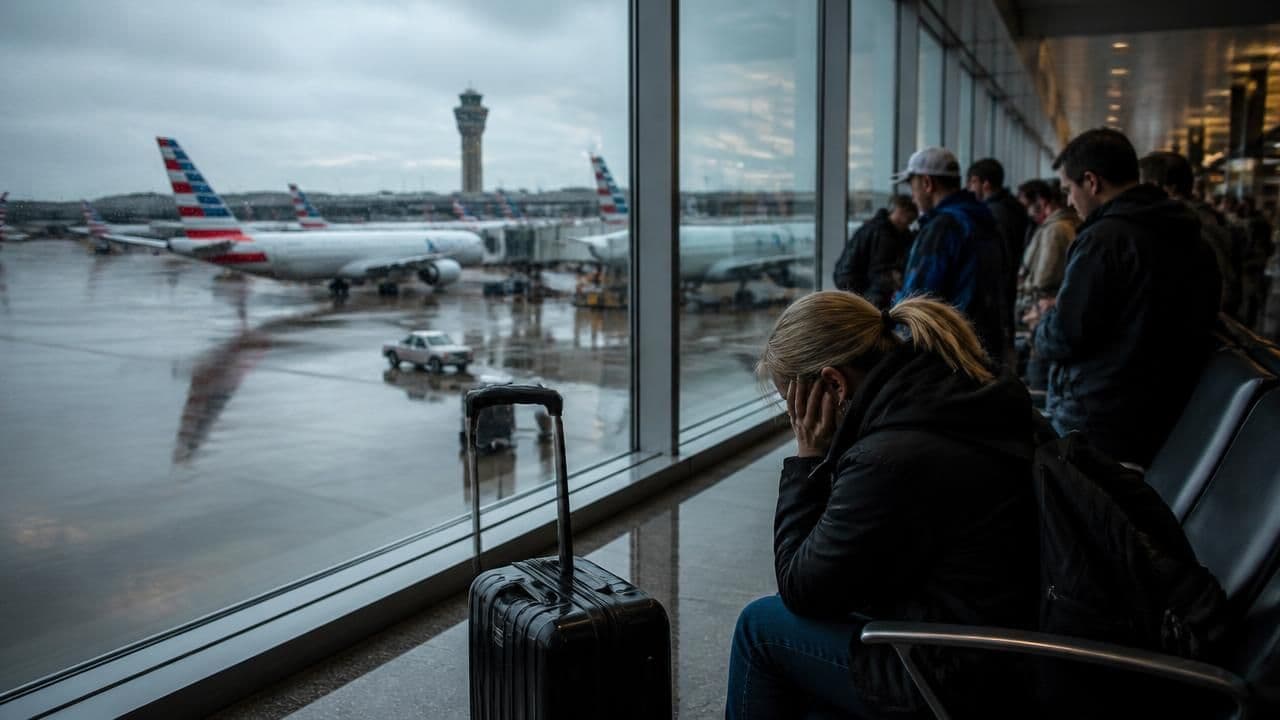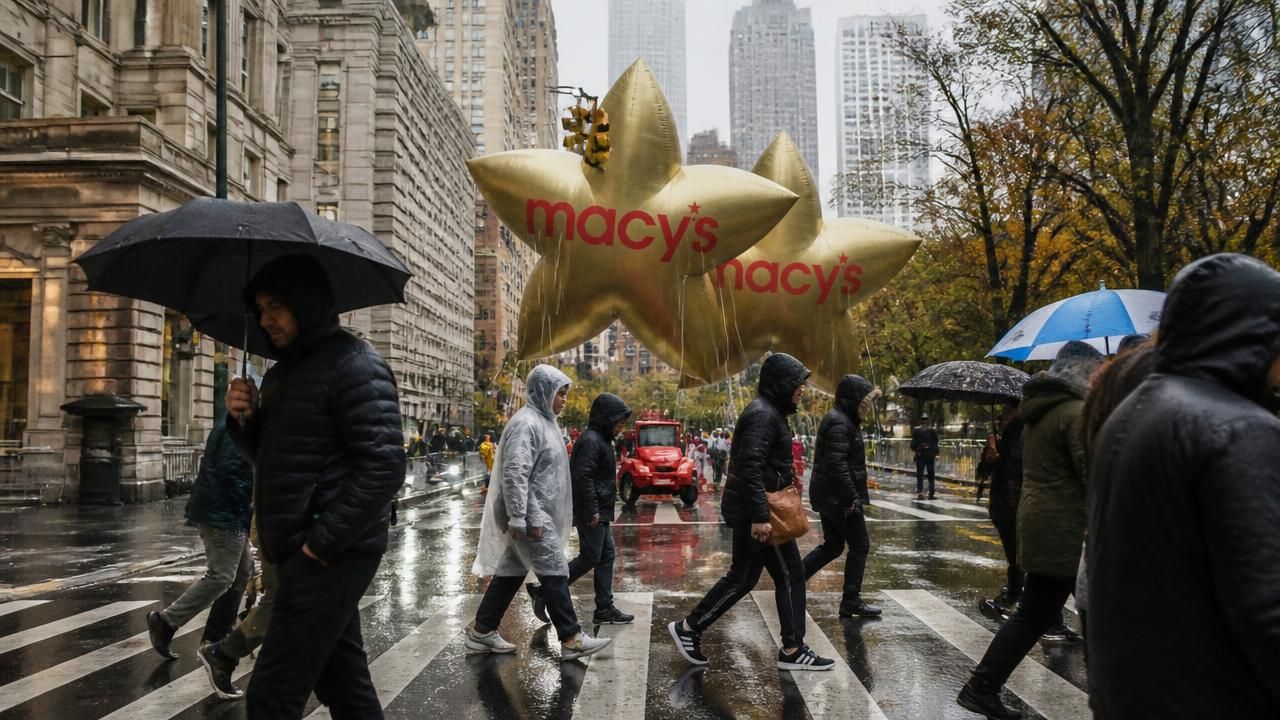
A pair of powerful storm systems flanking the United States has upended the busiest travel week of the year, forcing an unprecedented postponement of the Macy's Thanksgiving Day Parade and prompting states of emergency across the New York metropolitan region as an estimated 81.5 million Americans attempt to reach family and friends for the holiday.
The storm bearing down on the East Coast — described by forecasters in some outlets as a "bomb cyclone" — is expected to bring wind gusts of 60 to 70 mph, heavy rain, coastal flooding and dangerous travel conditions from the Southeast up through New England, while a second system threatens the West Coast. The National Weather Service's warnings arrive at precisely the moment the Transportation Security Administration and AAA anticipated near-record travel volumes.
A Parade Postponed for the First Time
The most visible casualty is the Macy's Thanksgiving Day Parade, which organizers moved from its traditional Thanksgiving morning slot to Saturday rather than cancel it outright. According to AccuWeather, which first reported the decision as breaking news, the move marks the first time in the parade's century-long history that the event has been postponed. The parade was famously suspended during World War II, but organizers have historically preferred cancellation to rescheduling — making this week's decision a singular moment in the tradition's history.
"We know how much this tradition means to generations of families who have made the Parade a cherished part of their Thanksgiving morning. In that spirit, we invite America to join us," organizers said in a statement carried by News 12.
City officials in New York said safety was the paramount consideration. "City officials say safety is the top priority following parade postponement announcement," News 12 reported, noting that the 2025 edition of the parade — already aired — was not affected, while this year's event will proceed on Saturday instead.
Philadelphia went further, canceling its own Thanksgiving Day parade outright, according to MSN, underscoring how differently the two cities weighed the risks of giant balloons and crowds against high winds.
States of Emergency and a Region on Alert
New York Gov. Kathy Hochul declared a state of emergency for New York City and Nassau, Suffolk and Westchester counties on Wednesday night, warning that the storm "could create dangerous travel conditions as people travel for the holiday." New Jersey followed with its own emergency declaration, according to Mercerme, as local officials braced for power outages and flooding.
News 12's regional live blogs — running simultaneously for the Bronx, New Jersey, Long Island, Connecticut and the Hudson Valley — painted a picture of a region hunkering down. Forecasters there warned of wind gusts reaching 70 mph on Long Island, with soaking rain, damaging winds and flooding possible across the metro area. Utility crews and tree companies were mobilizing, and libraries and schools announced closures, including a Cranbury library shuttered indefinitely after lightning damaged its roof.
Travel Chaos from Coast to Coast
NPR reported that the extreme weather — strong winds, high tides, heavy rain and floods — is expected to affect the travel plans of an estimated 81.5 million people. NBC News ran live updates tracking disruptions across the East Coast and Southeast, while MSN's weather maps showed where storms could snarl holiday journeys.
The-sun.com characterized the East Coast system as a "bomb cyclone" bearing down on America's busiest travel corridor, a framing echoed by MSN's grim weather-map coverage warning flyers to prepare for delays. USA Today focused on the Northeast, warning that the storm could disrupt holiday travel in New York and the surrounding region. NJ.com's coverage cautioned that a "powerful Thanksgiving coastal storm could ruin your holiday travel plans" for New Jersey residents, while FTN News tracked flight and road threats nationwide and detailed route changes, road closures and subway adjustments tied to the parade's rescheduling.
- Wind gusts of 60–70 mph forecast across the New York metro region, with isolated higher gusts on Long Island.
- Coastal flooding and high tides expected along the Eastern Seaboard.
- States of emergency declared in New York and New Jersey.
- Macy's Parade moved to Saturday; Philadelphia's parade canceled.
- Roughly 81.5 million travelers affected nationwide.
How Outlets Framed the Story
The coverage reveals distinct editorial priorities. National broadcasters such as NPR and NBC News centered the sheer scale of disruption — the 81.5 million travelers and rolling live updates — treating the parade postponement as one data point in a broader story about American mobility. Local outlets, particularly the News 12 network's hyperlocal live blogs, focused on the granular: which counties were under emergency orders, which roads would close, when the rain would arrive in the Bronx versus Connecticut.
Weather-focused outlets like AccuWeather emphasized the historic nature of the decision, leading with the "first time in history" angle, while tabloids such as The Sun leaned into dramatic language about a "bomb cyclone" striking the nation's busiest corridor. Business and travel trade publications, including FTN News, framed the storm through the lens of operational logistics — flight cancellations, road closures and transit changes — for readers trying to salvage itineraries.
Several outlets, including USA Today and AccuWeather, published only access-restricted shells, a reminder of how much breaking-weather coverage now sits behind paywalls or bot-verification walls during moments of peak public need.
What Comes Next
Forecasters expect the East Coast system to intensify through Thanksgiving morning before pulling away late in the day, with lingering gusty winds and scattered power outages likely into Friday. Travelers are being urged to check flight status before leaving for airports, allow extra time on roads and avoid coastal areas during high tide. The rescheduled parade is set for Saturday, when conditions are expected to improve — though organizers will be watching the wind gauges closely, since city rules prohibit flying the iconic balloons when sustained winds exceed 23 mph or gusts top 34 mph.
For a holiday built around the ritual of gathering, the storm has delivered an unwelcome lesson in flexibility: parades can wait until Saturday, but the 81.5 million people trying to get home have fewer options, and the weather is not negotiating.