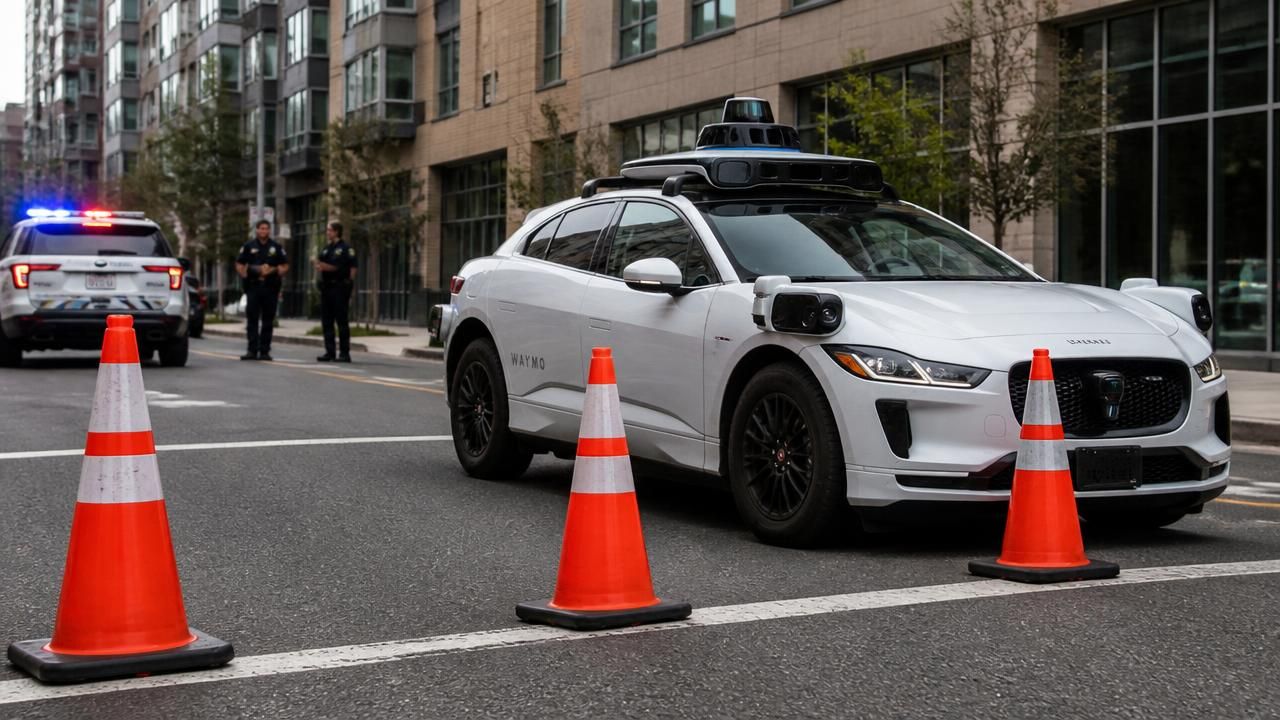
Police in Denver say a ponytailed man has thrown eggs at Waymo self-driving vehicles more than 30 times, using orange cones to trap the robotaxis before pelting them, according to a police report detailed by The New York Times and local outlets. No charges have been filed, and the man was not identified in the reports reviewed.
The case has drawn attention because of its unusual details and because it captures growing public friction over autonomous vehicles. The New York Times reported that the man drove a Toyota Corolla from a fleet leased to Lyft drivers. He allegedly placed orange cones around Waymo vehicles to stop or trap them, then threw eggs. The Denver Post and MSN reported that the behavior occurred more than 30 times, according to police.
A passenger video and a viral spectacle
The story gained wider traction after a Waymo passenger recorded video of a man hurling eggs at a driverless vehicle, according to headlines from MSN and Yahoo. The passenger’s footage underlined the jarring nature of the encounters: a human passenger inside a vehicle with no human driver, watching a person outside attack the car. The video also shifted the story from a police-blotter item into a public debate about robotaxis, vandalism, and the limits of acceptable protest.
Different outlets, different angles
Coverage has diverged in emphasis. The New York Times focused on the bizarre mechanics of the alleged campaign: the Lyft-leased Corolla, the orange cones, the eggs, and the fact that no charges had been filed. The Denver Post framed it as a local crime story, highlighting the ponytailed suspect and the police report’s count of more than 30 incidents. MSN and Yahoo leaned into the passenger-video angle, emphasizing the spectacle of a driverless car under attack. Denverite took a more analytical turn, asking whether the conduct is actually criminal.
“Is Denver’s ponytailed Waymo avenger actually committing a crime?” Denverite asked in a headline, signaling that the case may hinge on legal definitions as much as public outrage.
The legal question
That question is not merely rhetorical. Egg-throwing can be prosecuted as criminal mischief or vandalism if it damages property. Trapping a vehicle with cones could raise concerns about obstruction, reckless endangerment, or traffic hazards, especially if a passenger is inside. But the sources reviewed do not describe charges, injuries, or a detailed police legal analysis. The absence of charges may reflect investigative timing, evidentiary challenges, or prosecutorial discretion. It also leaves open the possibility that the conduct is being treated as a nuisance rather than a serious crime.
The legal ambiguity is part of the story’s appeal. A single egg may seem trivial; a sustained campaign against expensive sensor-laden vehicles is another matter. Waymo cars rely on cameras, lidar, and other sensors, and even minor damage or obstruction can be costly. Yet the alleged weapon here is a grocery staple, and the alleged trap is made of traffic cones. That contrast makes the case feel like a prank, a protest, and a potential crime all at once.
Why it matters
The Denver episodes arrive as autonomous vehicles become more common in some U.S. cities, prompting both curiosity and resistance. Robotaxi operators have faced scattered vandalism and protests elsewhere, and public trust remains a central obstacle to adoption. A passenger-recorded egging is a vivid reminder that self-driving cars are not just technical systems; they are social experiments moving through public space.
For Waymo, the incidents raise safety and customer-experience questions. For Denver police, they present a tricky enforcement problem: how aggressively to pursue a repeat vandal whose methods are unusual and whose motives remain unclear. For the public, the case asks what counts as legitimate protest against automation and what crosses into criminal behavior.
Police have not announced an arrest or filed charges. The investigation appears to remain open, and the man’s identity has not been released. Until more facts emerge, the story remains a strange collision of old-fashioned mischief and new technology, with a legal question still unresolved.