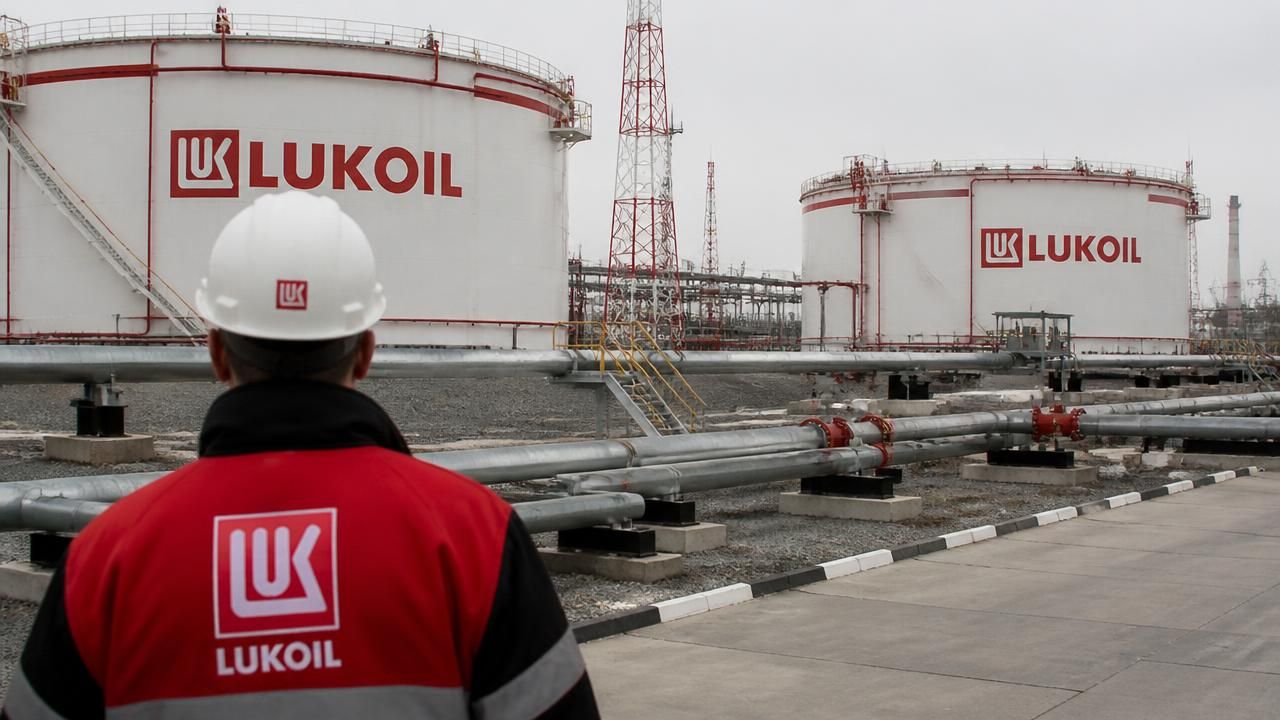
One of the largest asset sales since the start of the war in Ukraine is taking shape: Lukoil, Russia's privately owned oil major, has agreed to divest its valuable foreign holdings to a consortium led by American investors, a transaction that has been quietly shaped by U.S. sanctions policy, high-level diplomacy and, according to new reporting, a tangle of foreign money and political timing.
The New York Times reported that Lukoil's overseas properties will be sold to an American-led group — but not to associates of Jared Kushner and Steve Witkoff, the two Trump envoys who have served as the administration's principal channels to the Kremlin. Middle Eastern business contacts of the two men withdrew from the bidding, the Times reported, because of shifting political winds in Washington.
Separately, MSN reported that hidden Russian funding was discovered in the Lukoil bid that President Vladimir Putin himself raised with Trump's envoys — an account that raises uncomfortable questions about who ultimately stands behind the buyers of a company Washington only recently designated.
The deal, explained
The Center for Strategic and International Studies (CSIS) published an explainer on "the U.S. government's deal to buy Lukoil's assets," framing the transaction as an unusual hybrid of private sale and statecraft. Lukoil built one of the most international portfolios of any Russian energy company, with refineries, fuel retail networks, terminals and trading operations spread across Europe, the Balkans, the Middle East and Asia.
That footprint became a liability after the United States and its allies moved to restrict dealings with Russia's largest oil exporters. Lukoil's foreign subsidiaries found themselves cut off from banking, insurance and shipping services, while European governments — particularly in countries hosting Lukoil refineries — pressed for a change of ownership to keep fuel flowing and to sever Kremlin-linked influence over critical infrastructure.
Under the arrangement now emerging, the foreign assets would pass to an American-led consortium, with Washington's blessing, in exchange for a phased lifting of some restrictions. Yahoo Finance reported that the U.S. has lifted some sanctions restrictions relating to Lukoil's overseas assets — a narrow, technical relief that allows the carve-out to proceed without fully unwinding the measures imposed on the parent company.
Why the bidders matter
The political sensitivity lies less in the assets than in the buyers. Kushner and Witkoff have become the administration's most visible interlocutors with Moscow, and their private-sector networks — particularly in the Gulf — overlap with the pool of sovereign and family capital that might plausibly finance a multibillion-dollar energy purchase.
"Valuable properties belonging to the Russian energy giant will be sold to an American-led consortium. But Middle Eastern business contacts of the two Trump envoys pulled out because of political winds." — The New York Times
That withdrawal removes one set of conflict-of-interest questions but not all of them. The MSN report's central claim — that hidden Russian money was found inside a bid that Putin personally raised in conversations with the envoys — strikes at the core rationale for the whole exercise. If Russian capital is, directly or indirectly, among the buyers, the sale risks becoming a round-trip: Moscow-linked money regaining control of assets that sanctions were meant to place beyond its reach.
"Hidden Russian funding found in Lukoil bid Putin raised with Trump's envoys." — MSN
Diplomacy, business and blurred lines
The transaction has unfolded against the broader backdrop of the administration's push for a negotiated settlement in Ukraine, in which economic incentives — sanctions relief, the return of frozen or stranded assets, the prospect of Western investment — have been treated as bargaining chips. For the Kremlin, a sanctioned-but-orderly exit from Lukoil's foreign holdings is preferable to expropriation by European governments; for Washington, an American-led buyer offers a way to keep the assets out of Chinese, Iranian or Russian hands.
Critics argue that the sequencing sends a difficult signal: that sanctions can be negotiated away for the right buyer, and that proximity to presidential envoys is a commercial asset in its own right. Congressional scrutiny of the deal is likely, with lawmakers expected to press the Treasury Department on how it vetted the consortium's ultimate beneficial owners and how it established that the "hidden Russian funding" identified in reporting was excluded from the final structure.
What to watch
- Ownership disclosure: Whether the consortium publishes a full chain of beneficial ownership, including any Gulf or Eastern European intermediaries.
- Sanctions mechanics: How far the relief reported by Yahoo extends — and whether it is time-limited, conditional or reversible.
- European governments: Whether host countries accept the new owners or demand their own approval over refineries and fuel networks.
- The Kremlin's stake: Whether Moscow's endorsement, conveyed through Putin's conversations with the envoys, comes with conditions attached.
For now, the sale remains a case study in how sanctions, diplomacy and private capital have become entangled in the second Trump administration. The headline number may be about oil assets; the substantive question is whether a transaction brokered at the highest levels of diplomacy can be made transparent enough to survive scrutiny — and whether the money behind it is truly as far from Moscow as the structure claims.