CoreWeave Inc. is moving ahead with one of the largest debt financings of the AI boom — but on markedly tougher terms than the market offered just months ago. Bankers at Morgan Stanley and Mitsubishi UFJ Financial Group are preparing to sell a $4.5 billion loan for the GPU cloud provider as soon as next week, according to Bloomberg Markets, with the financing secured by graphics processing units destined for Meta Platforms Inc.
The deal arrives at a delicate moment for the so-called neocloud sector. Lenders that once raced to fund AI infrastructure are now hesitating, demanding tighter collateral requirements and lower leverage as questions mount over whether the enormous capital being poured into data centers will generate commensurate returns.
A $4.5 billion test of the neocloud trade
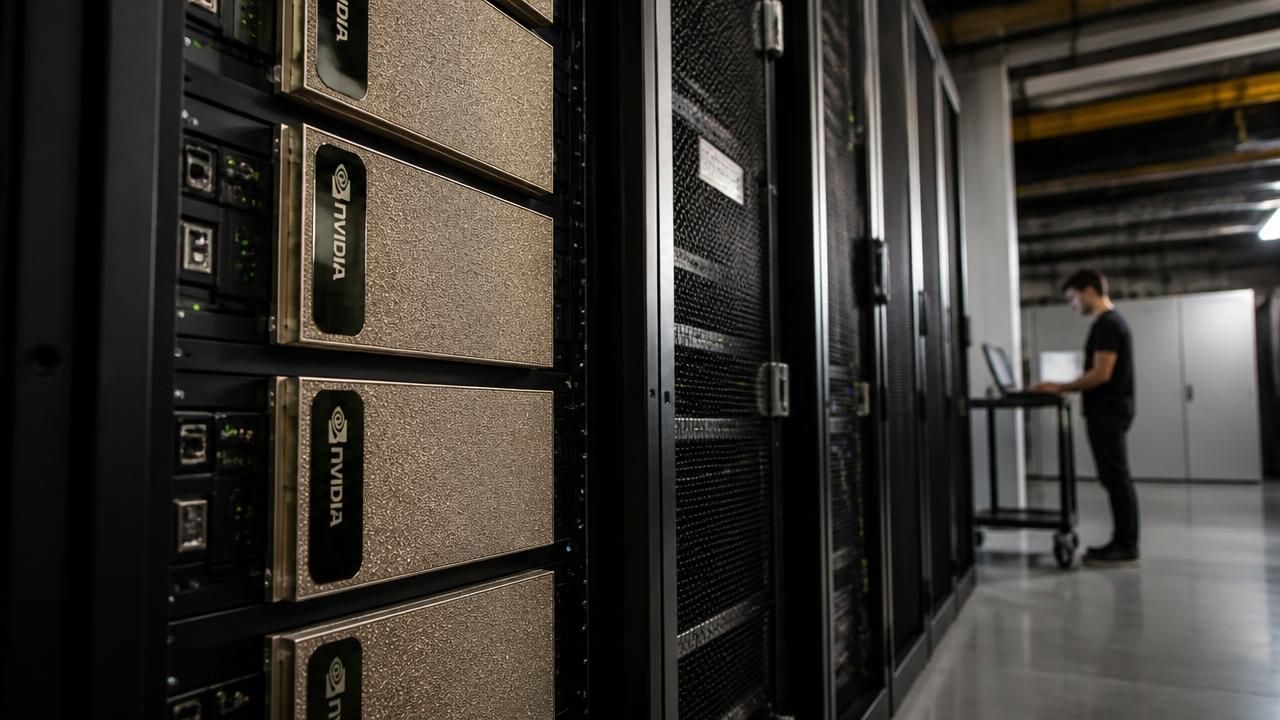
The structure of the CoreWeave financing is unusual: rather than relying on real estate or corporate cash flows, the loan is backed by the chips themselves — high-end Nvidia GPUs leased or deployed on behalf of Meta. It is a model CoreWeave pioneered, turning hardware into financeable assets and allowing it to borrow aggressively against the future value of compute.
That model is now being stress-tested. According to reporting cited by Yahoo Finance, GPU lenders have cut loan-to-value requirements to roughly 50 to 60 percent, down from as much as 80 percent in earlier financings. In practical terms, a borrower that could once pledge $100 million of chips and raise $80 million now might raise only $50 million to $60 million against the same collateral. The shift raises the effective cost of capital across the sector and pressures margins for operators such as CoreWeave and IREN.
The timing is notable. The banks are still expected to place the Meta-tied loan — a sign that demand for AI-linked credit has not evaporated — but the pricing and covenants are likely to reflect a newly sober market.
From enthusiasm to hesitation
The trajectory of lender sentiment has been swift. As one MSN headline put it bluntly:
"Banks that raced to fund neoclouds like CoreWeave are now hesitating."
That hesitation stems from several overlapping concerns. GPU collateral is depreciating faster than traditional infrastructure assets, and its resale value depends heavily on Nvidia's product cycle. A generation of chips superseded by newer models can lose value quickly, leaving lenders exposed if a borrower defaults. Concentration risk is another factor: many neoclouds depend on a handful of hyperscale customers, and their contracts are not always as long-dated as their debt.
Different outlets frame the story differently. Financial trade coverage emphasizes the mechanics of the syndication and the willingness of Morgan Stanley and MUFG to underwrite it. Market-focused outlets, meanwhile, highlight the deteriorating terms as evidence that the easy-money phase of the AI build-out may be ending.
Nvidia's backstop draws congressional scrutiny
Adding a political dimension to the financial story, Yahoo Finance also reported that Nvidia is CoreWeave's "key sole supplier" and has provided a $6.3 billion backstop — a figure now attracting attention from Congress. Lawmakers are reportedly examining the relationship between the chipmaker and its largest customers, including whether supplier-backed guarantees distort the true credit risk of the borrowers.
The arrangement underscores how interconnected the AI supply chain has become. Nvidia supplies the chips, CoreWeave finances and operates them, Meta buys the compute, and banks lend against the whole chain. When one link tightens, the effects ripple outward.
The $4.9 trillion question
At the center of the debate is an eye-watering number: roughly $4.9 trillion in projected global spending on data centers tied to AI, according to estimates cited by Livemint. The article poses the question investors are increasingly asking — whether AI spending will generate returns commensurate with the debt being raised to fund it.
The concern extends beyond CoreWeave. Meta, Oracle and other hyperscalers have committed tens of billions of dollars to AI infrastructure, much of it financed through debt and long-term leases that will weigh on balance sheets for years. If demand for AI services disappoints, or if efficiency gains reduce the need for raw compute, the collateral underlying these loans could prove less valuable than underwriters assumed.
- $4.5 billion: CoreWeave loan being syndicated by Morgan Stanley and MUFG, secured by GPUs tied to Meta.
- 50–60 percent: Current loan-to-value demanded by GPU lenders, down from 80 percent.
- $6.3 billion: Nvidia backstop supporting CoreWeave, now under congressional scrutiny.
- $4.9 trillion: Projected AI data-center spending underpinning the debt boom.
What to watch
The outcome of next week's loan sale will serve as a real-time gauge of institutional appetite for AI credit. A smooth syndication at the expected terms would suggest the market still has confidence in the neocloud model; a slow or discounted placement would signal that the repricing is only beginning.
For CoreWeave, the immediate challenge is funding growth without the leverage that once came cheaply. For the broader market, the question is whether the AI infrastructure build-out can be financed on terms that make economic sense — or whether the debt reality check now underway forces a more disciplined, and slower, expansion.