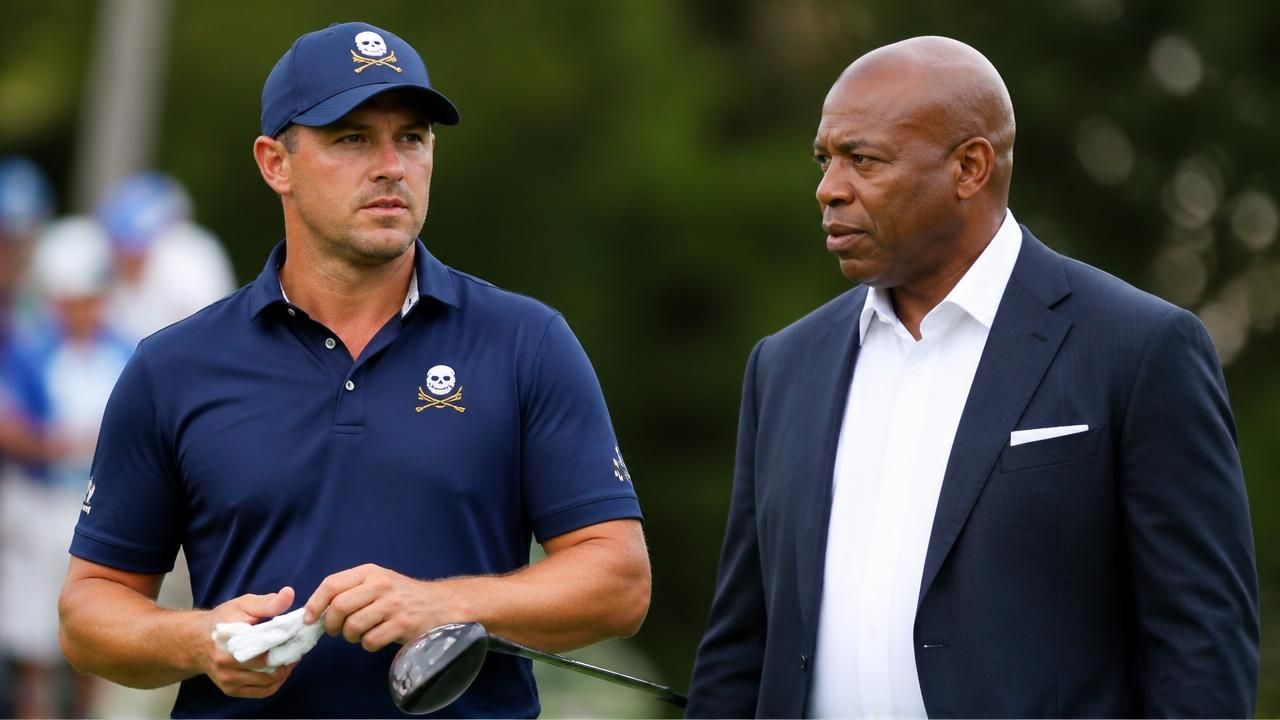
BC Partners’ credit arm has agreed to buy a majority stake in GSE Worldwide, the sports marketing agency whose clients include golf star Bryson DeChambeau and former NFL and MLB standout Bo Jackson, according to Bloomberg Markets. The deal, whose financial terms were not disclosed, puts a private-credit-backed investor at the center of an athlete-representation business just as questions swirl around the future of LIV Golf and the money owed to some of its biggest names.
The transaction is a finance story on its face: a credit-focused buyer taking control of an agency that sells sponsorships, appearances, and marketing rights for athletes. But it lands in a sports-business storm. Reports aggregated by MSN said GSE released a statement after being connected to a potential LIV Golf rescue deal, and that the agency denied playing a role in such an effort. Another MSN headline went further, declaring that LIV Golf is dead and that DeChambeau is owed $5.77 million—a claim that reframes the acquisition around player contracts and financial exposure.
A private-credit bet on athlete marketing
Bloomberg Markets reported that BC Partners’ credit arm agreed to acquire the majority stake in GSE Worldwide. GSE is a sports marketing agency with a roster that includes DeChambeau, one of golf’s most visible personalities, and Bo Jackson, the rare athlete who starred in both the NFL and MLB. The agency’s business depends on sponsorship deals, endorsements, appearances, and the broader commercial apparatus around star athletes.
The buyer’s identity matters. BC Partners is best known as a private equity firm, but the deal is being struck through its credit arm, a structure that has become more common as private-capital managers deploy credit funds into controlling or majority positions. For GSE, the capital could support expansion, client services, and acquisitions. For BC Partners, it is a wager that sports marketing remains a resilient, cash-generating business even when the leagues and tours that supply talent are in flux.
Terms were not disclosed in the Bloomberg report, leaving open questions about valuation, leverage, and governance. Those details will determine whether the deal is a straightforward growth investment or a more defensive capitalization of an agency exposed to the volatility of individual athletes and the tours they play on.
LIV Golf’s shadow
That volatility is hard to ignore. LIV Golf, the Saudi-backed circuit that upended men’s professional golf, has been the subject of merger talks, regulatory scrutiny, and persistent speculation about its long-term economics. DeChambeau was among the high-profile players who joined LIV, making him both a beneficiary and a symbol of the breakaway tour’s disruption.
The MSN reports add a new layer. One headline said DeChambeau’s agency released a statement after being connected to a LIV Golf rescue deal. Another said the agency denied a role in such a rescue. The episode suggests that GSE wants to keep its commercial identity separate from any effort to stabilize LIV—a sensitive distinction for an agency that represents clients across the golf ecosystem and beyond.
LIV Golf is dead. Bryson DeChambeau is owed $5.77 million. Now what?
That headline, from one MSN source, is more assertion than settled fact. It nonetheless captures the central anxiety: if LIV’s finances or competitive structure deteriorate, players and their representatives may face unpaid obligations, renegotiated contracts, or legal claims. The reported $5.77 million owed to DeChambeau is a striking number because it turns a story about tour politics into a balance-sheet problem.
Two frames, one deal
The sources frame the story differently. Bloomberg Markets treats it as a mergers-and-acquisitions story: a credit investor buys a majority stake in a sports agency with recognizable clients. The MSN headlines treat it as a LIV Golf story: an agency denies involvement in a rescue, while a separate report focuses on DeChambeau’s unpaid money and the apparent collapse of the tour.
Both frames can be true. GSE can be an attractive acquisition target and still be exposed to LIV-related uncertainty. BC Partners can see long-term value in athlete marketing while worrying about client concentration and tour risk. And DeChambeau can be a marquee asset for GSE while also being a claimant in a separate financial dispute.
What happens next
The immediate questions are whether BC Partners’ credit arm will disclose more about the deal’s structure, whether GSE will clarify its statement on LIV, and whether the reported $5.77 million owed to DeChambeau becomes a formal claim. For now, the transaction signals that private capital still sees opportunity in sports representation—even when the underlying sport is in turmoil.
For DeChambeau, the deal adds a new corporate owner to the business side of his career at a moment when LIV’s future is uncertain. For GSE, it means new capital and new scrutiny. For BC Partners, it is a bet that the business of star athletes can outlast the disputes of the tours they play on.